

Developing healthier eating habits can feel challenging when your daily routine is filled with work, family responsibilities, studies and other commitments. With so much conflicting nutrition advice available, knowing which foods to choose and how to create balanced meals can sometimes feel overwhelming. Fortunately, improving your diet does not require complicated meal plans, expensive ingredients, or completely changing the way you eat overnight.
Healthy Eating is about choosing a variety of nutritious foods that provide your body with the energy and nutrients it needs to function properly. A balanced diet generally includes vegetables, fruits, whole grains, protein-rich foods and sources of healthy fats. By making simple adjustments to your everyday meals, you can gradually develop eating habits that support your overall health and well-being.
For beginners, starting with small and manageable changes is often more practical than following restrictive diets. Simple habits such as adding vegetables to lunch, choosing whole grains more often, drinking water regularly and preparing meals at home can make nutritious eating easier. These changes can also help you become more aware of your food choices without creating unnecessary pressure around meals.
However, improving your diet does not mean avoiding every favorite food or following strict eating rules. Your nutritional needs depend on several factors, including age, activity level, health conditions, cultural preferences and individual circumstances. The goal is to build a flexible and balanced eating pattern that provides adequate nourishment while remaining enjoyable and sustainable.
This guide explains the basic principles of healthy eating, which foods to include in your diet, how to create balanced meals and how to develop practical eating habits at home. You will also learn how to plan a simple weekly menu, make nutritious food choices on a budget, avoid common dietary mistakes and maintain a balanced approach to nutrition.
Understanding How Healthy Eating Works
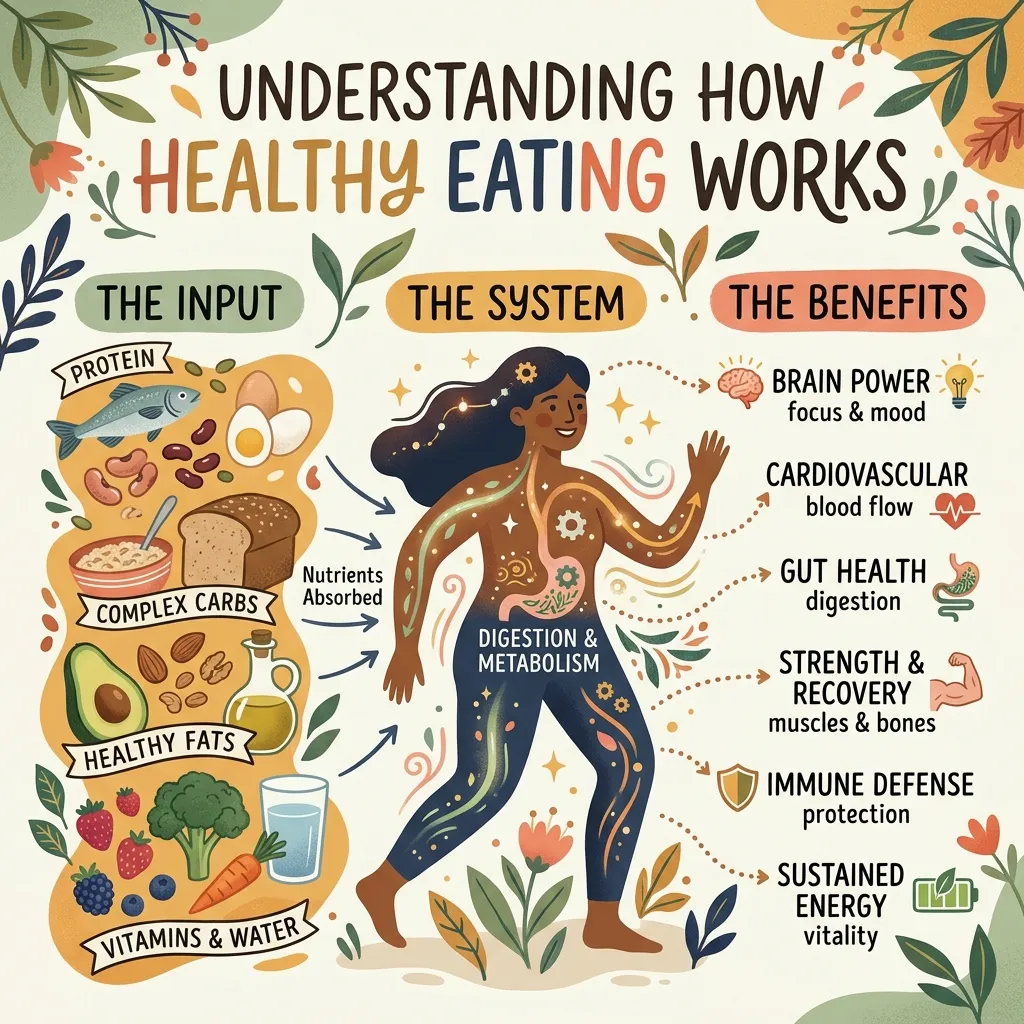
Healthy eating involves consuming a variety of foods that provide essential nutrients while supporting your body’s energy needs.
Rather than focusing on one particular food or following a temporary diet, a balanced eating pattern considers the overall quality and variety of foods you consume regularly.
A nutritious diet includes appropriate amounts of carbohydrates, proteins, fats, vitamins, minerals, fiber and fluids.
The amount of each nutrient you need varies according to your individual circumstances.
Understand the Importance of Balanced Nutrition

Your body requires different nutrients to support everyday functions.
Carbohydrates provide energy for your brain, muscles and other tissues.
Proteins contribute to the growth, maintenance and repair of body tissues.
Dietary fats support cell function, help your body absorb certain vitamins and provide energy.
Vitamins and minerals are involved in numerous processes, including immune function, bone health and normal metabolism.
Eating a variety of foods helps provide these nutrients without relying too heavily on one particular food group.
Read More: The Beginner Workout Routine for a Stronger, Fitter Body
Include Different Food Groups
A balanced diet generally contains foods from several major food groups.
Vegetables and fruits provide fiber, vitamins, minerals and beneficial plant compounds.
Whole grains contribute carbohydrates, fiber and important nutrients.
Protein-rich foods such as beans, lentils, eggs, fish, poultry, tofu and nuts support tissue maintenance and repair.
Dairy foods or suitable fortified alternatives can provide nutrients such as calcium and, depending on the product, vitamin D.
Including different food groups throughout the day helps create nutritional variety.
Focus on Overall Eating Patterns
One meal does not determine whether your diet is healthy or unhealthy.
Your overall eating pattern matters more than any single food choice.
For example, enjoying a dessert occasionally does not cancel out the nutritional value of balanced meals eaten throughout the week.
Similarly, eating one nutritious meal does not automatically make an otherwise limited diet balanced.
Focus on the foods and habits you practice consistently rather than judging individual meals.
Make Gradual Dietary Changes
Changing several eating habits at once can feel difficult.
A more manageable approach is to introduce one or two adjustments at a time.
You might begin by adding a serving of vegetables to dinner or replacing some refined grains with whole-grain alternatives.
Once these changes become familiar, you can gradually introduce additional habits.
This approach allows you to develop a sustainable eating routine without unnecessary restrictions.
Benefits of Following a Balanced Diet
A nutritious eating pattern can support several aspects of physical health when maintained over time.
Although no single food guarantees better health, regularly consuming a variety of nutrient-rich foods contributes to normal body functions and may reduce the risk of certain chronic diseases.
Support Everyday Energy Needs
Your body uses energy from food to support movement, thinking, digestion and other essential activities.
Carbohydrates, proteins and fats all contribute to your overall energy intake.
Meals that include a combination of these nutrients can help provide adequate nourishment throughout the day.
For example, a breakfast containing oatmeal, yogurt and fruit provides carbohydrates, protein and other nutrients.
Eating enough food regularly is also important because consistently inadequate energy intake can affect physical performance and well-being.
Support Normal Immune Function
Your immune system depends on adequate nutrition to function properly.
Nutrients such as vitamin A, vitamin C, vitamin D, zinc, iron and protein contribute to different aspects of immune function.
Vegetables, fruits, legumes, whole grains, dairy foods and protein-rich foods can help provide these nutrients.
However, eating specific foods does not guarantee protection against illness.
A balanced diet supports normal immune function as part of an overall healthy lifestyle.
Promote Digestive Health
Fiber is an important component of a nutritious diet.
It is found in foods such as vegetables, fruits, beans, lentils, nuts, seeds and whole grains.
Adequate fiber intake can support regular bowel movements and digestive health.
Some types of fiber also provide nourishment for beneficial microorganisms in the digestive system.
Increase fiber gradually and drink sufficient fluids to help your digestive system adjust comfortably.
Support Heart Health
Dietary patterns that include vegetables, fruits, whole grains, legumes, nuts and unsaturated fats can support cardiovascular health.
Replacing some saturated fats with unsaturated fats may help improve blood cholesterol levels.
Foods such as olive oil, nuts, seeds and certain fish provide sources of unsaturated fats.
Limiting excessive sodium intake can also support healthy blood pressure.
Heart health depends on multiple factors, including nutrition, physical activity, genetics and medical conditions.
Help Maintain Adequate Nutritional Intake
Eating a varied diet can help reduce the likelihood of inadequate intake of certain nutrients.
For example, calcium contributes to normal bone health, while iron is necessary for oxygen transport in the blood.
Protein supports tissue maintenance and several B vitamins contribute to normal energy metabolism.
Choosing foods from different food groups increases your opportunities to obtain these nutrients.
Individual needs may differ and some people may require fortified foods or supplements based on professional advice.
Essential Food Groups to Include in Your Diet
A practical approach to healthy eating is to become familiar with the major food groups and their nutritional contributions.
You do not need to include every food group in every meal, but consuming a variety of foods throughout the day can help create a balanced eating pattern.
Vegetables
Vegetables provide vitamins, minerals, fiber, water and other beneficial compounds.
Different vegetables contain different combinations of nutrients.
Leafy greens such as spinach provide folate and vitamin K, while carrots and sweet potatoes contain beta-carotene, which the body can convert into vitamin A.
Vegetables such as broccoli, tomatoes and bell peppers provide additional nutrients.
Try including vegetables in lunches and dinners.
You can enjoy them raw, steamed, roasted, grilled, or added to soups and other dishes.
Frozen and canned vegetables can also be nutritious options. When using canned varieties, consider products with little or no added salt.
Fruits
Fruits provide natural carbohydrates, fiber, vitamins, minerals and water.
Apples, oranges, bananas, berries, mangoes and pears are examples of fruits that can fit into a balanced diet.
Whole fruits generally provide more fiber than fruit juice.
You can add fruit to breakfast, enjoy it as a snack, or combine it with yogurt and oatmeal.
Choose different fruits when possible to increase dietary variety.
Fresh, frozen and canned fruits can all be useful options, particularly when canned varieties are packed in water or their own juice rather than heavy syrup.
Whole Grains
Whole grains contain the bran, germ and endosperm of the grain.
They generally provide more fiber and certain nutrients than comparable refined grains.
Examples include oats, brown rice, whole-wheat bread, whole-wheat pasta, barley and quinoa.
Whole grains can support digestive health and contribute to a balanced dietary pattern.
You do not need to replace every refined grain immediately.
Begin by choosing whole-grain alternatives more often when they are available and suitable for your preferences.
Protein-Rich Foods
Protein is necessary for the maintenance and repair of body tissues.
It also contributes to the production of enzymes, hormones and other important substances.
Protein-rich foods include eggs, fish, chicken, beans, lentils, tofu, yogurt, nuts and seeds.
Both animal and plant foods can contribute to your daily protein intake.
Including different protein sources helps provide a variety of nutrients.
For example, lentils supply protein and fiber, while fish may provide protein and beneficial fatty acids.
Healthy Fat Sources
Dietary fat is an essential nutrient that supports several body functions.
It contributes to cell structure and helps your body absorb vitamins A, D, E and K.
Sources of unsaturated fats include olive oil, avocados, nuts, seeds and certain fish.
These foods can be included in balanced meals in appropriate portions.
For example, you might add a small amount of olive oil to vegetables or include nuts with a snack.
Try replacing some sources of saturated fat with unsaturated fat rather than simply adding large amounts of fat to your existing diet.
Dairy and Fortified Alternatives
Milk, yogurt and certain cheeses provide nutrients such as calcium and protein.
Some dairy products also provide vitamin B12 and other essential nutrients.
People who avoid dairy can choose suitable fortified plant-based alternatives.
However, the nutritional content of plant-based beverages varies considerably.
For example, fortified soy milk often provides more protein than almond or rice milk.
Check product labels for calcium, vitamin D, protein and added sugar when selecting alternatives.
How to Build a Balanced Healthy Meal
Creating balanced meals does not require weighing every ingredient or calculating the nutritional value of every bite.
A simple visual approach can help beginners include a variety of food groups.
One commonly used method is to divide a plate into sections for vegetables, fruits, grains and protein-rich foods.
This method is a flexible guide rather than a strict rule for every individual.
Fill About Half Your Plate With Vegetables and Fruit
Vegetables and fruits contribute fiber, vitamins, minerals and water.
A practical goal is to make them a substantial part of your meals.
For lunch or dinner, you might include a generous serving of cooked vegetables or a fresh salad.
Fruit can be included as part of a meal or enjoyed separately.
The exact proportion can vary according to your nutritional needs and the type of meal you are preparing.
Include Whole Grains or Other Starchy Foods
Carbohydrate-rich foods provide energy for everyday activities.
Examples include rice, potatoes, oats, whole-wheat bread and other grains.
Choosing whole grains more often can increase fiber intake.
You can also include nutritious starchy vegetables such as potatoes and sweet potatoes.
Portion sizes should reflect your appetite, activity level and individual energy requirements.
Add a Source of Protein
Protein-rich foods can help create a nutritionally balanced meal.
Examples include grilled chicken, eggs, fish, lentils, beans and tofu.
You might combine brown rice with lentils and vegetables or prepare a whole-wheat sandwich with eggs and salad.
Choose different protein sources throughout the week.
This variety can help provide a broader range of nutrients.
Include Sources of Unsaturated Fats
Healthy fat sources can be included in meals without making the preparation complicated.
For example, you can use olive oil when cooking vegetables or add a small amount of seeds to yogurt.
Nuts and avocados are additional options.
Remember that dietary fats provide concentrated energy, so the amount that is appropriate depends on your overall nutritional needs.
Choose Water as a Regular Beverage
Water supports hydration, temperature regulation and numerous body functions.
Choosing water regularly instead of sugar-sweetened drinks can help reduce added sugar intake.
Unsweetened tea and other suitable beverages can also contribute to fluid intake.
Your hydration needs depend on factors such as activity level, climate and individual health.
Drink regularly and pay attention to thirst and other signs of hydration.
10 Easy Healthy Eating Habits for Beginners
Developing nutritious eating habits becomes easier when you focus on simple actions that fit into your daily routine.
The following habits can help you make practical food choices without following an overly restrictive diet.
Start Your Day With a Balanced Breakfast
Breakfast can be an opportunity to include several nutritious food groups.
Choose foods that provide a combination of carbohydrates, protein and fiber.
For example, oatmeal with yogurt and fruit is a simple option.
Whole-grain toast with eggs and vegetables is another practical breakfast.
If you do not feel hungry immediately after waking up, you can eat later when it suits your schedule.
The important consideration is meeting your overall nutritional needs throughout the day.
Add Vegetables to Your Main Meals
Adding vegetables is one of the simplest ways to increase dietary variety.
You can include tomatoes and spinach in an omelet or add carrots and peas to rice.
Vegetables can also be incorporated into soups, pasta dishes, sandwiches and curries.
Begin with vegetables you already enjoy.
Gradually experiment with different types and cooking methods.
Choose Whole Grains More Often
Replacing some refined grains with whole-grain alternatives can increase fiber intake.
For example, try whole-wheat bread instead of white bread or oats instead of highly sweetened breakfast cereals.
Brown rice and whole-wheat pasta are additional options.
You do not need to eliminate refined grains completely.
Focus on gradually including more whole grains in your overall diet.
Include Protein in Regular Meals
Protein contributes to tissue maintenance and normal body functions.
Including protein-rich foods throughout the day can help you meet your nutritional requirements.
Examples include eggs at breakfast, lentils at lunch and fish or beans at dinner.
You can also include yogurt, nuts, or other protein-containing foods in snacks.
The amount of protein you need depends on factors such as body size, age, activity level and health status.
Eat More Fiber-Rich Foods
Fiber supports digestive health and is found in many plant foods.
Beans, lentils, whole grains, vegetables, fruits, nuts and seeds are useful sources.
You can increase fiber intake by adding beans to soups or choosing fruit instead of fruit juice.
Introduce additional fiber gradually, particularly if your usual intake is low.
Drinking enough fluids can help reduce digestive discomfort as your body adjusts.
Reduce Excess Added Sugar
Added sugars are found in many sweetened beverages, desserts, candies and packaged foods.
Consuming large amounts of added sugar can make it more difficult to maintain a balanced dietary pattern.
Try choosing water instead of sugary drinks more often.
You can also select plain yogurt and add fruit for sweetness.
There is no need to avoid every sweet food.
Focus on reducing excessive intake while maintaining a flexible approach to eating.
Pay Attention to Sodium Intake
Sodium is an essential mineral, but excessive intake can contribute to high blood pressure in some people.
Packaged snacks, processed meats, instant noodles and certain sauces may contain substantial amounts of sodium.
Check nutrition labels when purchasing packaged foods.
You can also use herbs, spices, lemon juice and other flavorings when cooking.
Choose lower-sodium options when practical.
Prepare More Meals at Home
Cooking at home can give you greater control over ingredients and preparation methods.
You can decide how much salt, oil and added sugar to use.
Simple meals such as vegetable omelets, lentil soup, rice with beans, or grilled chicken with vegetables do not require complicated cooking skills.
Begin with a few easy recipes that you enjoy.
Gradually expand your meal options as you become more comfortable preparing food.
Practice Mindful Eating
Mindful eating involves paying attention to your food and the experience of eating.
Try sitting down for meals when possible and eating at a comfortable pace.
Notice the taste, texture and satisfaction of your food.
Pay attention to hunger and fullness signals without treating them as strict rules.
This approach can help you develop a more thoughtful relationship with food.
Maintain Consistent, Flexible Eating Habits
A sustainable eating pattern should fit your lifestyle.
You do not need to eat identical meals every day or follow rigid meal times.
Some people prefer three main meals, while others benefit from including snacks.
Choose a routine that helps you meet your nutritional needs comfortably.
Focus on consistency over time rather than expecting perfection at every meal.
How to Start Meal Planning for Healthy Eating
Meal planning can make nutritious eating more convenient, especially when your schedule is busy.
Planning a few meals in advance can reduce last-minute decisions and help you use ingredients efficiently.
You do not need to prepare every meal for the entire week.
Even planning two or three days ahead can be helpful.
Check the Foods You Already Have
Before creating a meal plan, look through your refrigerator, freezer and pantry.
Identify ingredients that can be used in upcoming meals.
For example, leftover vegetables may be added to an omelet, soup, or rice dish.
Beans and lentils can be combined with grains to create simple meals.
Using existing ingredients can help reduce unnecessary food purchases and waste.
Choose Simple Recipes
Begin with meals that require familiar ingredients and straightforward preparation.
Examples include oatmeal with fruit, vegetable sandwiches, lentil soup and baked potatoes with beans.
You can gradually introduce new recipes as your cooking confidence improves.
Avoid planning several complicated meals during a busy week.
Simple recipes are often easier to prepare consistently.
Make a Practical Grocery List
A grocery list can help you purchase ingredients for your planned meals.
Organize your list into categories such as vegetables, fruits, grains, proteins and dairy or alternatives.
Check which ingredients you already have before shopping.
This can help reduce duplicate purchases.
Choose quantities that suit your household size and storage space.
Prepare Ingredients in Advance
Basic food preparation can save time during busy days.
You might wash vegetables, cook a batch of grains, or prepare beans and lentils.
Store prepared foods promptly in suitable containers and refrigerate them safely.
Cooked leftovers should generally be refrigerated within two hours, or within one hour when temperatures exceed 32°C (90°F).
Use refrigerated leftovers within approximately three to four days or freeze them for longer storage.
Keep Flexible Meal Options
Meal plans should allow room for changes.
You may occasionally have less time to cook or prefer a different meal.
Keep simple ingredients available for quick alternatives.
For example, eggs, frozen vegetables, canned beans and whole-grain bread can be used to prepare several easy meals.
Flexibility can help make meal planning more sustainable.
Create a Simple 7-Day Healthy Eating Meal Plan
A weekly meal plan can help beginners understand how different food groups fit into everyday meals.
The following schedule provides examples of balanced meal combinations using familiar ingredients.
It is not a personalized diet plan and the meals and portions should be adjusted according to your nutritional needs, appetite, food preferences and health circumstances.
| Day | Breakfast | Lunch | Dinner |
|---|---|---|---|
| Monday | Oatmeal with yogurt and banana | Grilled chicken, brown rice and vegetables | Lentil soup with whole-wheat bread and salad |
| Tuesday | Whole-grain toast with eggs and tomatoes | Chickpea salad with whole-wheat bread | Baked fish, potatoes and steamed vegetables |
| Wednesday | Plain yogurt with fruit and oats | Vegetable and bean rice bowl | Chicken or tofu stir-fry with whole grains |
| Thursday | Vegetable omelet with whole-grain toast | Lentil curry with whole-wheat roti and salad | Vegetable soup with beans and whole-grain bread |
| Friday | Oatmeal with milk and berries | Tuna or chickpea sandwich with vegetables | Grilled chicken or tofu with rice and vegetables |
| Saturday | Eggs with whole-wheat roti and fruit | Bean and vegetable wrap | Fish or lentil curry with rice and salad |
| Sunday | Yogurt, fruit and whole-grain cereal | Homemade vegetable pasta with protein | Mixed vegetable and chickpea stew with whole grains |
You can include snacks such as fruit, yogurt, nuts, or vegetables with hummus according to your hunger and nutritional needs.
Water can be included regularly throughout the day.
Monday: Begin With Familiar Balanced Meals
Start the week with simple foods that provide a combination of nutrients.
Oatmeal with yogurt and banana offers carbohydrates, protein and fiber.
For lunch, combine grilled chicken with brown rice and vegetables.
A dinner of lentil soup, whole-wheat bread and salad provides plant protein and additional fiber.
Adjust the ingredients and portions according to your preferences.
Tuesday: Include Different Protein Sources
Use Tuesday to introduce variety into your protein choices.
Eggs can be included at breakfast, while chickpeas provide plant-based protein and fiber at lunch.
For dinner, baked fish can be served with potatoes and vegetables.
If you do not eat fish, replace it with tofu, beans, or another suitable protein source.
Choose preparation methods that use moderate amounts of added salt and saturated fat.
Wednesday: Focus on Dietary Variety
Include several food groups throughout the day.
Plain yogurt with fruit and oats can provide a convenient breakfast.
A vegetable and bean rice bowl offers carbohydrates, fiber and protein.
For dinner, prepare a stir-fry with chicken or tofu and a variety of vegetables.
Using different vegetables can increase the range of nutrients in your meals.
Thursday: Include More Plant-Based Foods
Plant-based foods can contribute important nutrients to a balanced diet.
A vegetable omelet provides a combination of protein and vegetables.
Lentil curry with whole-wheat roti is a practical lunch option.
For dinner, vegetable soup with beans and whole-grain bread offers additional fiber and protein.
You do not need to follow a fully vegetarian diet to benefit from including more plant foods.
Friday: Keep Meals Convenient
Busy days often require simple meal options.
Oatmeal with milk and fruit is a quick breakfast.
A tuna or chickpea sandwich with vegetables can be prepared for lunch.
For dinner, combine grilled chicken or tofu with rice and vegetables.
Preparing some ingredients in advance can make these meals easier to assemble.
Saturday: Enjoy Balanced Home-Cooked Meals
Use Saturday to prepare familiar meals with nutritious ingredients.
Eggs, whole-wheat roti and fruit provide a simple breakfast combination.
A bean and vegetable wrap can be enjoyed for lunch.
For dinner, prepare fish or lentil curry with rice and salad.
Adjust cooking methods and seasoning according to your preferences.
Sunday: Plan for the Upcoming Week
Sunday can be a useful day to review your eating habits and prepare for the coming week.
Begin with yogurt, fruit and whole-grain cereal.
For lunch, prepare vegetable pasta with a suitable protein source.
A chickpea and vegetable stew with whole grains can provide a satisfying dinner.
You can also use this day to prepare ingredients for upcoming meals.
Healthy Eating on a Budget
Eating nutritious foods does not always require expensive ingredients or specialty products.
Many affordable foods provide important nutrients and can be used in a variety of meals.
A few practical shopping and cooking habits can help make balanced eating more accessible.
Choose Affordable Staple Foods
Foods such as oats, rice, lentils, beans, eggs and potatoes can form the foundation of nutritious meals.
These ingredients are often versatile and can be prepared in several ways.
For example, lentils can be used in soups, curries and grain bowls.
Oats can be prepared as porridge or added to yogurt.
Choose staple foods that are affordable and commonly available in your area.
Buy Seasonal Produce
Seasonal vegetables and fruits may be more affordable and readily available.
Compare prices and choose produce that fits your budget.
You do not need to purchase expensive imported fruits to maintain a nutritious diet.
Locally available vegetables and fruits can provide valuable nutrients.
Frozen produce can also be a practical option when fresh varieties are expensive.
Use Beans and Lentils More Often
Beans and lentils provide plant protein, fiber and several vitamins and minerals.
They can be used as the main protein source in many meals.
For example, combine lentils with rice and vegetables or add beans to soups and salads.
Dried beans and lentils are often economical when purchased in larger quantities.
Canned varieties are convenient alternatives when time is limited.
Reduce Unnecessary Food Waste
Food waste can increase grocery expenses.
Plan meals around ingredients you already have and store food appropriately.
Use vegetables that are approaching the end of their freshness in soups or cooked dishes, provided they remain safe to eat.
Freeze suitable leftovers when you cannot use them promptly.
Check food storage guidance rather than relying only on appearance or smell to determine safety.
Compare Nutrition Labels and Prices
Packaged foods can vary in price and nutritional content.
Compare the cost per serving or unit weight when possible.
Check labels for fiber, protein, sodium, added sugars and saturated fat.
A more expensive product is not automatically more nutritious.
Choose foods that provide useful nutrients while fitting your budget and preferences.
Tips for Maintaining Healthy Eating Habits
Developing a nutritious eating pattern is a gradual process.
Small habits practiced regularly can be more sustainable than strict rules followed for only a short period.
Keep Nutritious Foods Accessible
Make convenient food choices easier by keeping suitable ingredients available.
For example, store washed fruit in the refrigerator or keep oats and canned beans in your pantry.
Frozen vegetables can also be useful for quick meals.
Having nutritious ingredients available may reduce the need for last-minute food decisions.
Learn Basic Cooking Skills
Simple cooking skills can make home-prepared meals more convenient.
Begin by learning how to cook grains, prepare vegetables and make basic protein-rich dishes.
You do not need advanced culinary skills to create balanced meals.
Start with a few reliable recipes and gradually expand your options.
Enjoy Your Favorite Foods in Moderation
A balanced diet can include foods chosen primarily for enjoyment.
You do not need to eliminate every dessert, snack, or restaurant meal.
Instead, consider how these foods fit into your overall eating pattern.
Avoid labeling individual foods as completely good or bad.
A flexible approach may help you maintain nutritious eating habits without unnecessary stress.
Pay Attention to Hunger and Fullness
Your body provides signals that can help guide eating.
Try noticing when you feel hungry and when you begin to feel comfortably satisfied.
Avoid rushing through meals whenever possible.
However, hunger and fullness signals can vary because of stress, illness, medications and other factors.
Use these signals as helpful information rather than rigid rules.
Adjust Your Diet as Your Needs Change
Your nutritional requirements may change over time.
Factors such as age, activity level, pregnancy, medical conditions and changes in routine can influence your dietary needs.
Review your eating habits occasionally and make adjustments when appropriate.
If you have specific nutritional concerns, a registered dietitian or qualified healthcare professional can provide individualized guidance.
Common Healthy Eating Mistakes to Avoid
Beginners sometimes approach dietary changes with unrealistic expectations or overly restrictive rules.
Understanding common mistakes can help you develop a more balanced and sustainable relationship with food.
Trying to Change Everything at Once
Completely changing your diet overnight can feel overwhelming.
You may find it difficult to maintain several unfamiliar habits at the same time.
Instead, begin with one or two manageable changes.
For example, add vegetables to dinner and choose water more often.
Once these habits become familiar, introduce additional adjustments.
Skipping Meals Without Considering Your Needs
Skipping meals is not automatically unhealthy, but doing so without considering your nutritional needs may leave you excessively hungry or make it harder to obtain enough nutrients.
Some people prefer regular meals, while others follow different eating schedules.
Choose a pattern that supports your energy needs, health and daily routine.
Avoid skipping meals simply to compensate for eating a particular food earlier.
Avoiding Entire Food Groups Unnecessarily
Restricting entire food groups without a medical or personal reason can make it more difficult to obtain certain nutrients.
For example, completely avoiding carbohydrates is unnecessary for most people.
Whole grains, fruits, vegetables and legumes provide valuable carbohydrates and other nutrients.
Similarly, dietary fats are essential for normal body function.
If you need to avoid a food group because of an allergy, intolerance, or medical condition, seek guidance on suitable nutritional alternatives.
Relying Too Heavily on Supplements
Vitamin and mineral supplements can be useful in certain circumstances.
However, they are not a complete replacement for a varied diet.
Whole foods provide combinations of nutrients, fiber and other compounds that supplements may not contain.
Some supplements can also cause harm when taken in excessive amounts or interact with medications.
Use supplements when appropriate based on individual needs and professional guidance.
Believing Every Nutrition Trend
Nutrition information on social media can sometimes be confusing or misleading.
Claims that one food can detoxify the body, cure diseases, or produce immediate weight loss should be approached cautiously.
Reliable dietary guidance generally emphasizes balanced eating patterns rather than miracle ingredients.
Consider the quality of the evidence before making major dietary changes.
Expecting Immediate Results
Improving your diet is not a quick solution that produces dramatic changes overnight.
Some benefits, such as meeting nutrient requirements more consistently, may occur as your eating pattern improves.
Other health outcomes depend on long-term habits and individual circumstances.
Focus on sustainable changes rather than expecting immediate physical transformations.
How to Stay Consistent With Healthy Eating
Consistency does not mean eating perfectly every day.
It means developing a flexible pattern that supports your nutritional needs across different situations.
Set Realistic Weekly Goals
Begin with simple goals that fit your current routine.
For example, aim to include vegetables with lunch on several days of the week.
You might also prepare breakfast at home more often or try one new whole-grain food.
Choose goals that are achievable without creating unnecessary pressure.
Gradually build on these habits as they become familiar.
Create a Flexible Grocery Routine
Regular grocery planning can make nutritious eating more convenient.
Keep a basic list of foods you use frequently.
Include vegetables, fruits, grains, protein-rich foods and other suitable ingredients.
Adjust your purchases according to your budget, schedule and household needs.
A flexible shopping routine can help you maintain variety without excessive planning.
Prepare Simple Meals Ahead of Time
Preparing ingredients in advance can reduce the time needed to cook.
For example, cook a batch of lentils, wash vegetables, or prepare whole grains.
Store foods safely and use them within appropriate storage periods.
You can also freeze suitable portions for future meals.
Meal preparation should make your routine easier rather than become another demanding responsibility.
Make Eating Enjoyable
Food is not only a source of nutrients.
It is also connected to culture, family traditions, enjoyment and social experiences.
Include meals and flavors that you genuinely enjoy.
Experiment with herbs, spices and different cooking methods.
A nutritious eating pattern is more likely to remain sustainable when it fits your preferences and lifestyle.
Focus on Long-Term Progress
Your eating habits may vary from day to day.
Busy schedules, celebrations, travel and unexpected events can influence your food choices.
These changes do not mean your overall efforts have failed.
Return to your usual balanced habits when practical.
Long-term consistency is more important than following strict rules at every meal.
Safety and Nutritional Considerations Before Changing Your Diet
Although general healthy eating principles can benefit many people, individual nutritional needs vary.
Major dietary changes should consider your medical history, medications, food allergies and other personal circumstances.
Consider Existing Health Conditions
Certain health conditions may require specific dietary adjustments.
For example, people with diabetes may need individualized guidance on carbohydrate intake and meal timing.
Those with kidney disease may require adjustments to protein, potassium, phosphorus, or sodium intake depending on their condition.
People with food allergies must avoid relevant allergens and choose safe alternatives.
Consult a qualified healthcare professional when dietary changes may affect an existing medical condition.
Avoid Extreme Dietary Restrictions
Very restrictive diets can make it difficult to obtain adequate energy and nutrients.
Avoid eliminating large numbers of foods without a clear reason.
Eating too little over an extended period can affect physical health and well-being.
A balanced diet should provide sufficient nourishment rather than focus only on reducing food intake.
Practice Safe Food Handling
Food safety is an important part of preparing nutritious meals.
Wash your hands before handling food and clean utensils and preparation surfaces.
Keep raw meat, poultry and seafood separate from ready-to-eat foods.
Cook foods to appropriate safe internal temperatures.
Refrigerate perishable foods promptly and follow recommended storage periods.
Be Careful With Nutrition Supplements
Supplements should be selected according to individual nutritional needs.
Taking high doses of certain vitamins or minerals can cause unwanted effects.
Some supplements may also interact with prescription medications.
Consult a qualified healthcare professional before beginning supplements when you have a medical condition, take medication, or are unsure whether supplementation is necessary.
Seek Professional Guidance When Necessary
Pregnant or breastfeeding individuals, children, older adults and people with specific medical conditions may have additional nutritional requirements.
People with a history of eating disorders or significant anxiety around food may also benefit from specialized support.
A registered dietitian can help develop an eating plan suited to individual needs and preferences.
Seek professional advice if you experience unexplained weight changes, persistent digestive symptoms, suspected nutrient deficiencies, or other health concerns.
Frequently Asked Questions
What is healthy eating for beginners?
Healthy eating for beginners involves choosing a variety of nutritious foods and developing balanced dietary habits. A practical approach includes vegetables, fruits, whole grains, protein-rich foods and sources of unsaturated fats. Beginners can start with small changes, such as adding vegetables to meals, choosing water more often and preparing simple home-cooked foods.
How can I start eating healthy without following a strict diet?
You can begin by making gradual improvements to your usual meals rather than following restrictive rules. Add fruits and vegetables, include protein-rich foods, choose whole grains more often and reduce excessive added sugar and sodium. Focus on developing a balanced eating pattern that fits your preferences and daily routine.
What foods should I eat every day for a balanced diet?
A balanced diet generally includes a variety of vegetables, fruits, whole grains, protein-rich foods and suitable sources of healthy fats. Dairy foods or fortified alternatives may also contribute important nutrients. You do not need to eat the same foods every day, but dietary variety helps support adequate nutritional intake.
Is healthy eating expensive?
Healthy eating does not necessarily require expensive foods. Affordable ingredients such as lentils, beans, oats, eggs, rice, seasonal vegetables and locally available fruits can contribute to nutritious meals. Planning groceries, preparing food at home and reducing waste can help manage food expenses.
Can I eat rice and bread while eating healthy?
Yes. Rice and bread can be included in a balanced diet. Whole-grain varieties generally provide more fiber than refined versions, but both can fit into an overall nutritious eating pattern. Portion sizes and food combinations should reflect your individual nutritional needs and preferences.
How many meals should I eat each day?
There is no single meal frequency that is ideal for everyone. Some people prefer three main meals, while others benefit from additional snacks or different eating schedules. The important consideration is obtaining adequate energy and nutrients throughout the day. Choose a routine that supports your health, appetite and lifestyle.
Can healthy eating help with weight management?
A balanced eating pattern can support weight management, but body weight is influenced by several factors, including energy intake, physical activity, genetics, medications and medical conditions. Healthy eating should focus on adequate nourishment and sustainable habits rather than extreme restrictions or rapid weight changes.
Do I need to stop eating sugar completely?
No. You do not need to eliminate all sugar from your diet. Naturally occurring sugars in whole fruits and plain dairy foods are part of foods that also provide important nutrients. It is generally more useful to limit excessive added sugars, particularly from sweetened beverages and highly sweetened foods, while maintaining a balanced overall diet.
What are some easy healthy snacks for beginners?
Simple snack options include fresh fruit, plain yogurt, nuts, whole-grain crackers, vegetables with hummus and boiled eggs. Choose snacks according to your hunger, dietary preferences and nutritional needs. Snacks can be useful when they help you obtain adequate nourishment between meals.
How long does it take to develop healthy eating habits?
The time needed to develop new eating habits varies from person to person. Factors such as your routine, food preferences, available resources and consistency can influence the process. Rather than expecting a specific timeline, focus on making small, manageable changes that you can maintain over time.
Conclusion
Healthy Eating is an important part of supporting your body’s nutritional needs and maintaining overall well-being. By including a variety of vegetables, fruits, whole grains, protein-rich foods and healthy fat sources, you can create balanced meals without following complicated dietary rules. Simple changes such as cooking at home more often, choosing nutritious snacks and planning meals ahead can make healthier food choices more convenient.
The most important part of improving your diet is developing habits that match your lifestyle, preferences and individual nutritional requirements. Beginners can start with small adjustments, experiment with different foods and gradually build confidence in preparing balanced meals. Avoid unnecessary restrictions, unrealistic expectations and the pressure to make every meal perfect.
Remember that nutritious eating is a long-term practice rather than a temporary challenge. Combining a balanced diet with regular physical activity, adequate sleep, proper hydration and other supportive lifestyle habits can contribute to your overall health. Focus on variety, flexibility and gradual progress to develop eating habits that remain practical and enjoyable over time.




One Comment on “Healthy Eating for Beginners: Easy Ways to Improve Your Diet”