
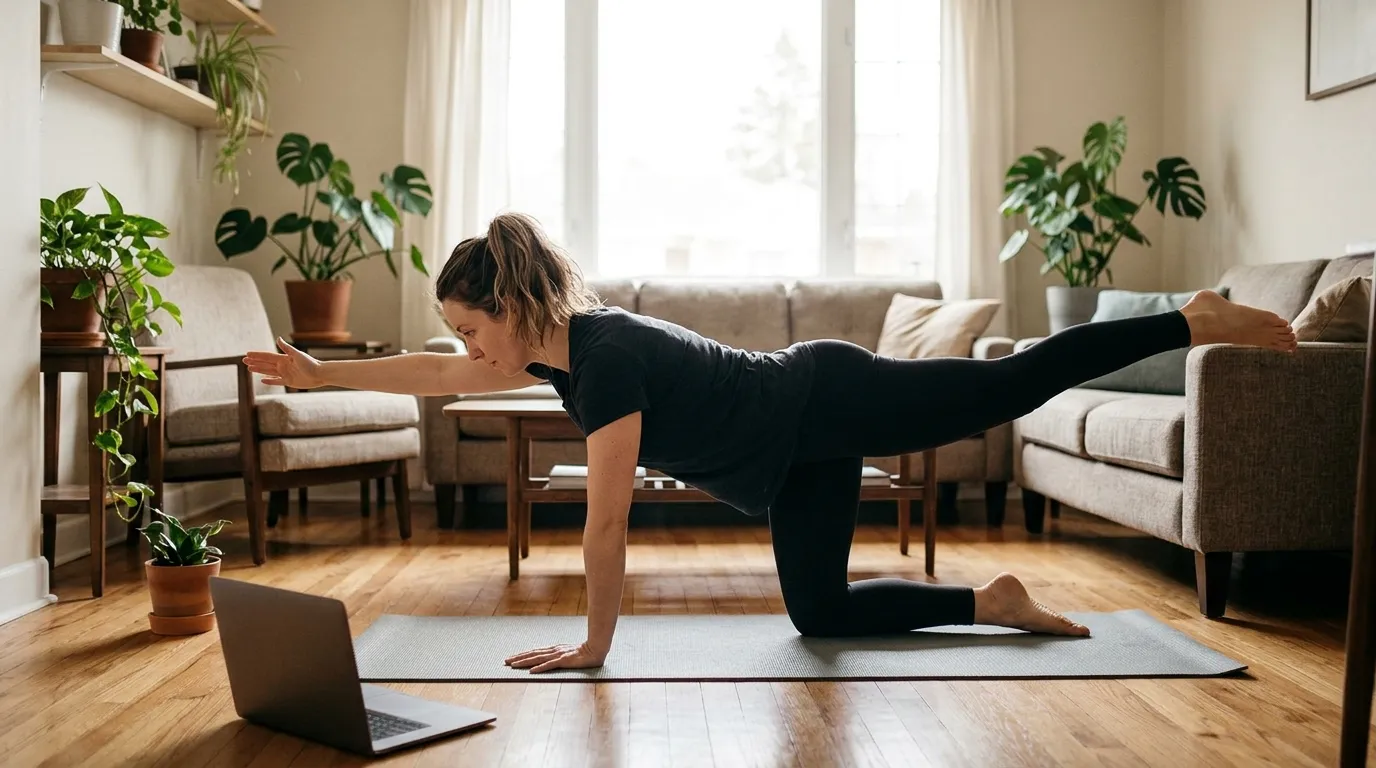
Getting started with exercise does not have to mean joining an expensive gym, buying workout equipment, or following a complicated fitness routine. With the right exercises and a little consistency, you can build an effective workout routine from the comfort of your home.
For many women, working out at home is a convenient way to stay active while managing work, family responsibilities, studies and other daily activities. You can exercise at your own pace, choose movements that match your fitness level and gradually build confidence without feeling pressured.
If you are new to exercise, starting with simple bodyweight movements is an excellent way to develop strength, improve flexibility, support cardiovascular health and build better movement habits. Exercises such as squats, wall push-ups, glute bridges and marching in place require little space and no special equipment.
The key is to choose beginner-friendly movements, use proper form, allow enough time for recovery and create a routine that fits your lifestyle. This guide explores practical home workouts for women, including easy exercises, weekly workout ideas and helpful tips for staying consistent without using equipment.
Understanding the Benefits of Home Workouts
Home workouts offer a convenient way to incorporate physical activity into your everyday routine. You do not need a gym membership or complicated equipment to perform exercises that strengthen your muscles and improve your overall fitness.
Bodyweight exercises use your own body as resistance, helping you develop strength, coordination, balance and mobility.
Improve Overall Strength
Strength-building exercises help your muscles work against resistance. Movements such as squats, lunges, push-ups and planks can strengthen different muscle groups.
For beginners, bodyweight exercises provide an opportunity to learn basic movement patterns before progressing to more challenging variations.
Regular strength training can also support everyday activities, including climbing stairs, carrying groceries, lifting objects and maintaining good posture.
Support Heart Health
Cardiovascular exercise increases your heart rate and encourages your body to use oxygen more efficiently.
Activities such as marching in place, step touches, dancing and low-impact jumping movements can help improve cardiovascular fitness.
You can begin with short sessions and gradually increase the duration as your stamina improves.
Improve Flexibility and Mobility
Stretching and mobility exercises help you move your joints through comfortable ranges of motion.
Gentle movements such as arm circles, shoulder rolls, hip circles and hamstring stretches can help prepare your body for exercise and improve movement comfort.
Including mobility exercises in your routine can also make everyday movements feel more comfortable.
Build Confidence and Consistency
Working out at home allows you to exercise in a familiar environment without worrying about crowded fitness spaces or complicated gym routines.
You can choose a convenient time, wear comfortable clothing and adjust the difficulty of each movement.
Starting with manageable sessions can help you develop confidence and make physical activity a regular part of your lifestyle.
Prepare Your Body Before Exercising
Before beginning any workout, it is important to prepare your muscles and joints with a short warm-up.
A warm-up gradually increases your heart rate, improves circulation and helps your body transition from resting to more active movements.
Start With Marching in Place
Marching in place is a simple way to increase your activity level before starting more demanding exercises.
Stand upright with your feet approximately hip-width apart. Begin lifting one knee at a time while moving your arms naturally.
Keep your movements controlled and maintain a comfortable rhythm.
Start with 30–60 seconds of marching. If you are completely new to exercise, begin slowly and increase the duration as you become more comfortable.
Include Arm Circles
Arm circles help prepare your shoulders and upper body for movements such as push-ups and planks.
Stand comfortably with your feet apart and extend your arms out to the sides.
Make small circles with both arms, gradually increasing their size if the movement feels comfortable.
Continue for approximately 20–30 seconds, then reverse the direction.
Avoid forcing your shoulders into uncomfortable positions.
Perform Gentle Leg Swings
Leg swings can help prepare your hips and lower body for exercises such as squats and lunges.
Stand beside a sturdy wall or chair for support. Gently swing one leg forward and backward while keeping your upper body stable.
Perform several controlled repetitions before switching legs.
Keep the movement comfortable rather than trying to swing your leg as high as possible.
Try Shoulder Rolls
Shoulder rolls are an easy warm-up movement that helps loosen the shoulders and upper back.
Stand naturally with your arms relaxed beside your body.
Slowly roll your shoulders forward, upward, backward and downward.
Repeat several times, then reverse the direction.
This gentle movement is especially useful if you spend long periods sitting at a desk or using a computer.
Beginner-Friendly Lower Body Exercises
Lower-body exercises target the muscles in your thighs, hips, glutes and legs. They can help improve strength, balance and stability while supporting everyday movements.
You can perform many effective lower-body exercises without weights or resistance bands.
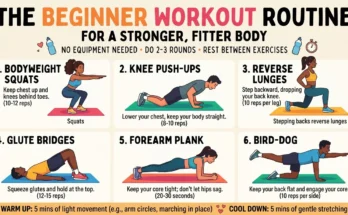
Bodyweight Squats
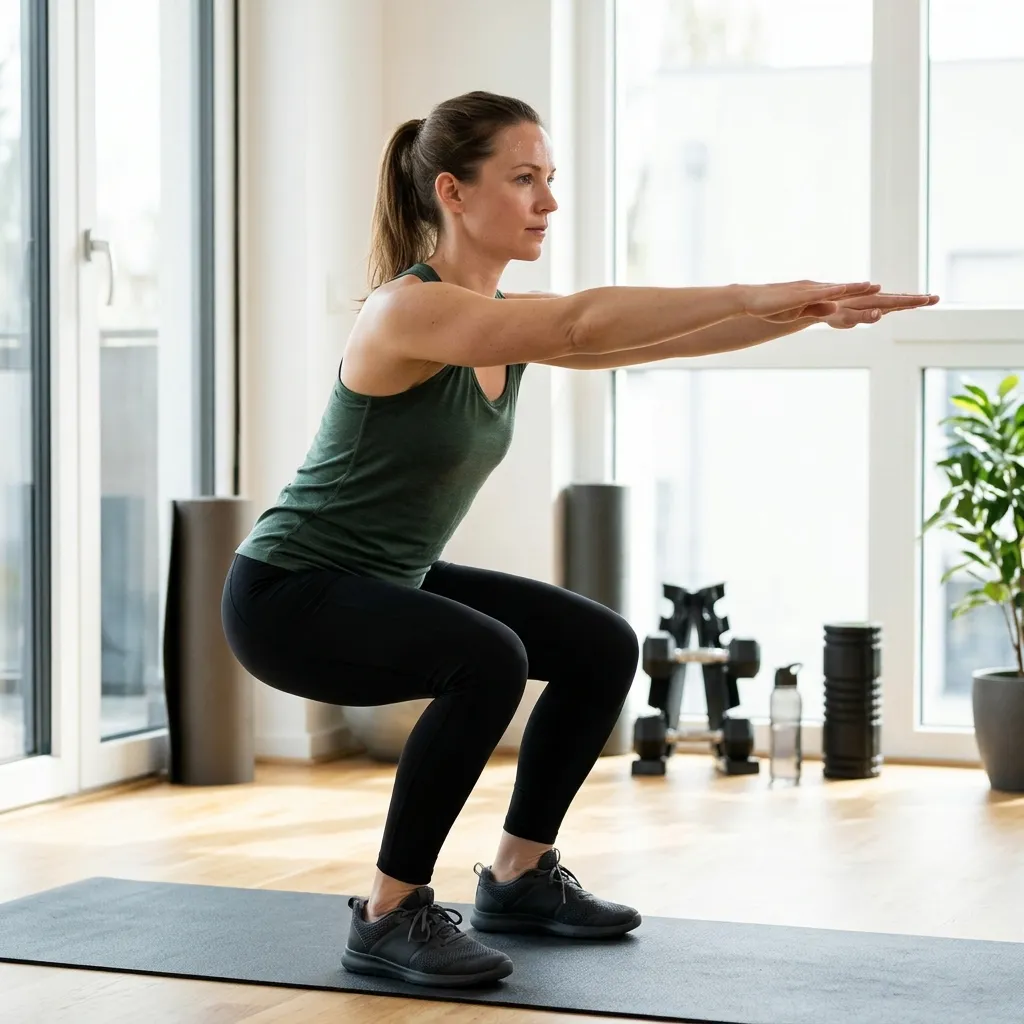
Bodyweight squats are one of the most useful beginner exercises because they work several lower-body muscle groups at the same time.
They primarily strengthen the quadriceps, glutes and hamstrings while encouraging better lower-body coordination.
Stand with your feet approximately shoulder-width apart and your toes pointing slightly outward.
Bend your knees and push your hips backward as though you are sitting on an imaginary chair. Lower yourself only as far as you can comfortably manage while keeping your chest lifted.
Press through your feet to return to the standing position.
Start with 8–10 repetitions and gradually increase the number as your technique improves.
If regular squats feel difficult, try sitting down onto a sturdy chair and standing back up.
Reverse Lunges
Reverse lunges help strengthen your glutes, thighs and supporting leg muscles.
They also encourage balance and coordination, making them a useful addition to a beginner workout.
Stand upright with your feet hip-width apart.
Step one foot backward and gently bend both knees. Lower your body while keeping your front foot stable and your torso upright.
Push through your front foot to return to the starting position.
Repeat with the opposite leg.
Begin with 6–8 repetitions on each side. Hold onto a sturdy chair or wall if you need additional support.
Glute Bridges
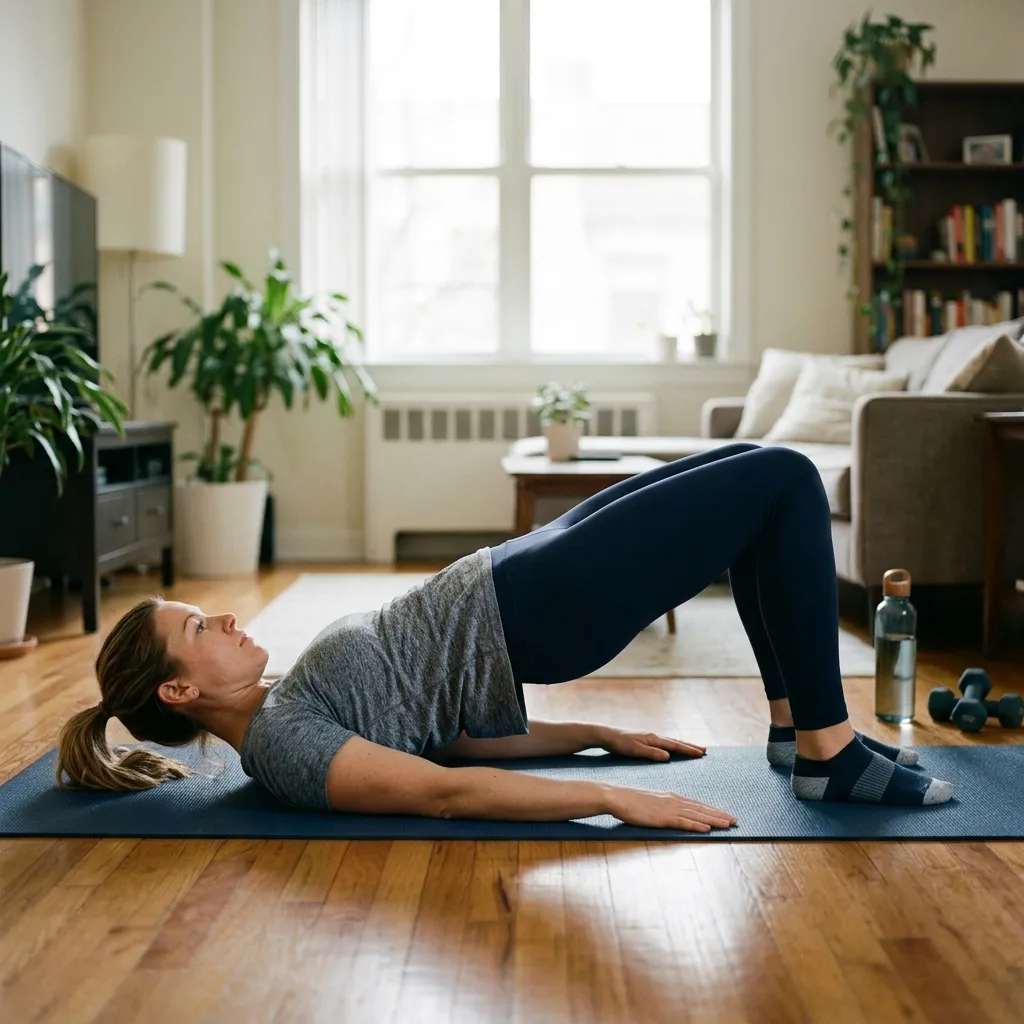
Glute bridges primarily target the gluteal muscles while also engaging the hamstrings and core.
Lie on your back with your knees bent and your feet flat on the floor. Keep your arms relaxed beside your body.
Gently tighten your abdominal muscles and press through your heels to lift your hips.
Raise your hips until your body forms a comfortable diagonal line from your shoulders to your knees.
Pause briefly, then slowly lower your hips.
Try 10–12 repetitions while maintaining controlled movements.
Avoid arching your lower back excessively when lifting your hips.
Standing Calf Raises
Standing calf raises strengthen the muscles at the back of your lower legs.
Stand upright with your feet hip-width apart. Place your hands against a wall or sturdy chair if you need support.
Slowly lift your heels until you are standing on the balls of your feet.
Pause briefly at the top, then lower your heels back to the floor.
Repeat 12–15 times.
Keep your movements slow and controlled instead of bouncing quickly.
Side Leg Raises
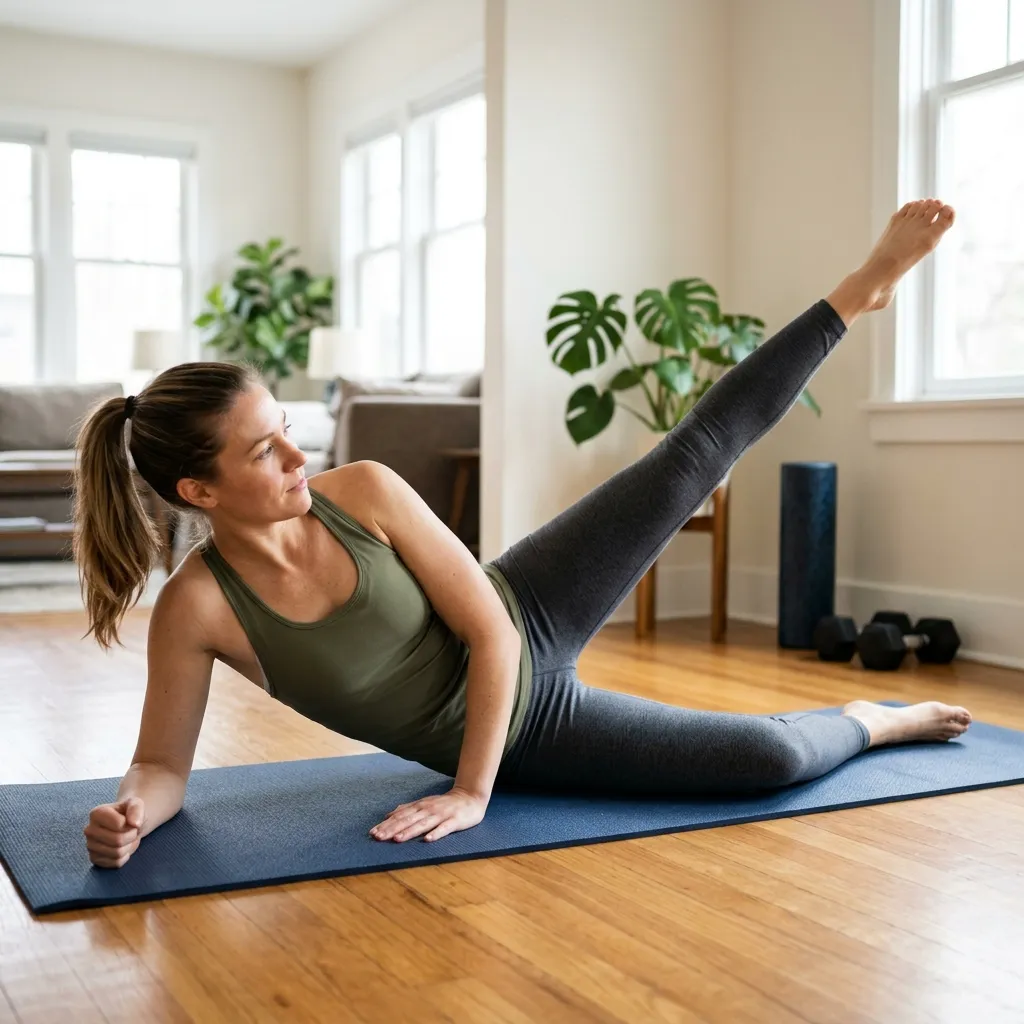
Side leg raises work the muscles around your hips, particularly the muscles responsible for supporting your pelvis during movement.
Lie on one side with your legs extended and your body aligned comfortably.
Keep your upper leg straight and slowly lift it upward without rotating your hips.
Lower it gradually and repeat.
Perform 10–12 repetitions before switching sides.
If lying on the floor is uncomfortable, you can perform a standing variation while holding a sturdy chair.
Beginner-Friendly Upper Body Exercises
Upper-body exercises help strengthen your shoulders, chest, arms and back. These movements can support better posture and make everyday activities easier.
You can start with simple variations that use your body weight or a wall for support.
Wall Push-Ups
Wall push-ups are an excellent alternative to traditional push-ups for beginners.
They strengthen the chest, shoulders and triceps while allowing you to control the amount of resistance.
Stand facing a wall and place your palms against it slightly wider than shoulder-width apart.
Take a small step backward so your body forms a gentle diagonal line.
Bend your elbows and slowly bring your chest toward the wall.
Push through your palms to return to the starting position.
Start with 8–12 repetitions.
Keep your body aligned and avoid allowing your hips to drop forward.
Arm Circles
Arm circles are a simple exercise for activating your shoulder muscles without equipment.
Stand upright and extend both arms out to the sides at shoulder height.
Make small forward circles for approximately 15–20 seconds.
Reverse the direction and repeat.
Keep your shoulders relaxed and avoid raising them toward your ears.
You can gradually increase the circle size or duration as your endurance improves.
Modified Knee Push-Ups
Modified knee push-ups are a beginner-friendly progression toward traditional push-ups.
Start on your hands and knees with your hands slightly wider than shoulder-width apart.
Move your knees backward slightly and keep your body aligned from your shoulders to your knees.
Bend your elbows to lower your chest toward the floor.
Push through your hands to return to the starting position.
Begin with 5–8 controlled repetitions.
If this variation feels too difficult, continue practicing wall push-ups until you develop more upper-body strength.
Superman Exercise
The Superman exercise targets muscles along your back and helps develop coordination between your upper and lower body.
Lie face down on a comfortable exercise mat with your arms extended forward.
Gently lift one arm and the opposite leg while keeping your neck in a neutral position.
Lower them slowly and repeat on the other side.
You can also lift both arms and legs slightly if you can maintain comfortable control.
Start with 6–8 repetitions on each side.
Avoid lifting too high or forcing your lower back into an uncomfortable position.
Beginner-Friendly Core Exercises
Core exercises strengthen the muscles around your abdomen, back and pelvis. These muscles help stabilize your body during movement and support balance and posture.
You do not need advanced abdominal exercises to build a stronger core. Simple movements performed with proper technique can be an effective starting point.
Forearm Plank
The forearm plank is a popular core exercise that activates several muscles responsible for stabilizing your body.
Start by lying face down on a mat.
Place your forearms on the floor with your elbows positioned approximately beneath your shoulders.
Lift your body so your weight is supported by your forearms and toes.
Keep your abdomen engaged and your body aligned.
For beginners, holding the position for 10–15 seconds may be enough.
You can also perform a modified plank with your knees resting on the floor.
Focus on maintaining proper form instead of trying to hold the position for as long as possible.
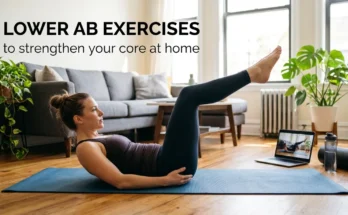
Dead Bug Exercise
The dead bug exercise helps develop core stability and coordination.
Lie on your back with your arms extended toward the ceiling and your knees bent at approximately 90 degrees.
Slowly extend your right arm backward and your left leg forward while keeping your lower back comfortably supported.
Return to the starting position and repeat with the opposite arm and leg.
Perform 8–10 controlled repetitions on each side.
Move slowly and avoid allowing your lower back to arch excessively.
Bird Dog Exercise
Bird dogs help strengthen the core while improving balance and coordination.
Begin on your hands and knees with your hands beneath your shoulders and your knees beneath your hips.
Extend your right arm forward while extending your left leg backward.
Keep your hips level and avoid rotating your body.
Hold briefly, then return to the starting position.
Repeat with the opposite arm and leg.
Start with 8 repetitions on each side.
Standing Knee Raises
Standing knee raises are an accessible way to activate your abdominal muscles while working on balance.
Stand upright with your feet hip-width apart.
Slowly lift one knee toward your waist while maintaining an upright posture.
Lower your foot and repeat with the opposite leg.
Continue alternating sides for 30–45 seconds.
Keep your movements controlled and use a wall for support if needed.
Low-Impact Cardio Exercises for Beginners
Cardiovascular exercise helps improve heart and lung fitness while increasing your daily movement.
Low-impact exercises are particularly useful for beginners who prefer movements without jumping.
You can combine several activities to create a simple cardio routine at home.
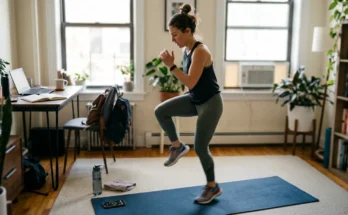
Marching in Place
7 Simple Exercises to Do at Home Without Equipment
Marching in place is a convenient cardiovascular exercise that requires very little space.
Stand comfortably and begin lifting your knees one at a time.
Move your arms naturally and maintain a steady rhythm.
Start with 30–60 seconds and increase the duration as your stamina improves.
You can make the movement slightly more challenging by lifting your knees higher while maintaining control.
Step Touches
Step touches are simple side-to-side movements that help increase your heart rate.
Stand with your feet together.
Step your right foot out to the side and bring your left foot toward it.
Repeat in the opposite direction.
Continue alternating sides while gently moving your arms.
Perform the movement for 45–60 seconds.
This exercise is especially suitable for beginners because you can easily adjust the speed.
Standing Knee Drives
Standing knee drives add a little more intensity to a basic marching movement.
Stand upright and lift your right knee toward your chest while bringing your left arm forward.
Lower your leg and repeat on the opposite side.
Continue alternating sides at a comfortable pace.
Start with 30 seconds and gradually increase the duration.
Avoid leaning backward or rushing through the movement.
Low-Impact Jumping Jacks
Low-impact jumping jacks are a beginner-friendly alternative to traditional jumping jacks.
Stand with your feet together and your arms relaxed.
Step your right foot out to the side while raising your arms overhead.
Return to the starting position and repeat with your left foot.
Continue alternating sides.
Try 30–45 seconds of movement.
Keep one foot on the floor at all times to avoid the jumping impact of traditional jumping jacks.
Stretching Exercises After Your Workout
Stretching after exercise can help you gradually transition back to a resting state and maintain comfortable movement.
Choose gentle stretches and avoid forcing your body into positions that cause pain.
Standing Hamstring Stretch
The hamstring stretch targets the muscles along the back of your thighs.
Stand upright and place one foot slightly in front of the other.
Keep your front leg relatively straight and gently bend your back knee.
Move your hips backward while keeping your back comfortably aligned.
You should feel a gentle stretch behind your front thigh.
Hold for approximately 15–20 seconds before switching sides.
Standing Quadriceps Stretch
This stretch focuses on the muscles at the front of your thighs.
Stand upright and hold a wall or sturdy chair for balance.
Bend one knee and gently bring your heel toward your glutes.
Hold your ankle only if you can reach it comfortably.
Keep your knees close together and avoid arching your lower back.
Hold for 15–20 seconds before changing legs.
Child’s Pose
Child’s pose is a gentle resting position that can help stretch your back and hips.
Begin on your hands and knees.
Slowly move your hips toward your heels while extending your arms forward.
Rest your forehead toward the mat if comfortable.
Breathe naturally and remain in the position for approximately 20–30 seconds.
You can place a cushion between your thighs and calves if your knees need additional support.
Chest and Shoulder Stretch
This stretch can help relax the muscles around your chest and shoulders.
Stand upright and gently bring your hands behind your back.
If comfortable, hold your hands together and slowly move your shoulders backward.
Keep your chest open without forcing your arms into a painful position.
Hold for 15–20 seconds while breathing normally.
Create a Simple Weekly Home Workout Routine
Having a weekly workout schedule can make it easier to stay organized and maintain consistency.
Beginners do not need to exercise intensely every day. A balanced routine should include strength exercises, cardiovascular activity, mobility work and adequate recovery.
Here is an example of a beginner-friendly weekly schedule that requires no exercise equipment.
| Day | Workout focus | Suggested duration |
|---|---|---|
| Monday | Full-body strength | 20 minutes |
| Tuesday | Low-impact cardio | 15–20 minutes |
| Wednesday | Gentle stretching and walking | 15–20 minutes |
| Thursday | Lower-body exercises | 15–20 minutes |
| Friday | Upper body and core | 15–20 minutes |
| Saturday | Light cardio or dancing | 15–25 minutes |
| Sunday | Rest and recovery | As needed |
Adjust the schedule according to your fitness level, energy and available time. You can begin with fewer sessions if you are completely new to exercise.
Monday: Full-Body Workout
A full-body workout combines movements that target different muscle groups.
Try including:
- 10 bodyweight squats.
- 8 wall push-ups.
- 10 glute bridges.
- 20 seconds of marching in place.
- 8 bird dogs on each side.
Perform one round initially. If the exercises feel comfortable, gradually work toward two rounds.
Take short breaks whenever necessary.
Tuesday: Low-Impact Cardio
Choose simple movements that increase your heart rate without requiring jumping.
Your routine can include:
- Marching in place for 1 minute.
- Step touches for 1 minute.
- Standing knee raises for 30 seconds.
- Low-impact jumping jacks for 30 seconds.
- Gentle walking around your home for 1 minute.
Repeat the sequence if you feel comfortable.
Wednesday: Recovery and Mobility
Use this day to focus on gentle movement rather than intense exercise.
You can include:
- Shoulder rolls.
- Arm circles.
- Standing hamstring stretches.
- Gentle hip circles.
- Comfortable walking.
Recovery days are important because your muscles need time to adapt to exercise.
Thursday: Lower-Body Workout
Focus on movements that strengthen your thighs, glutes and hips.
Include:
- 10 bodyweight squats.
- 8 reverse lunges on each side.
- 12 glute bridges.
- 12 standing calf raises.
- 10 side leg raises on each side.
Complete one round and increase gradually when the movements become easier.
Friday: Upper Body and Core
Combine simple upper-body and core exercises to develop strength and stability.
Your workout can include:
- 10 wall push-ups.
- 20 seconds of arm circles.
- 8 modified knee push-ups, if comfortable.
- 10 dead bug repetitions on each side.
- 20 seconds of a modified plank.
Focus on controlled movements rather than speed.
Saturday: Fun Cardio Activities
Your Saturday workout can be more flexible and enjoyable.
Try dancing to your favorite music, walking around your neighborhood, or performing a short low-impact cardio routine.
Choose an activity you enjoy so that staying active does not feel like another daily responsibility.
Sunday: Rest and Recovery
A rest day allows your body to recover from the week’s activities.
You can enjoy normal daily movement, take a gentle walk, or spend time relaxing.
If you feel particularly tired or experience muscle soreness, give yourself additional recovery time.
Tips for Making Home Workouts More Effective
A successful workout routine is not simply about performing more exercises. Proper technique, consistency, recovery and realistic expectations all contribute to better results.
A few practical habits can make your home workouts more comfortable and productive.
Focus on Proper Exercise Form
Correct technique is more important than completing a large number of repetitions.
Start with slow movements and learn how each exercise should feel.
For example, during squats, keep your feet stable and avoid allowing your knees to collapse inward. During push-ups, maintain a comfortable body position instead of letting your hips drop.
If you are unsure about an exercise, begin with an easier variation.
Start With Short Workout Sessions
You do not need to spend an hour exercising to build a regular fitness habit.
Short sessions can be a practical starting point for beginners.
Begin with approximately 10–15 minutes of activity and gradually increase the duration as your fitness improves.
The most important thing is to choose a routine that fits your current abilities.
Increase Difficulty Gradually
Once an exercise becomes comfortable, you can make small adjustments to challenge your muscles.
For example, you might increase the number of repetitions, add another round, slow down the movement, or choose a slightly more challenging variation.
Avoid increasing the intensity, duration and frequency all at once.
Gradual progression gives your body time to adapt.
Stay Hydrated
Water supports normal body functions and helps maintain fluid balance during physical activity.
Drink water regularly throughout the day and pay attention to your thirst, especially when exercising in warm weather.
You do not need expensive sports drinks for ordinary beginner workouts.
Wear Comfortable Clothing
Choose clothing that allows you to move freely without restricting your joints.
Wear supportive footwear when appropriate, particularly for standing cardio exercises.
If you exercise on the floor, use a comfortable exercise mat or another stable, nonslip surface.
Make sure the workout area is free from furniture, loose objects and other obstacles.
Common Home Workout Mistakes to Avoid
Starting an exercise routine can involve a learning process. However, avoiding a few common mistakes can make your workouts safer and easier to maintain.
Exercising Without Warming Up
Going directly into challenging exercises without preparing your body can make movement feel uncomfortable.
A short warm-up helps gradually increase your activity level and prepare your muscles and joints.
Spend approximately 5 minutes performing gentle movements before beginning your main workout.
Doing Too Much Too Soon
Many beginners feel motivated to exercise every day or complete demanding workouts immediately.
However, suddenly increasing exercise intensity can lead to excessive soreness, fatigue, or injury.
Start with manageable sessions and allow your body enough time to recover.
Consistency is more valuable than pushing yourself beyond your current ability.
Ignoring Proper Technique
Rushing through exercises can make it difficult to maintain good form.
For example, lowering too quickly during squats or allowing your back to arch excessively during core exercises may cause discomfort.
Slow down, focus on your positioning and choose easier variations when necessary.
Skipping Recovery Days
Muscles need time to recover after challenging exercise sessions.
Training the same muscle groups intensely every day can make it difficult to maintain a comfortable routine.
Include lighter activity and rest days throughout your week.
Comparing Your Progress With Others
Every person begins with a different fitness level, movement ability and exercise background.
Some women may find squats or push-ups easy, while others need several weeks of practice to perform them comfortably.
Avoid comparing your repetitions, workout duration, or strength with someone else’s.
Focus on improving your own movement quality and consistency.
How to Stay Motivated With Home Workouts
Building a regular exercise habit can be challenging, especially when you have a busy schedule or limited motivation.
The best way to stay consistent is to make your routine simple, flexible and enjoyable.
Set Realistic Fitness Goals
Choose goals that focus on building healthy habits rather than achieving unrealistic results.
For example, you might aim to complete three beginner workouts each week or practice a particular exercise with better technique.
Small goals are easier to monitor and can help you recognize your progress.
Choose Exercises You Enjoy
You are more likely to continue exercising when your routine includes activities you genuinely like.
If you dislike traditional workouts, try dancing, walking, gentle yoga, or simple bodyweight movements.
There is no single exercise routine that everyone needs to follow.
Schedule Your Workouts
Choose a convenient time for physical activity and include it in your daily schedule.
Some people prefer exercising in the morning, while others find it easier to work out in the afternoon or evening.
The best time is the one that allows you to exercise comfortably and consistently.
Track Your Progress
Keeping a simple workout record can help you notice improvements over time.
You can record:
- The exercises you completed.
- How many repetitions you performed.
- How long you exercised.
- Which movements felt easier.
- How your energy and stamina changed.
You do not need to track every detail. A simple record can be enough to help you stay organized.
Celebrate Small Improvements
Progress does not always mean performing more repetitions or completing longer workouts.
You might notice that your balance has improved, your movements feel smoother, or you can complete a routine with fewer breaks.
Recognizing these improvements can help you maintain a positive relationship with exercise.
Safety Tips for Women Starting Home Workouts
Exercise can support physical and mental well-being, but it is important to choose activities that match your individual needs and abilities.
A beginner-friendly routine should challenge your body without causing unnecessary discomfort.
Listen to Your Body
Mild muscle tiredness can occur when you begin exercising, but sharp pain should never be ignored.
If an exercise causes pain, stop and consider whether you need an easier variation or professional guidance.
Do not force your body to continue when you feel unwell.
Choose Exercises That Match Your Fitness Level
You do not need to perform advanced exercises to benefit from physical activity.
Start with wall push-ups instead of full push-ups, supported lunges instead of unsupported variations and modified planks instead of demanding holds.
Gradually increase difficulty as your strength and coordination improve.
Allow Enough Recovery Time
Avoid performing intense workouts for the same muscle groups every day.
Include lighter sessions and rest days to support recovery.
Adequate sleep, balanced meals and regular hydration are also important parts of an exercise routine.
Seek Professional Guidance When Needed
If you have a chronic medical condition, an injury, significant joint pain, or another health concern, consult a qualified healthcare professional before beginning a new exercise program.
Women who are pregnant or recently gave birth may also need exercises adapted to their individual circumstances.
If you experience chest pain, fainting, severe dizziness, or unusual shortness of breath during exercise, stop and seek appropriate medical attention.
Frequently Asked Questions
Can beginners exercise at home without equipment?
Yes. Beginners can perform many effective exercises at home without equipment. Bodyweight squats, wall push-ups, glute bridges, standing knee raises and modified planks are simple options that can help develop strength, balance and coordination.
How many days a week should women work out at home?
The appropriate number of workout days depends on your fitness level, health, and recovery needs. Beginners can start with two or three structured sessions per week and gradually increase their activity. Include lighter movement and recovery days between challenging workouts.
What is the easiest home workout for beginners?
A simple beginner routine can include marching in place, chair squats, wall push-ups, glute bridges and gentle stretching. These exercises require little space and can be adjusted according to your abilities.
Can I build strength with bodyweight exercises?
Yes. Bodyweight exercises use your own body as resistance and can help develop muscular strength and endurance. Movements such as squats, push-ups, lunges and planks can become more challenging through gradual progressions.
How long should a beginner home workout last?
A beginner workout can last approximately 10–20 minutes, depending on your fitness level and the exercises you choose. Start with a duration that feels manageable and gradually increase it as your stamina improves.
Do I need to warm up before home workouts?
Yes. A short warm-up is recommended before exercise. Gentle marching, arm circles, shoulder rolls and controlled leg movements can help prepare your body for more active exercises.
Can I do home workouts every day?
You can include gentle physical activity in your daily routine, but intense workouts are not necessary every day. Alternate strength training with lighter activities and allow your muscles enough time to recover.
What should I wear for home workouts?
Choose comfortable clothing that allows you to move freely. Supportive footwear may be helpful for standing exercises and cardio activities, while a stable exercise mat can make floor movements more comfortable.
Are low-impact workouts suitable for beginners?
Low-impact workouts can be an excellent starting point for many beginners. Activities such as walking, marching in place, step touches and modified jumping jacks provide movement without requiring repeated jumping. Choose exercises that feel comfortable for your body.
How can I stay consistent with home workouts?
Create a realistic weekly schedule, choose exercises you enjoy and start with short sessions. Tracking your workouts and recognizing small improvements can also help you maintain motivation over time.
Conclusion
Starting a home workout routine does not require expensive equipment, complicated exercises, or hours of exercise every day. Simple movements such as squats, wall push-ups, glute bridges, planks and low-impact cardio can help you build strength, improve mobility and support overall fitness.
The most important part of creating an effective routine is choosing exercises that match your current abilities and gradually increasing the difficulty as you become more comfortable. Combining strength training, cardiovascular activity, stretching and adequate recovery can help you develop a balanced approach to physical activity.
Remember that progress looks different for everyone. Some women may improve their stamina quickly, while others need more time to develop strength and confidence. Avoid comparing your routine with others and focus on building habits that fit your everyday life.
With patience, consistency and proper exercise technique, Home Workouts for Women can become a convenient and enjoyable way to stay active, develop strength and support long-term well-being without needing a gym or special equipment.

One Comment on “Home Workouts for Women: Beginner-Friendly Exercises Without Equipment”