
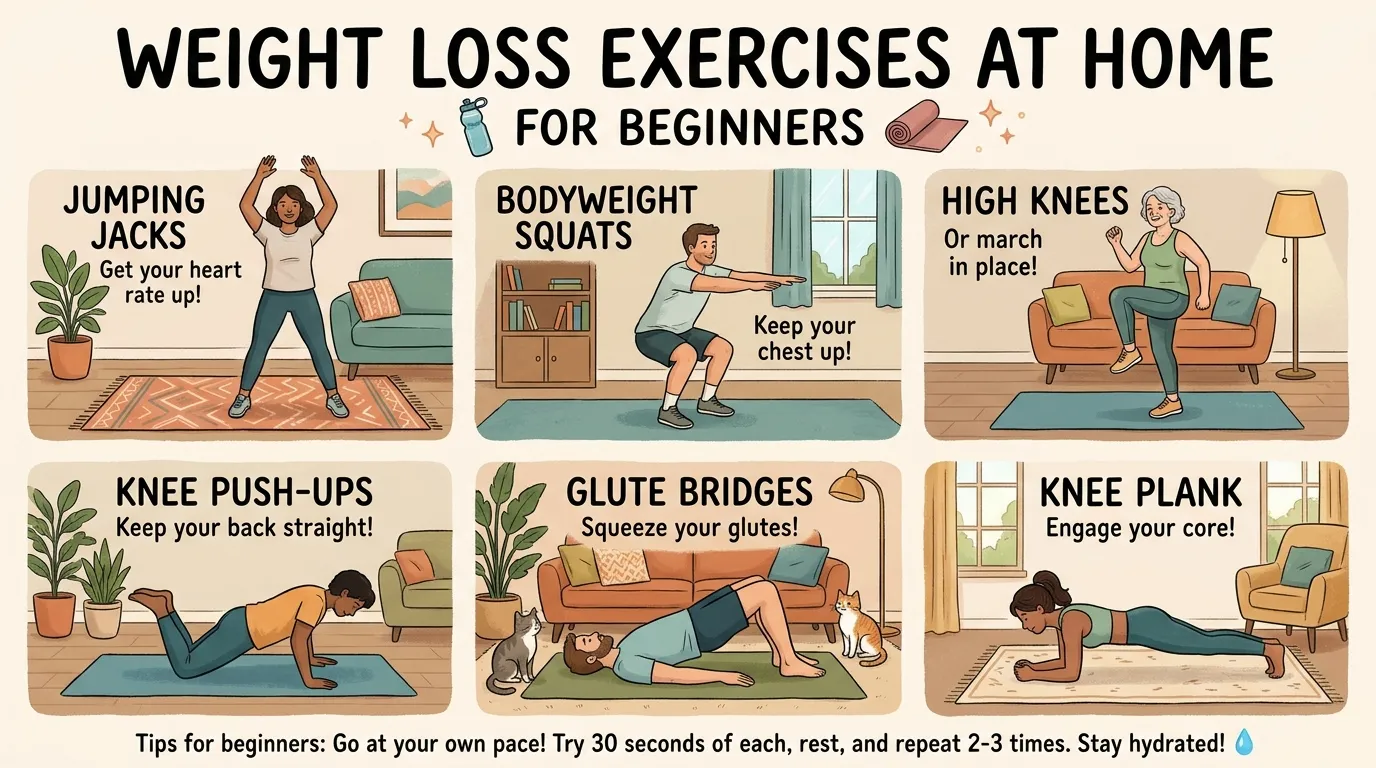
Getting started with exercise can feel difficult when you have a busy schedule, limited money for gym memberships, or no access to fitness equipment. The good news is that you can build an effective exercise routine at home with simple movements, a little space and a plan that fits your current fitness level.
Weight loss exercises at home can help you become more active, improve cardiovascular fitness, strengthen your muscles and support long-term weight management. You do not need expensive equipment or intense daily workouts to begin. Simple activities such as walking in place, squats, wall push-ups and dancing can help you develop a consistent routine.
Exercise is only one part of weight management. Food choices, sleep, stress, health conditions and everyday activity also influence your results. The aim should be to develop habits that support your health rather than trying to burn as many calories as possible in every session.
This guide covers beginner-friendly home exercises, a simple weekly workout schedule, ways to progress safely and common mistakes to avoid. Whether you are returning to exercise after a break or starting for the first time, you can adapt the movements to your abilities and available space.
Can You Lose Weight by Exercising at Home?
Yes. Home workouts can contribute to weight management by increasing physical activity and helping you build or maintain muscle. The results depend on your routine, nutrition, starting fitness level, health and consistency.
Your body uses energy throughout the day, including during rest, walking, household activities and exercise. Regular movement contributes to total energy expenditure. When combined with an appropriate eating pattern, physical activity can help support a calorie deficit that may lead to weight loss.
However, exercise does not guarantee a particular result. A workout’s energy expenditure varies according to body size, intensity, duration, and individual physiology.
Why Home Workouts Can Be Effective
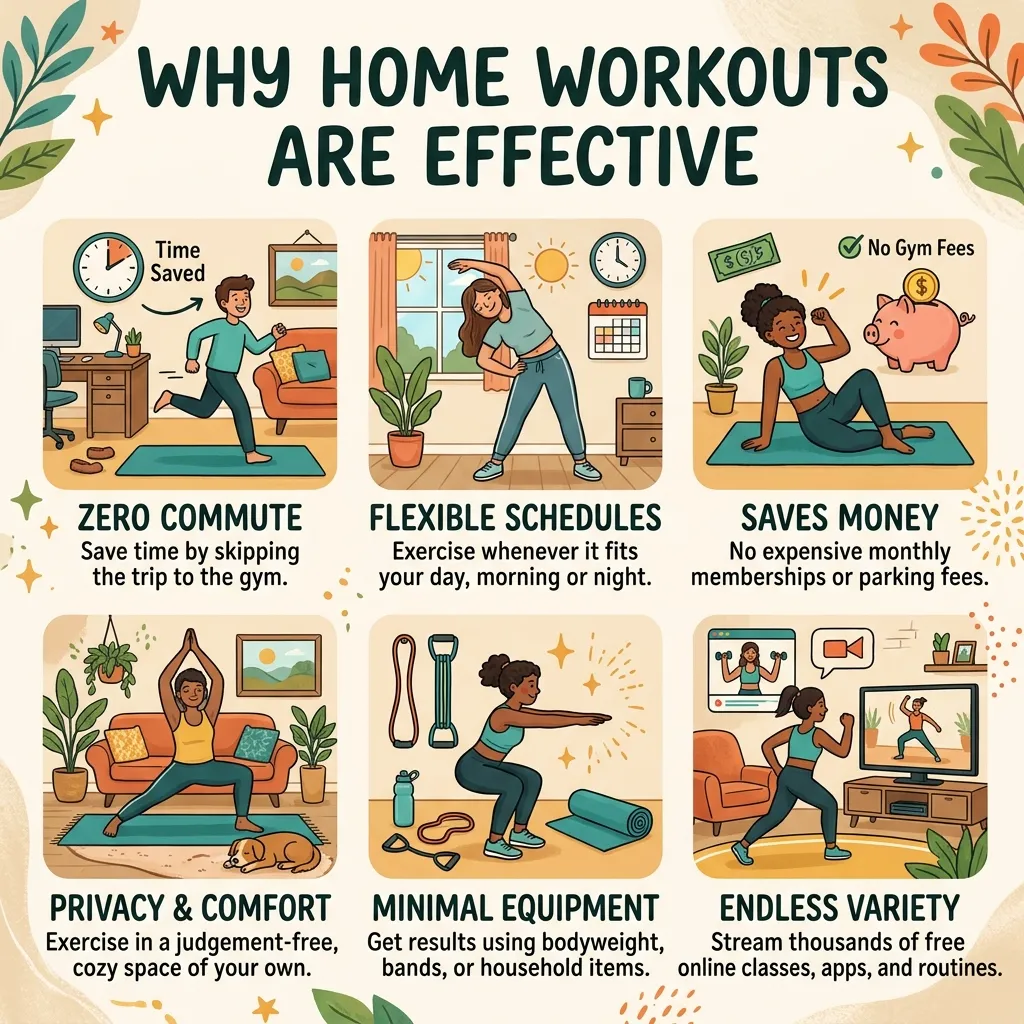
Home workouts offer several practical advantages.
- You can exercise without traveling to a gym.
- You can choose a time that fits your schedule.
- Many exercises require little or no equipment.
- You can start with short sessions and increase gradually.
- You can repeat familiar movements while improving your technique.
Exercising at home may also feel less intimidating for beginners. You can take breaks when needed and adjust the intensity without feeling pressured to keep up with other people.
Do You Need Equipment?
No. Many beginner exercises use body weight as resistance. Squats, wall push-ups, glute bridges, and standing knee raises can all be performed without gym equipment.
A sturdy chair, exercise mat, resistance band, or pair of light weights may offer additional options, but these are not essential for getting started.
Wear comfortable clothing and choose a clear, non-slip surface. If you use furniture for support, make sure it is stable and cannot slide.
Best Weight Loss Exercises at Home
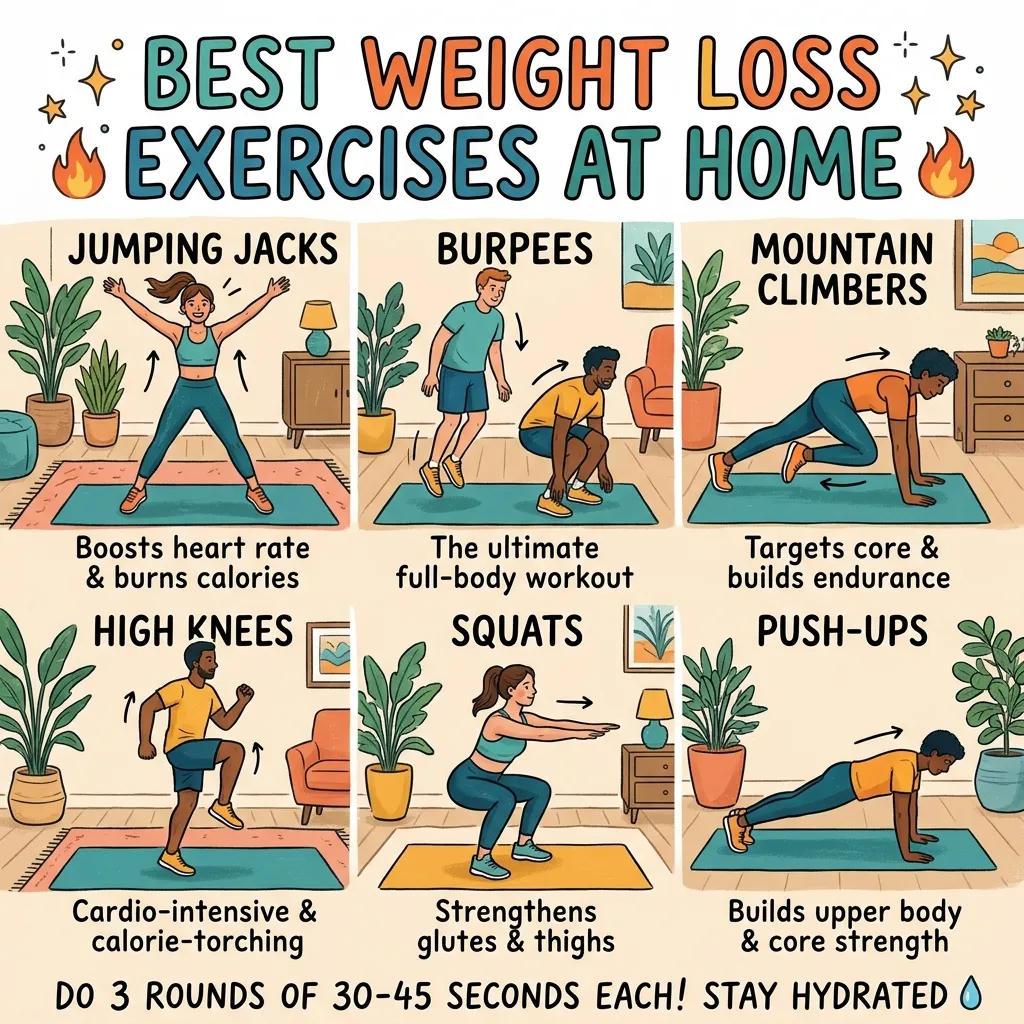
The best exercises are those you can perform safely and repeat consistently. A balanced routine includes cardiovascular activity, strength exercises, and movements that improve mobility.
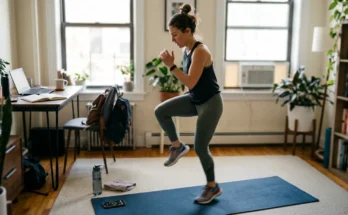
Image placement: Add the feature image or a home workout photograph below this introduction.
Image prompt: A realistic fitness photograph of an adult exercising in a bright, uncluttered living room, performing a bodyweight squat on a yoga mat with enough open space around them, comfortable athletic clothing, natural window light, encouraging beginner-friendly atmosphere, no text, no logos.
Image alt text: Beginner performing a bodyweight exercise at home to support fitness and weight management.
Read More: Weight Loss Diet: How to Build a Healthy Meal Plan
1. Walking in Place
Walking in place is a simple way to warm up or add low-impact cardiovascular activity to your workout.
Stand upright with your feet about hip-width apart. Begin marching gently, lifting each foot and swinging your arms naturally. Keep your movements comfortable and increase your pace only if you can maintain control.
Start with one to three minutes, or less if needed. As your fitness improves, you can extend the duration.
Walking in place is useful for people who want to exercise in a small room or prefer to avoid jumping. If balance is a concern, exercise near a stable support.
2. Bodyweight Squats
Squats work several muscles in the lower body, including the thighs and glutes. They also help develop strength for everyday activities such as sitting down and standing up.
Stand with your feet approximately shoulder-width apart. Push your hips backward and bend your knees as though sitting into a chair. Keep your feet flat and your chest comfortably lifted. Lower only as far as you can manage with good control, then return to standing.
Beginners can start with five to ten repetitions. If a regular squat feels difficult, use a sturdy chair to guide the movement or perform a smaller squat.
Avoid forcing your knees into a position that causes pain. If you have knee, hip, or balance problems, ask a qualified professional about suitable modifications.
3. Wall Push-Ups
Wall push-ups strengthen the chest, shoulders, and arms while placing less demand on the upper body than a floor push-up.
Stand facing a wall and place your hands against it at approximately shoulder height. Step backward until your body forms a comfortable straight line. Bend your elbows to bring your chest toward the wall, then push gently back to the starting position.
Start with five to ten controlled repetitions. Move your feet farther from the wall as the exercise becomes easier, provided you can maintain good technique.
Keep your body aligned instead of allowing your hips to sag. Stop if you experience shoulder or wrist pain.
4. Marching Knee Raises
Marching knee raises increase movement and challenge coordination without requiring jumping.
Stand tall and lift one knee toward your waist as far as is comfortable. Lower it slowly, then repeat with the other leg. Swing your arms naturally and maintain a steady rhythm.
Perform the movement for 20 to 45 seconds, adjusting the duration to your fitness level.
To make it more challenging, increase your pace slightly. To make it easier, keep the knee lift low and use a stable support if necessary.
5. Glute Bridges
Glute bridges strengthen the gluteal muscles and engage the muscles around the hips.
Lie on your back on a comfortable mat with your knees bent and your feet flat on the floor. Keep your arms resting beside your body. Tighten your glutes and lift your hips until your body forms a comfortable line from your shoulders toward your knees.
Pause briefly, then lower your hips with control.
Begin with eight to twelve repetitions if comfortable. Avoid arching your lower back excessively or pushing through pain.
If getting down to the floor or standing back up is difficult, choose standing exercises instead.
6. Standing Side Steps
Side steps provide low-impact movement and can raise your activity level without placing the repeated impact of jumping on your joints.
Stand with your feet together and step to one side. Bring the other foot toward it, then repeat in the opposite direction. Move your arms naturally and maintain control.
Continue for 30 to 60 seconds, resting as needed.
You can increase the pace gradually or add a light squat when stepping to the side. Keep the movement comfortable, especially if you have balance concerns.
7. Step-Ups on a Suitable Step
Step-ups work the muscles of the legs and can provide cardiovascular exercise when performed continuously.
Use a low, stable step designed to support your weight. Step up with one foot, bring the other foot onto the step, then step down carefully. Alternate your leading leg.
Start with a short set and use a handrail or another stable support if appropriate. Avoid unstable stools, chairs, or surfaces that could tip.
If you have knee pain or difficulty with balance, choose walking in place or side steps instead.
8. Low-Impact Jumping Jacks
Traditional jumping jacks involve jumping the feet apart and bringing them together while raising and lowering the arms. They can raise your heart rate, but the impact may not suit every beginner.
A low-impact version removes the jumping. Step one foot out to the side while raising your arms, then return to the starting position. Repeat on the other side.
Continue for 20 to 40 seconds, adjusting the pace as needed.
This modification can make the exercise more accessible while still encouraging movement. There is no requirement to perform high-impact exercise to improve fitness.
9. Dancing at Home
Dancing is an enjoyable way to add cardiovascular activity to your day. Choose music you like and move in a way that feels comfortable.
You can step from side to side, march in place, move your arms, or follow a simple dance routine. Start with a few minutes and increase the duration when you feel ready.
Dancing can also make exercise feel less repetitive. If you have limited mobility, use seated dance movements or gentle upper-body movements as appropriate.
10. Standing Calf Raises
Calf raises strengthen the muscles at the back of your lower legs.
Stand near a wall or sturdy counter for support. Slowly rise onto the balls of your feet, pause briefly and lower your heels to the floor.
Begin with eight to twelve repetitions, maintaining control throughout the movement.
Avoid bouncing or rushing. If you have balance difficulties, keep both hands on a stable support.
A Beginner-Friendly Home Workout Routine
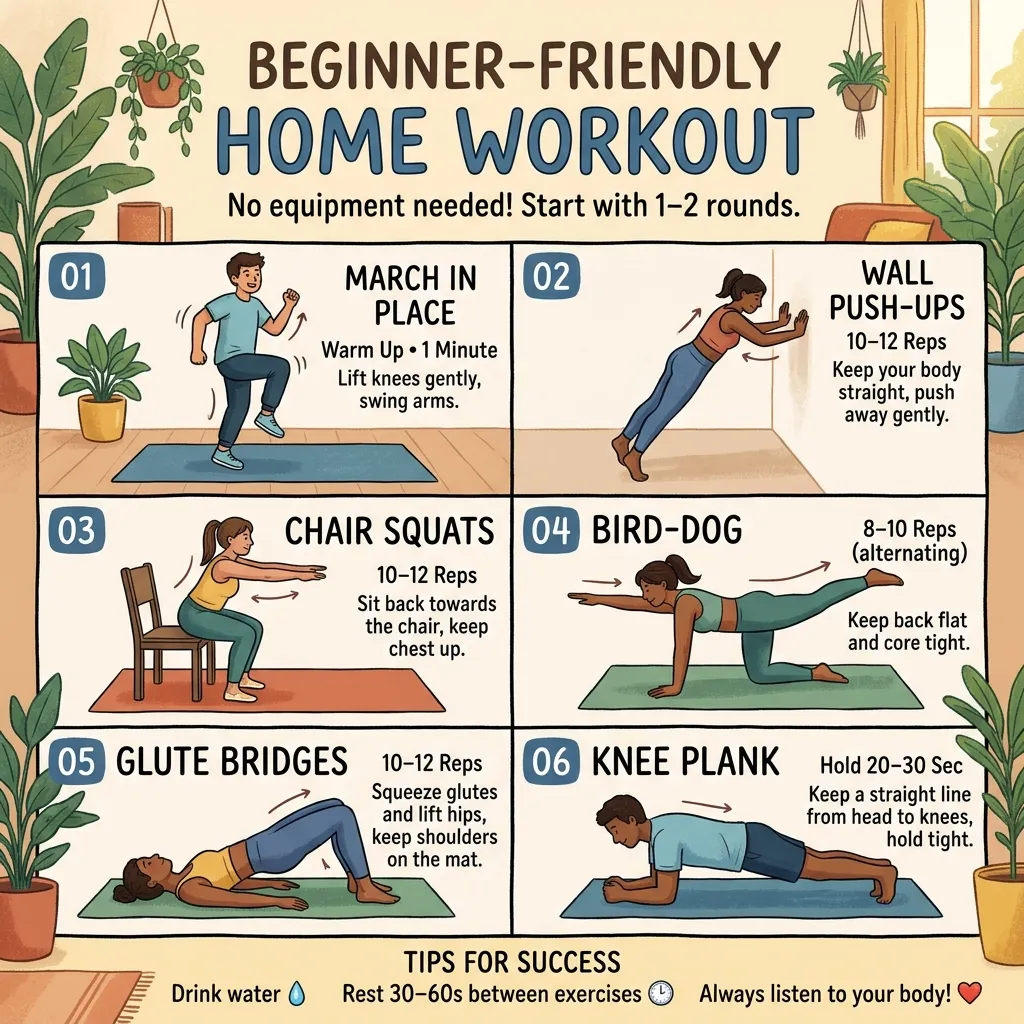
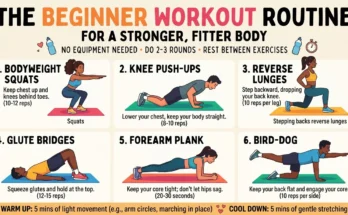
You do not need to perform every exercise in one session. A simple workout can combine a warm-up, several strength movements, and a short period of cardiovascular activity.
Image placement: Use a home exercise routine image here.
Image prompt: A realistic wide-angle lifestyle photograph of an adult following a beginner home workout in a bright living room, with a yoga mat, a sturdy chair and a water bottle nearby, performing a gentle standing exercise, natural daylight, uncluttered background, no text, no logos.
Image alt text: Beginner home workout setup with a mat, chair and space for simple exercises.
A Simple 20-Minute Workout
Use the following routine as a starting point. If you are new to exercise, you can complete fewer movements or shorten the sessions.
| Stage | Exercise | Suggested duration |
|---|---|---|
| Warm-up | Gentle walking in place and shoulder movements | 3 minutes |
| Cardio | Marching knee raises | 1 minute |
| Strength | Bodyweight squats or chair squats | 8 to 10 repetitions |
| Strength | Wall push-ups | 8 to 10 repetitions |
| Cardio | Side steps | 1 minute |
| Strength | Glute bridges or a suitable standing alternative | 8 to 12 repetitions |
| Cardio | Low-impact jumping jacks | 1 minute |
| Recovery | Slow walking and gentle breathing | 2 to 3 minutes |
Rest between exercises as needed. You can repeat the main circuit if it feels manageable, but it is not necessary to do so during your first sessions.
The total time will vary according to rest periods and your pace. Prioritize proper technique over finishing within an exact number of minutes.
How Often Should Beginners Exercise?
Start at a level you can recover from comfortably. You might begin with two or three short home workouts each week and add gentle walking or other enjoyable activity on additional days.
The general public health guideline for adults is to work toward at least 150 minutes of moderate-intensity aerobic activity each week, along with muscle-strengthening activities on two or more days. This is a longer-term target, not a requirement to achieve immediately.
People who are inactive can benefit from starting with smaller amounts and increasing gradually. Some activity is better than none, and the appropriate starting point depends on your health and fitness.
A Weekly Home Workout Schedule
A weekly plan helps you balance exercise and recovery. The following schedule is an example that can be adjusted to your needs.
| Day | Activity |
|---|---|
| Monday | Beginner full-body home workout |
| Tuesday | Comfortable walk or gentle dancing |
| Wednesday | Strength exercises and low-impact cardio |
| Thursday | Rest or gentle mobility exercises |
| Friday | Beginner full-body home workout |
| Saturday | Walking, cycling, or another enjoyable activity |
| Sunday | Rest or light movement |
You can switch the days to fit your routine. If you feel unusually tired or sore, take additional recovery time.
Rest days do not mean you have failed. Recovery is an important part of a sustainable fitness plan.
How to Make Home Workouts More Effective
Progress does not require making every workout harder. Small, consistent improvements can help you build fitness safely.
Increase Duration Gradually
If you currently exercise for five minutes, aim to become comfortable with that duration before increasing it. Add a little time when your body feels ready.
There is no need to jump immediately into long sessions. Gradual progression can make exercise more manageable and reduce the risk of overuse injuries.
Improve Your Technique
Controlled movements are often more useful than fast, poorly controlled repetitions.
Keep your movements smooth, use a comfortable range of motion and pay attention to your posture. If an exercise causes pain, stop and consider an alternative.
Add Resistance When Appropriate
Once bodyweight exercises become comfortable, you may add resistance bands or suitable weights. Household items should only be used if they are secure and easy to hold without slipping.
Increase resistance gradually and avoid lifting more than you can control. If you are unsure how to perform an exercise, seek guidance from a qualified fitness professional.
Combine Cardio and Strength Training
Cardiovascular exercise supports heart and lung fitness, while resistance exercise helps build and maintain muscle. Combining both can provide a broader range of health benefits than focusing on only one type.
Your exact balance depends on your goals, preferences and physical ability.
Make Exercise Enjoyable
Choose activities you genuinely like. If you dislike repetitive circuits, try dancing, walking, or following a beginner-friendly movement video.
You are more likely to maintain a routine that fits your life than one that feels like punishment.
Can You Lose Belly Fat With Home Exercises?
Home workouts can support overall fat loss, but they cannot reliably target fat from a specific area of the body.
Exercises such as crunches and planks strengthen abdominal muscles. They do not guarantee that fat around the waist will be reduced directly.
Where your body stores and loses fat depends on genetics, hormones, age and other individual factors. Changes in body fat occur through overall energy balance rather than choosing a particular exercise for a particular area.
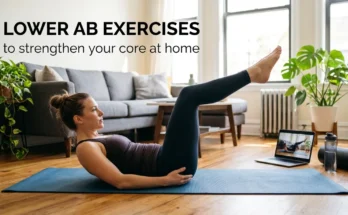
If your goal is to improve your core strength, exercises such as modified planks, bird dogs and controlled abdominal movements may be useful. Choose versions that match your fitness level and do not cause back or neck pain.
What Should You Eat Alongside Home Workouts?
Exercise works best as part of a broader approach to health. You do not need a special diet or expensive supplements to begin.
Image placement: Add a balanced meal photograph after this section’s introduction.
Image prompt: A realistic overhead photograph of a balanced homemade meal featuring grilled chicken or chickpeas, brown rice, colorful vegetables, leafy greens, fresh fruit, and a glass of water, clean kitchen table, natural daylight, no text or logos.
Image alt text: Balanced meal with protein, vegetables, whole grains and fruit to support an active lifestyle.
Include Protein at Meals
Protein supports muscle repair and maintenance. Suitable sources include eggs, chicken, fish, yogurt, beans, lentils, tofu and other foods that match your dietary preferences.
You do not necessarily need protein powders or special fitness products. Most people can obtain protein from ordinary foods, although individual needs vary.
Eat Carbohydrates for Energy
Carbohydrate-containing foods such as oats, rice, potatoes, fruit and whole grains can provide energy for daily activity and exercise.
You do not need to eliminate carbohydrates to lose weight. Choose a variety of foods and portions that support your needs.
Include Vegetables and Fruit
Vegetables and fruit provide fiber, vitamins, minerals and water. Including different colors and varieties can help make your meals more nutritious.
Fresh, frozen and suitable canned options can all be useful.
Drink Enough Water
Drink water regularly throughout the day and pay attention to thirst, especially when exercising in hot weather.
The amount you need varies with temperature, activity, body size and health. You may need more fluids during prolonged exercise or heavy sweating. Do not force excessive amounts of water and follow medical guidance if you have a condition requiring fluid restriction.
Avoid Extreme Dieting
Combining intense exercise with very low food intake can leave you fatigued and may increase the risk of injury, poor recovery and nutritional deficiencies.
Your body needs enough energy to support both daily activities and exercise. Focus on balanced meals and a routine you can maintain rather than trying to get the fastest possible result.
Common Home Workout Mistakes to Avoid
Exercising Too Intensely at the Beginning
Starting with difficult workouts every day can lead to excessive soreness, fatigue and loss of motivation.
Begin with movements you can perform comfortably. Increase the challenge over time rather than trying to match advanced workout videos immediately.
Skipping the Warm-Up
A short warm-up prepares you for movement by gradually increasing activity. Marching in place, gentle side steps and controlled arm movements can be suitable options.
You do not need a complicated warm-up, but avoid going directly from sitting for hours into an intense workout.
Ignoring Pain
Muscle effort and mild temporary soreness can occur with exercise, but sharp pain, chest pain, faintness, or unusual breathlessness should not be ignored.
Stop exercising if concerning symptoms occur. Seek urgent medical care for severe symptoms such as chest pain, fainting, or significant difficulty breathing.
Expecting Immediate Weight Loss
Weight changes depend on many factors, including food intake, hydration, activity and individual physiology. You may become stronger or fitter before you notice a substantial change on the scale.
Measure progress in more than one way. Improved stamina, better movement control and greater consistency are meaningful signs of progress.
Comparing Yourself With Others
People have different starting points, abilities, schedules, and health needs. An exercise routine that suits one person may not be appropriate for another.
Focus on your own progress and choose a pace that allows you to recover.
How Long Does It Take to See Results?
There is no guaranteed timeline for results from home workouts. Some people notice improved energy or exercise tolerance within a few weeks, while changes in body weight and body composition may take longer.
Your progress depends on consistency, exercise intensity, nutrition, sleep, recovery, and other factors. Changes may also be affected by medication or health conditions.
Rather than setting an unrealistic deadline, establish small goals. You might aim to complete a few workouts each week, walk more often, or gradually increase the number of repetitions you can perform comfortably.
If you have a medical condition, ongoing pain, or concerns about your weight, consider seeking advice from a qualified healthcare professional.
Who Should Take Extra Care Before Starting?
Most people can benefit from some form of physical activity, but the right type and intensity depend on individual circumstances.
Speak with a healthcare professional before starting a demanding exercise plan if you have heart disease, uncontrolled high blood pressure, significant joint problems, balance difficulties, or another condition that affects exercise safety.
If you are pregnant, recovering from surgery, or returning to exercise after a prolonged illness, you may need specific modifications.
People who are new to exercise can generally start with gentle activities, provided they feel well and do not have medical reasons to avoid them. Stop if you experience concerning symptoms and do not push through pain to finish a workout.
Frequently Asked Questions
What is the best exercise for weight loss at home?
There is no single best exercise for everyone. Walking in place, dancing, squats, wall push-ups, and other suitable movements can support fitness and contribute to energy expenditure. The most useful routine is one you can perform safely and consistently.
Can I lose weight at home without equipment?
Yes. Many exercises, including bodyweight squats, wall push-ups, glute bridges, marching, and side steps, require no special equipment. A clear space and comfortable clothing are enough to get started.
How many minutes should I exercise each day?
Your starting duration depends on your fitness and health. Beginners can start with short sessions and gradually build toward public health recommendations for weekly activity. You do not need to begin with an intense 30-minute workout every day.
Are home workouts effective for belly fat?
Home workouts can support overall weight management and strengthen your abdominal muscles. However, they cannot specifically direct fat loss from your belly. Changes in body fat depend on overall energy balance and individual factors.
Should I exercise every day to lose weight?
Not necessarily. You can spread activity across the week and include recovery days. Gentle walking or mobility work may be suitable on some days, while strength workouts can be scheduled with enough recovery between sessions.
Can beginners do squats and push-ups?
Yes, many beginners can perform modified versions. Chair squats and wall push-ups are useful starting options. Use a comfortable range of motion, focus on technique and stop if you experience pain.
Do I need to follow a diet while exercising at home?
You do not need a restrictive diet, but balanced nutrition supports energy, recovery and overall health. Include protein, vegetables, fruit, suitable carbohydrate sources and healthy fats. If weight loss is your goal, food intake and activity both influence results.
Why am I exercising but not losing weight?
Exercise-related changes in body weight can be gradual and water retention or other factors may temporarily hide changes. Food intake, activity outside workouts, medications, sleep and health conditions can also affect results. Avoid responding by drastically reducing food intake.
Is walking in place good for beginners?
Yes. Walking in place is a simple, low-impact way to start moving indoors. You can adjust your pace and duration according to your fitness level and use a stable support if needed.
Conclusion
Weight loss exercises at home offer a practical way to become more active, develop strength and support long-term health without needing a gym membership or expensive equipment.
Start with simple movements such as walking in place, chair squats, wall push-ups and side steps. Build a routine that combines cardiovascular activity with strength exercises and increase the duration or difficulty gradually as your fitness improves.
Remember that exercise is not a punishment for eating and you do not need to push yourself to exhaustion to make progress. Balanced nutrition, adequate sleep, hydration and recovery all contribute to a sustainable routine.
Choose activities you enjoy, listen to your body and measure progress through consistency as well as physical changes. Small steps repeated over time can help you develop healthier habits that last.

One Comment on “Weight Loss Exercises at Home for Beginners”