
Intermittent fasting has become a popular topic among people interested in weight management, healthy eating and improving their daily routines. Unlike traditional diets that focus mainly on which foods to eat, this eating pattern focuses on when you eat and when you take a break from food.
For some people, intermittent fasting provides a simple structure for organizing meals and reducing unnecessary snacking. Others find that it makes them overly hungry, tired, or preoccupied with food. Whether it suits you depends on your health, lifestyle, nutritional needs and personal preferences.
If you are considering intermittent fasting for beginners, it is important to understand how it works, which schedules are commonly used, what you can drink during a fasting period and how to maintain balanced nutrition during your eating window.
Intermittent fasting is not a magic solution for weight loss and longer fasting periods do not automatically produce better results. A sustainable routine should provide enough nutrients, support your daily activities and fit comfortably into your life.
This guide explains the basics of intermittent fasting, how to approach common schedules, what to eat during your eating window, potential benefits and risks and when to seek professional advice.
What Is Intermittent Fasting?
Intermittent fasting is an eating pattern that alternates between periods of eating and periods of fasting. During the eating period, you consume your meals and snacks. During the fasting period, you avoid food and consume permitted drinks, depending on the fasting method you follow.
Unlike a conventional diet, intermittent fasting does not automatically specify which foods you must eat. You can follow a fasting schedule while eating a balanced diet, but you can also follow one while eating foods that provide insufficient nutrients. The quality and quantity of your food still matter.
For example, someone might finish dinner in the evening and eat breakfast later the following morning. This creates an overnight fasting period without requiring an especially restrictive routine.
Some people extend this interval by delaying their first meal, while others prefer to finish eating earlier in the evening. Both approaches can create a fasting window.
The main objective should be to find an eating pattern that supports your nutritional needs rather than trying to tolerate the longest possible period without food.
How Does Intermittent Fasting Work?
Your body uses energy from food to support everyday functions. After you eat, your digestive system breaks down carbohydrates, fats and proteins so your body can absorb and use their components.
Between meals, your body continues to require energy. It uses stored energy sources to help meet those needs.
As the time since your last meal increases, your body gradually shifts how it uses available energy. The extent and timing of these changes depend on factors such as your previous meal, activity level, metabolism and overall health.
Intermittent fasting may help some people lose weight when it reduces their average energy intake. For example, someone who stops eating late-night snacks may consume fewer calories without deliberately counting every calorie.
However, fasting does not guarantee a calorie deficit. If you eat enough food during your eating window to compensate for everything you skipped, your weight may remain unchanged.
Research also does not establish that intermittent fasting is consistently superior to other approaches that produce a similar calorie deficit. For many people, its main advantage is convenience rather than a unique fat-burning effect.
Common Intermittent Fasting Schedules
Different fasting schedules offer different balances between convenience, flexibility and restriction. Beginners should understand these differences before deciding whether fasting is appropriate.
The Overnight Fasting Schedule
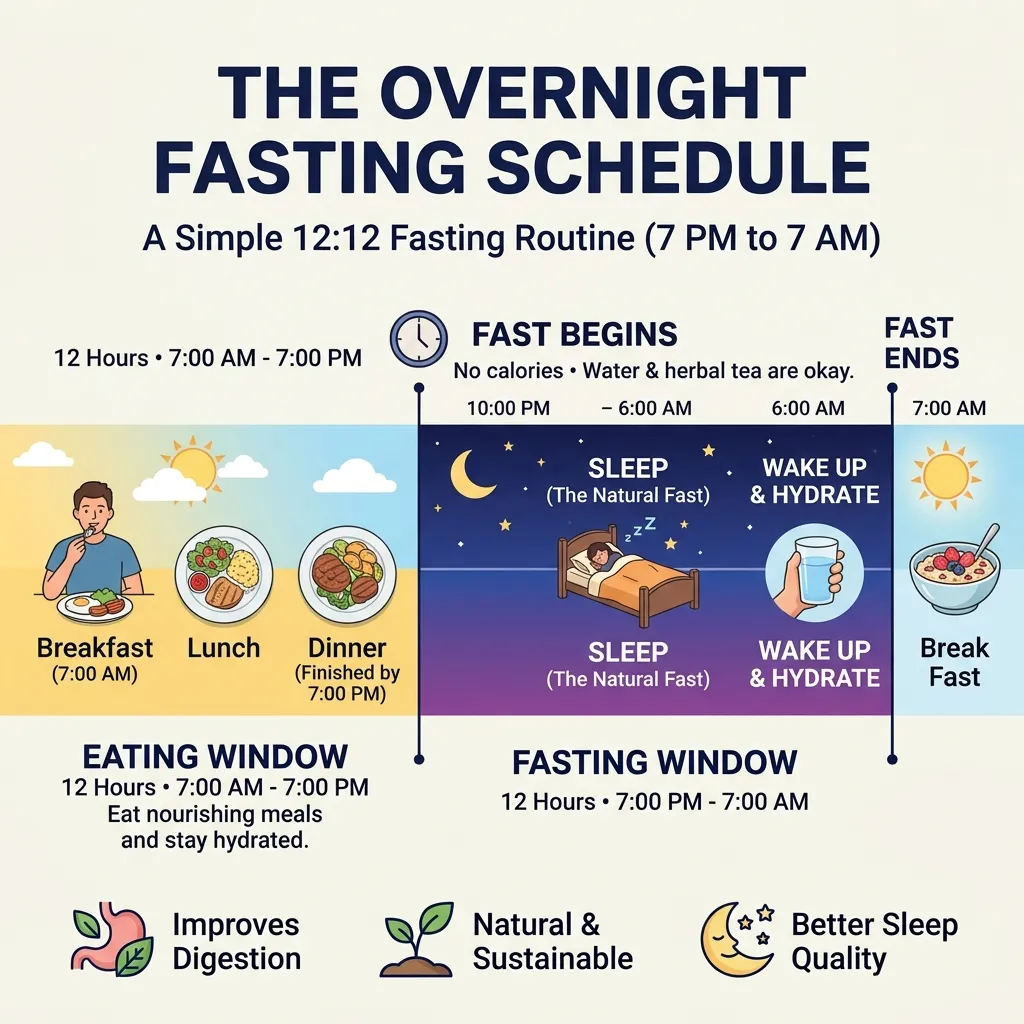
An overnight fasting schedule involves finishing dinner in the evening and eating breakfast the next morning. Depending on the timing of your meals, this might produce a fasting interval of around 12 hours.
For example, someone who finishes dinner at 7 p.m. and eats breakfast at 7 a.m. has completed a 12-hour overnight fast.
This approach can be a gentle starting point for healthy adults who want to establish regular eating times. It may also reduce habitual late-night snacking.
You do not need to skip breakfast or tolerate significant hunger to follow an overnight schedule. If you feel unwell or need food earlier, your routine should accommodate that need.
Read More: Nutrition for Beginners: Simple Habits for a Healthier Life
The 14:10 Method
The 14:10 method involves fasting for 14 hours and eating during a 10-hour window.
For example, a person might eat between 8 a.m. and 6 p.m., then fast until 8 a.m. the following morning.
This schedule can suit people who prefer breakfast and an earlier dinner. Others may find it difficult because of work hours, family meals, or evening activities.
The timing itself does not guarantee weight loss. Its usefulness depends on whether it helps you maintain balanced meals and an appropriate overall food intake.
The 16:8 Method
The 16:8 method involves a 16-hour fasting period and an eight-hour eating window. It is one of the most widely discussed forms of intermittent fasting.
A person might eat between noon and 8 p.m., or between 10 a.m. and 6 p.m. The best timing, if this method is appropriate at all, depends on personal circumstances.
Some people appreciate having fewer hours in which to plan meals. Others experience excessive hunger, difficulty concentrating, headaches, or overeating later in the day.
A longer fasting window is not necessarily better than a shorter one. If a 16-hour fast interferes with your energy, work, exercise, or relationship with food, it may not be a suitable choice.
Alternate-Day Fasting
Alternate-day fasting involves alternating between days of usual eating and days of fasting or substantially restricted energy intake, depending on the specific protocol.
This approach is more demanding than a regular overnight fasting schedule. It may be difficult to maintain and can increase the risk of inadequate nutrition or an unhealthy cycle of restriction and overeating.
It is not a recommended starting point for beginners and people should not attempt strict alternate-day fasting without appropriate medical guidance.
The One-Meal-a-Day Approach
One-meal-a-day eating, often abbreviated as OMAD, involves consuming most or all daily food in a single meal.
Although it receives attention online, this approach can make it difficult to obtain enough protein, fiber, vitamins, minerals and energy. Large meals may also cause digestive discomfort.
For many people, eating multiple balanced meals provides a more practical way to meet nutritional needs. One-meal-a-day fasting is not necessary for weight loss and should not be treated as a superior method.
What Can You Drink During a Fasting Window?
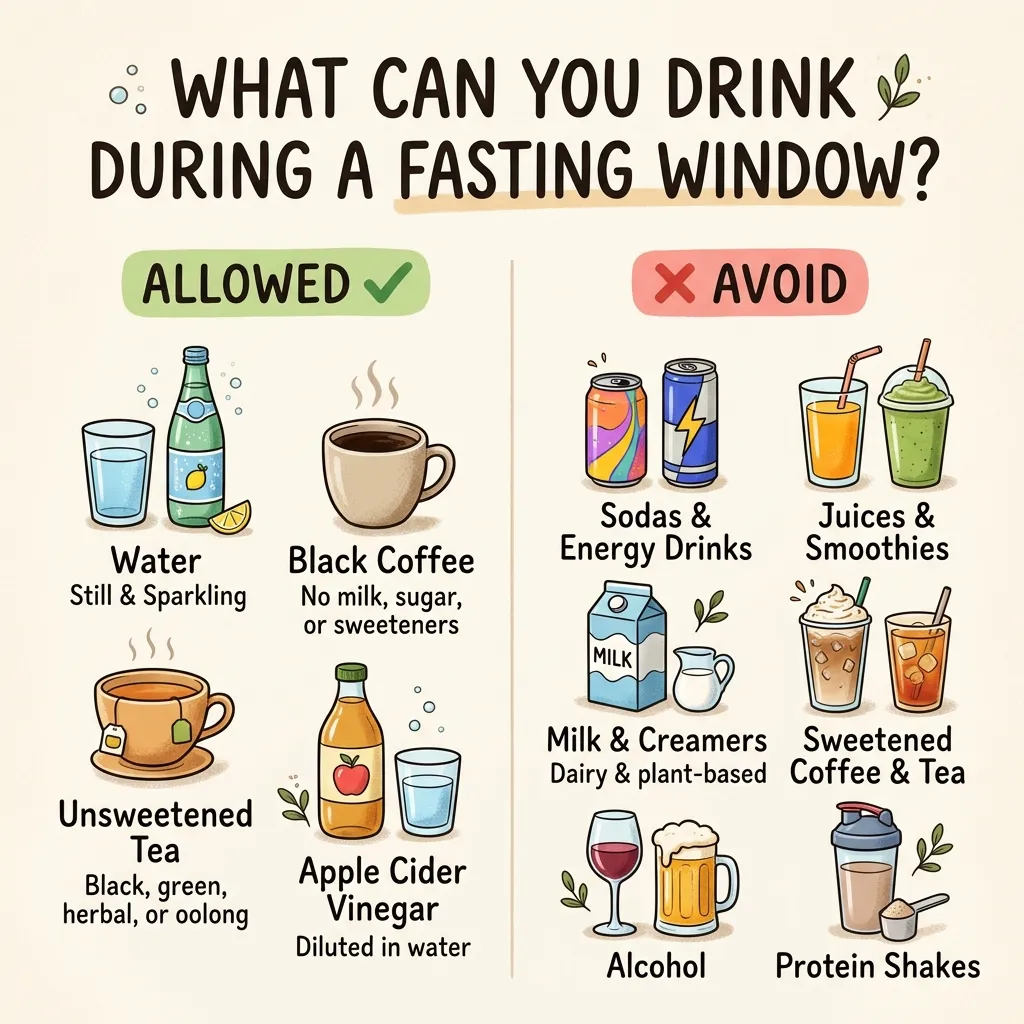
Staying hydrated is important during a fasting period. The drinks you choose depend partly on your fasting goal and any medical advice you have received.
Water
Plain water is the simplest option during fasting. It supports hydration without adding calories.
You can drink water according to your thirst, activity level and environment. Hot weather and exercise may increase your fluid needs.
Do not force yourself to drink excessive amounts. People with conditions that require fluid restriction should follow their healthcare professional’s instructions.
Unsweetened Tea
Plain tea without added sugar or milk contains very few calories and is commonly consumed during intermittent fasting.
Black tea and many herbal teas can provide variety if you prefer warm drinks. Caffeine-sensitive people may need to limit caffeinated tea, particularly later in the day.
Tea should not be used to suppress severe hunger or replace adequate meals.
Black Coffee
Black coffee is another common fasting-period beverage because it contains very few calories when served without additions.
However, caffeine can cause nervousness, palpitations, stomach discomfort, or sleep disruption in some people. Coffee may also make fasting feel more difficult for people who are sensitive to its effects.
Avoid relying on large quantities of coffee to get through a fasting period. If you have been advised to limit caffeine, follow that guidance.
What About Milk, Sugar and Other Drinks?
Milk, cream, sugar, honey, juice and other drinks containing energy technically interrupt a strict calorie-free fast.
Artificially sweetened beverages may contain little or no energy, but their suitability depends on the product and your goals. You do not need to obsess over every ingredient to benefit from a generally balanced eating routine.
If your priority is long-term health and weight management, the overall quality of your diet matters more than trying to maintain a perfect fasting window at all costs.
What Should You Eat During Your Eating Window?
A balanced eating window should provide enough energy, protein, carbohydrates, fats, vitamins, minerals and fiber to meet your needs.
The purpose of intermittent fasting is not to eat as little as possible. It is to organize eating times in a way that remains compatible with adequate nutrition.
Prioritize Protein-Rich Foods
Protein supports muscle maintenance, tissue repair and many other body functions. Including a protein source in your meals can also help you feel satisfied.
Suitable options include eggs, chicken, fish, yogurt, milk, beans, chickpeas, lentils and tofu.
For example, you might have eggs with whole-grain bread for your first meal, lentils with rice and vegetables later in the day and yogurt or another suitable protein-rich food as part of a snack.
Your protein requirements depend on factors such as body size, activity level, age and health. People with kidney disease or other conditions affecting protein needs should seek individualized advice.
Include Vegetables and Whole Fruits
Vegetables and whole fruits provide fiber, vitamins, minerals and water.
Spinach, carrots, cucumber, cabbage, tomatoes, cauliflower, apples, oranges, berries and guavas can all contribute to a varied eating pattern.
You do not need to avoid fruit because it contains natural sugar. Whole fruit can be a useful part of meals and snacks.
Try to include a variety of colors and types of produce throughout your eating window rather than relying on a narrow selection of foods.
Choose Fiber-Rich Carbohydrates
Carbohydrates are an important energy source and they do not need to be eliminated during intermittent fasting.
Whole grains, oats, whole-wheat bread, beans, lentils, potatoes and other starchy foods can help provide energy and nutrients.
Fiber-rich foods may also support digestive health and improve meal satisfaction. Increasing fiber gradually and drinking enough fluid can help reduce digestive discomfort.
Your portions should reflect your needs and activity level. Someone who performs physically demanding work or regular exercise may need more energy than someone with a less active routine.
Include Healthy Fats
Dietary fats support normal body functions and help your body absorb fat-soluble vitamins.
Sources include nuts, seeds, olive oil, avocado and fish. Foods containing fat can be part of a balanced diet, although portion sizes matter because fats are energy-dense.
You do not need to eliminate oils or other fat-containing foods to lose weight. Focus on variety, moderation and the overall nutritional quality of your meals.
How to Start Intermittent Fasting Safely
If intermittent fasting is appropriate for you, starting with a flexible routine is generally more sensible than immediately attempting a long fast.
Establish Regular Meal Times
Begin by observing your usual eating pattern. Notice when you normally eat breakfast, lunch, dinner and snacks, including late-night food.
If you regularly snack because of boredom rather than hunger, you might experiment with establishing a consistent end time for dinner. This can help create a natural overnight break from eating.
You do not need to delay your first meal if you are genuinely hungry or feel unwell. Regular eating can be more suitable for some people than a restrictive schedule.
Choose a Manageable Schedule
Select a schedule that fits your work, study, family responsibilities and physical activity.
Someone who works early mornings may prefer an earlier eating window. Someone who works late shifts may need a different arrangement.
There is no universally correct fasting window. A routine that causes persistent fatigue, irritability, dizziness, or intense hunger should be reconsidered.
Eat Enough During Meals
Avoid treating the eating window as an opportunity to restrict food as much as possible.
Include protein, fiber-rich carbohydrates, vegetables or fruit and appropriate sources of fat. Eat enough to support your daily activities and nutritional requirements.
If you repeatedly experience intense hunger or find yourself overeating after fasting, your eating window may be too restrictive, your meals may be inadequate, or fasting may not suit you.
Monitor How You Feel
Pay attention to your concentration, mood, sleep, energy, digestion and exercise performance.
Some adults tolerate an overnight fasting schedule comfortably. Others feel better eating breakfast or having regular meals and snacks throughout the day.
If fasting causes faintness, significant weakness, confusion, or other concerning symptoms, stop the fast and seek appropriate medical help.
Do not ignore symptoms simply because you believe that enduring hunger is necessary for weight loss.
Can Intermittent Fasting Help With Weight Loss?
Intermittent fasting can help some adults lose weight, particularly when the schedule makes it easier to reduce their overall energy intake.
For example, someone who previously ate late-night snacks and drank sugary beverages may consume less energy after changing their routine. If this change creates a consistent calorie deficit, weight loss may follow.
However, the result depends on the person’s overall eating pattern. Fasting does not automatically cancel out large portions, frequent high-calorie snacks, or an unbalanced diet.
Research suggests that intermittent fasting can produce weight-loss results broadly comparable to continuous calorie restriction for many people. It may be easier for some people to follow, but it is not consistently more effective for everyone.
Does Intermittent Fasting Burn Belly Fat?
Intermittent fasting does not selectively burn fat from the abdomen.
When people lose body fat, the areas where changes occur depend on several factors, including genetics, hormones, age and individual body composition.
A fasting schedule may contribute to overall fat loss if it supports a sustainable energy deficit. However, it cannot guarantee a flatter stomach or a specific waist measurement within a particular number of days.
Abdominal exercises can strengthen the core muscles, while walking and strength training support general fitness. Neither fasting nor a particular exercise can guarantee that fat will disappear from one specific body area.
How Long Does It Take to See Results?
The timeline varies between individuals. Some people notice changes in eating habits or appetite within the first few weeks, while changes in body weight may take longer to become clear.
Initial weight changes can include shifts in water and stored carbohydrates, not just changes in body fat.
Your starting weight, food intake, activity level, sleep, medications and health conditions can all influence your results.
Rather than expecting dramatic changes after a few days, evaluate whether your routine is sustainable and whether your overall progress is moving in a healthy direction over several weeks.
Potential Benefits of Intermittent Fasting
Intermittent fasting has been studied for its possible effects on weight, blood sugar regulation and other markers of metabolic health. Results vary and not all reported benefits occur in every person.
It May Simplify Meal Planning
Some people find it easier to follow a consistent eating schedule than to monitor every meal or snack.
A defined eating window can help organize grocery shopping, meal preparation and dinner times. It may also reduce unplanned late-night eating for people who habitually snack without feeling hungry.
However, fewer meals do not necessarily mean better nutrition. A person who struggles to meet energy requirements within a short eating window may benefit from a less restrictive schedule.
It May Support Weight Management
When intermittent fasting reduces overall energy intake, it can support weight loss.
Losing excess weight may improve certain health markers for some people, depending on their starting health and other circumstances.
However, the benefits of weight loss should not be confused with proof that fasting itself has special effects independent of changes in energy intake.
Balanced nutrition, regular movement, adequate sleep and appropriate medical care remain important.
It May Improve Some Metabolic Markers
Some studies have found improvements in measures such as blood glucose, blood pressure, or blood lipids in certain participants following intermittent fasting.
These effects may depend on the fasting schedule, the duration of the study, changes in body weight and participants’ underlying health.
The evidence does not establish that intermittent fasting is the best option for everyone or that it can replace prescribed medication.
People with diabetes or other metabolic conditions should discuss fasting with their healthcare professional before changing their eating schedule.
Risks and Side Effects to Understand
Intermittent fasting is not suitable for every person. Even healthy adults may experience unwanted effects, particularly when they adopt a restrictive schedule too quickly.
Hunger and Irritability
Hunger is common when you change your usual meal timing. Some people also experience irritability, difficulty concentrating, or a persistent preoccupation with food.
These effects may interfere with studying, work, driving, or family responsibilities.
If you feel consistently miserable or distracted by hunger, do not assume you need stronger willpower. You may need a different schedule or a regular eating pattern instead.
Headaches and Fatigue
Changes in caffeine intake, inadequate food intake, dehydration and altered meal timing may contribute to headaches or fatigue.
Ensure that you drink enough fluid, obtain adequate nutrition and avoid abruptly making multiple restrictive changes at once.
Persistent or severe headaches, dizziness, fainting and unusual weakness should not be dismissed as normal parts of fasting.
Overeating During the Eating Window
Some people become extremely hungry after a long fasting period and compensate by eating quickly or consuming more food than they intended.
This can make the schedule difficult to maintain and may create an unhealthy cycle of restriction and overeating.
If this pattern occurs repeatedly, consider a shorter fasting period or regular balanced meals. If you experience loss-of-control eating or significant distress around food, seek support from an appropriately qualified professional.
Possible Nutritional Deficiencies
A short eating window can make it harder to consume enough food and obtain all essential nutrients, especially if the diet is already limited.
People who exclude major food groups, eat very small portions, or combine fasting with excessive exercise may be at greater risk.
Balanced meals and sufficient energy intake are more important than maintaining a strict fasting window.
Who Should Avoid Intermittent Fasting?
Intermittent fasting should not be treated as a universally safe eating pattern. Some groups should avoid it or only consider it with direct medical supervision.
- Children and teenagers: Growing bodies need adequate energy and nutrients. Restrictive fasting for weight loss is generally inappropriate without specialist guidance.
- Pregnant or breastfeeding individuals: Nutritional and energy requirements may be increased, so fasting should not be started for weight loss without medical advice.
- People with a history of eating disorders: Restrictive eating schedules may trigger unhealthy patterns or worsen existing difficulties.
- People who are underweight or malnourished: Additional restrictions may increase health risks.
- People with diabetes: Fasting can affect blood glucose and interact with insulin or other medications, potentially causing hypoglycemia or other complications.
- People taking medicines that require food: Changing meal timing may affect medication safety or tolerability.
- People with certain chronic illnesses: Kidney, liver and other health conditions may require individualized meal and fluid plans.
Anyone who is unsure whether fasting is safe should consult a qualified healthcare professional before starting.
Intermittent Fasting and Exercise
Exercise can be part of a healthy lifestyle while following an appropriate eating schedule, but training during a fast does not guarantee greater fat loss.
Your performance depends on the exercise, its intensity, your training experience, hydration and when you last ate.
Choose Exercise Timing That Feels Comfortable
Some people are comfortable walking or doing light exercise before their first meal. Others feel weak or perform better after eating.
For demanding workouts, consider whether you have enough energy and whether your routine allows you to eat and recover adequately.
Do not push through dizziness, shakiness, nausea, or unusual weakness to complete a workout while fasting.
Support Muscle Recovery
Strength training and adequate nutrition help support muscle maintenance. Protein, carbohydrates, fluids and sufficient overall energy contribute to recovery.
If you exercise regularly, ensure that your eating window gives you enough opportunities to meet these needs.
People who train intensively, perform physically demanding work, or are trying to build muscle may find a less restrictive eating schedule more practical.
Frequently Asked Questions
Is intermittent fasting good for beginners?
It can suit some healthy adults who prefer a structured eating schedule, but it is not necessary for weight loss. A regular overnight break between dinner and breakfast may be easier to manage than a restrictive fasting schedule.
Can I drink water during intermittent fasting?
Yes. Plain water is commonly consumed during fasting and helps maintain hydration. Avoid excessive water intake and follow medical guidance if you have a condition that requires fluid restriction.
Can I drink tea or coffee while fasting?
Unsweetened tea and black coffee are commonly included in calorie-free fasting windows. Adding milk, sugar, or cream interrupts a strict calorie-free fast. Caffeine may also cause unwanted symptoms in sensitive individuals.
Can intermittent fasting help me lose weight without exercise?
Weight loss can occur without a formal exercise program if your average energy intake is lower than your energy expenditure. However, physical activity supports cardiovascular health, strength, mobility and overall well-being.
Is the 16:8 method better than the 14:10 method?
Not necessarily. Both schedules may work for some adults, but a longer fast is not automatically more effective. Choose an approach based on safety, comfort, nutritional adequacy and sustainability rather than the number of fasting hours.
What happens if I feel hungry during fasting?
Mild hunger may occur when you change your meal timing. However, severe or persistent hunger, dizziness, shakiness, or weakness should not be ignored. End the fast if necessary and reconsider whether the schedule is suitable for you.
Can I eat rice while following intermittent fasting?
Yes. Rice can be part of a balanced diet. Combine an appropriate portion with protein-rich foods and vegetables to create a satisfying meal. You do not need to eliminate carbohydrates to follow intermittent fasting.
Does intermittent fasting slow down metabolism?
Intermittent fasting does not automatically slow metabolism. However, prolonged under-eating and substantial weight loss can reduce energy expenditure. Avoid severe restriction and ensure that your eating pattern meets your nutritional needs.
Conclusion
Intermittent fasting is an eating schedule that may help some adults manage their food intake and lose weight, but it is not a requirement for good health or successful weight management.
Understanding common fasting schedules, choosing balanced meals, staying hydrated and paying attention to your body’s response can help you make a more informed decision.
Avoid extreme fasting methods, especially if you have medical conditions, take medication that affects blood sugar, are pregnant or breastfeeding, or have a history of disordered eating.
The best eating routine is one that supports your health, provides adequate nutrition and fits your life over the long term. If intermittent fasting makes you feel unwell or causes persistent food-related distress, a regular meal schedule may be a better choice.



One Comment on “Intermittent Fasting for Beginners: A Simple Guide to Getting Started”