
Eggs are a popular breakfast food because they are affordable, versatile and packed with important nutrients. Whether you enjoy them boiled, scrambled, fried, or poached, eggs can provide protein and other nutrients that support a balanced diet. They are also easy to prepare and can be added to meals throughout the day.
Understanding egg calories can help you make informed food choices and compare different preparation methods. The number of calories in an egg depends mainly on its size and how it is cooked. A plain boiled egg contains fewer calories than an egg fried in butter or oil, while scrambled eggs can vary depending on the ingredients used.
Beyond their calorie content, eggs provide high-quality protein, vitamin B12, selenium, choline and other nutrients. Both the egg white and the yolk contribute to their nutritional value, although they contain different amounts of protein, fat, vitamins and minerals.
In this complete guide, you will learn how many calories are in different egg sizes, how cooking methods affect their calorie content, what nutrients eggs provide and how to include them in a balanced eating routine.
How Many Calories Are in an Egg?
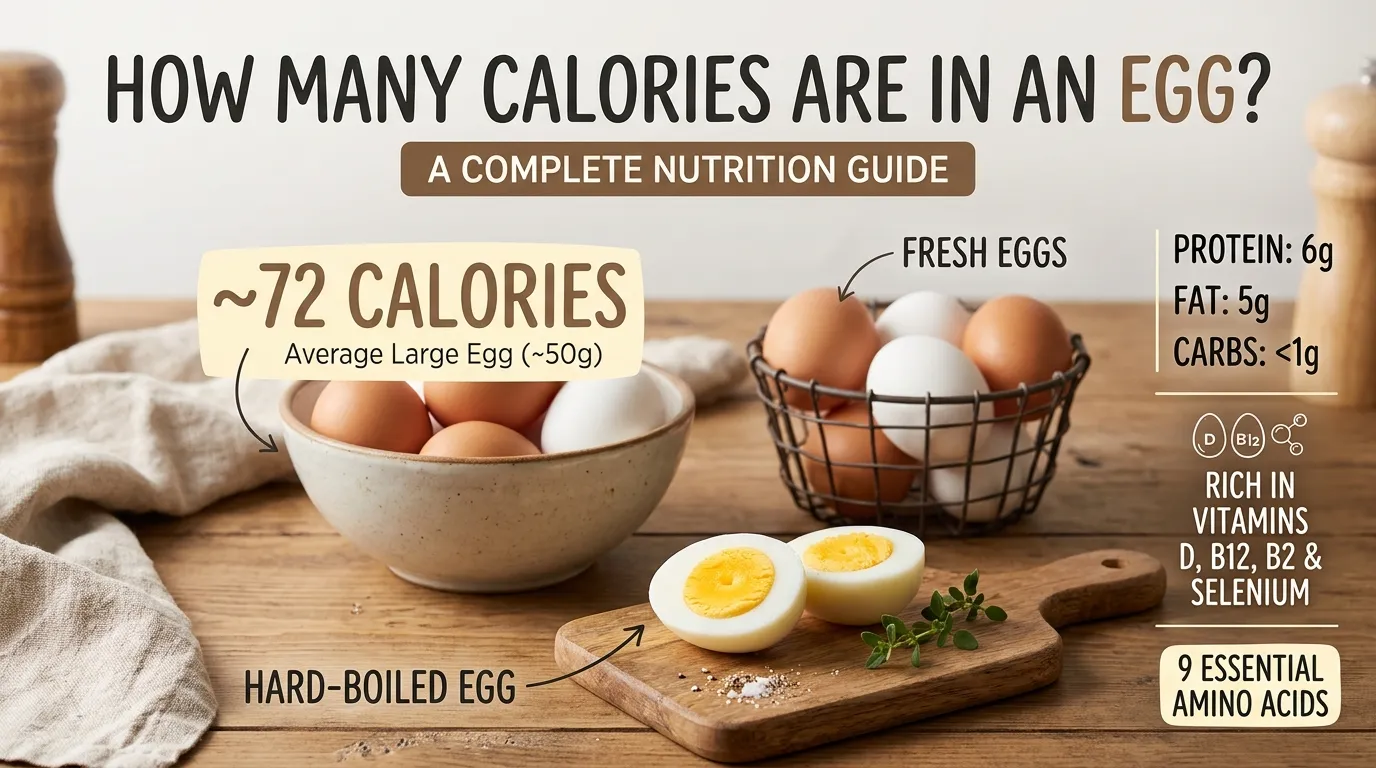
The number of calories in an egg varies according to its size and preparation method. A typical large whole egg contains approximately 72 calories when cooked without added fat.
Most of these calories come from the combination of protein and fat naturally present in the egg. The white provides protein with very little fat, while the yolk contains most of the egg’s fat and several important vitamins and minerals.
Here is an approximate guide to the calories in raw or plain whole eggs by size:
| Egg Size | Approximate Calories |
|---|---|
| Small egg | 54 calories |
| Medium egg | 63 calories |
| Large egg | 72 calories |
| Extra-large egg | 80 calories |
| Jumbo egg | 90 calories |
These values are estimates and can vary slightly depending on the egg’s actual weight. Cooking methods and added ingredients can also change the final calorie total.
For everyday food tracking, a large egg is a useful reference point. If you use a calorie counter, select the entry that best matches your egg’s size and preparation method.
Egg Nutrition Facts
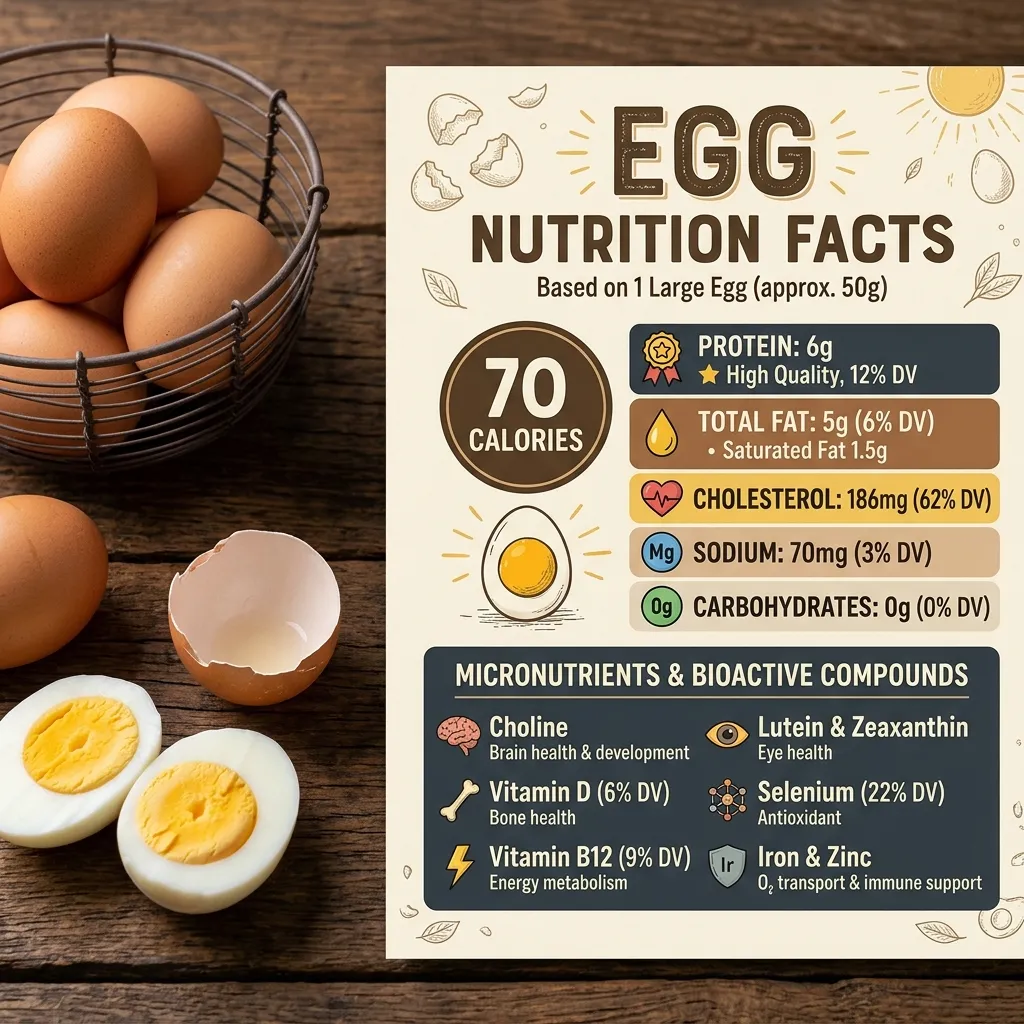
Eggs provide several nutrients in a relatively small serving. A large whole egg contains protein, fat, small amounts of carbohydrates and a range of vitamins and minerals.
The following table shows approximate nutrition information for one large whole egg, weighing about 50 grams without its shell.
| Nutrient | Approximate Amount |
|---|---|
| Calories | 72 |
| Protein | 6.3 grams |
| Total fat | 4.8 grams |
| Saturated fat | 1.6 grams |
| Carbohydrates | 0.4 grams |
| Cholesterol | 186 milligrams |
| Vitamin B12 | 0.5 micrograms |
| Vitamin D | 1.1 micrograms |
| Selenium | 15.4 micrograms |
| Choline | 147 milligrams |
Nutrient values are approximate and may vary according to egg size and production conditions.
Protein in Eggs
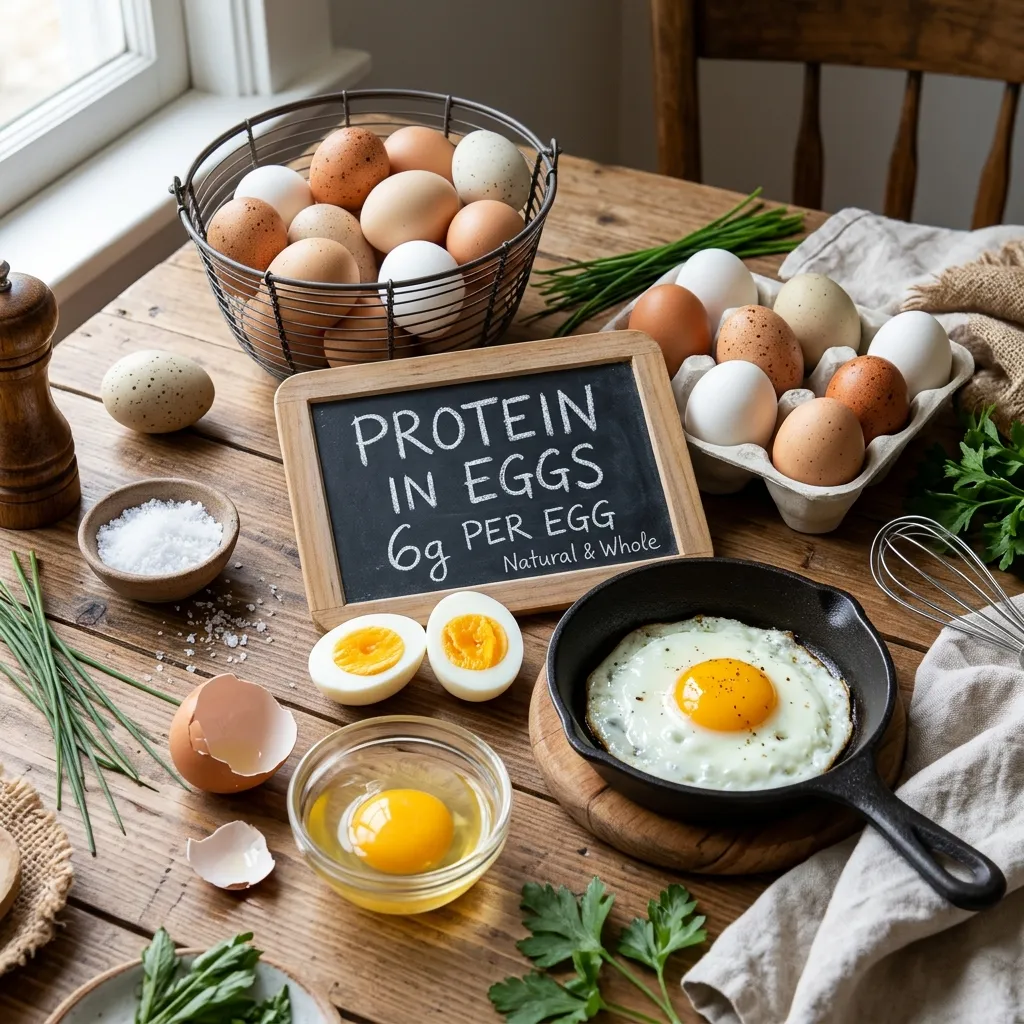
Protein is one of the main nutritional benefits of eggs. A large egg provides approximately 6.3 grams of high-quality protein, containing all nine essential amino acids.
Your body uses protein to maintain and repair tissues and support many normal functions. Including protein-rich foods in meals can also help make them more satisfying.
Eggs are convenient because they can be prepared in several ways and combined with foods such as whole-grain bread, vegetables, beans, or potatoes.
Read More: Calories Explained: How Much Energy Does Your Body Need?
Fat in Eggs
Most of the fat in a whole egg is found in the yolk. This fat contributes to the egg’s calorie content and helps carry fat-soluble vitamins.
The total fat content increases when you cook eggs with butter, oil, cream, or other added ingredients.
If you are monitoring your food intake, consider the cooking method as well as the egg itself when estimating calories.
Vitamins and Minerals
Eggs provide several nutrients, including vitamin B12, selenium, riboflavin and choline. They also contain vitamin D, although the amount varies.
Vitamin B12 supports normal nerve function and red blood cell formation. Selenium contributes to normal thyroid function and antioxidant defense, while choline is important for cell membranes and normal brain and nervous system function.
Eggs can contribute to your daily nutrient intake, but a varied diet remains important because no single food provides everything your body needs.
Calories in Egg Whites vs. Egg Yolks
An egg white and an egg yolk have different nutritional profiles. Understanding the difference can help you decide how to use each part in your meals.
Egg White Calories
The white of one large egg contains approximately 17 calories and around 3.6 grams of protein.
Egg whites contain very little fat and provide most of their calories from protein. They can be useful in omelets, scrambles and other dishes when you want to add protein without adding much fat.
However, egg whites do not provide the same range of nutrients as the whole egg because many vitamins, minerals and other nutrients are concentrated in the yolk.
Egg Yolk Calories
The yolk of one large egg contains approximately 55 calories.
It provides most of the egg’s fat and cholesterol, along with nutrients such as choline, vitamin B12 and vitamin D.
Although the yolk contains more calories than the white, it also contributes important nutritional value. Removing it changes the overall nutrient profile of the egg.
Whole Eggs vs. Egg Whites
Whole eggs provide a combination of protein, fat, vitamins and minerals. Egg whites offer protein with very little fat.
Neither option is automatically best for everyone. The right choice depends on your nutritional needs, food preferences, medical history and overall eating pattern.
For many people, whole eggs can fit into a balanced diet. Those with specific cholesterol concerns or other medical considerations may benefit from individualized advice from a qualified healthcare professional.
Calories in Eggs by Cooking Method
The way you prepare eggs can significantly affect their calorie content. Boiling and poaching generally require no added fat, while frying and scrambling may involve oil, butter, milk, cheese, or other ingredients.
Boiled Egg Calories
A large hard-boiled egg contains approximately 78 calories, although estimates vary slightly by database and egg size.
Boiling does not require added oil or butter, so the calorie content remains close to that of the plain egg itself.
Hard-boiled eggs are convenient for meal preparation because they can be cooked ahead of time, refrigerated and used in salads, sandwiches, or quick snacks.
Soft-boiled eggs provide a similar amount of energy when the egg size is the same.
Fried Egg Calories
A large fried egg may contain approximately 90 calories or more, depending on the amount of oil or butter used.
The egg itself contributes most of the calories, while the added cooking fat increases the total. A small amount of oil can make a difference, especially when cooking several eggs.
For a more accurate estimate, record both the eggs and the cooking fat used. The amount absorbed by the food can vary with the pan, temperature and cooking method.
Scrambled Egg Calories
One large egg scrambled without added ingredients contains approximately 72 calories before accounting for cooking fat.
However, scrambled eggs often include butter, milk, cream, cheese, or other additions. These ingredients increase the total calorie content and may change the protein, fat and carbohydrate amounts.
For example, scrambling two eggs with a little butter will provide more calories than scrambling two eggs in a nonstick pan without added fat.
Poached Egg Calories
A large poached egg generally contains around 72 calories.
Poaching uses hot water rather than cooking oil, so it adds little or no extra energy when no other ingredients are included.
Poached eggs are a useful choice for breakfast bowls, whole-grain toast and vegetable-based meals.
Baked Egg Calories
The calories in baked eggs depend on the recipe.
An egg baked on its own will have a calorie content close to that of a plain whole egg. A dish prepared with cheese, cream, butter, meat, or oil can contain considerably more.
When tracking a baked egg recipe, include the ingredients and divide the estimated total by the number of portions.
How Many Calories Are in Two Eggs?
Two large whole eggs contain approximately 144 calories before adding cooking fat or other ingredients.
Two eggs also provide around 12.6 grams of protein, along with fat, vitamins and minerals.
This makes two eggs a convenient base for breakfast or another meal. You can pair them with vegetables, whole-grain toast, beans, or fruit to create a more varied plate.
The final calorie total depends on what you serve alongside the eggs and how you prepare them. Two boiled eggs will generally contain fewer calories than two eggs fried in a generous amount of butter or oil.
If you are using a calorie counter, record the number of eggs and any meaningful additions separately.
Health Benefits of Eating Eggs
Eggs provide several important nutrients that can contribute to a balanced diet. Their benefits depend on the wider eating pattern, portion sizes and individual health needs.
Supports Muscle Maintenance
Eggs provide high-quality protein containing all nine essential amino acids.
Protein helps maintain and repair body tissues, including muscles. Combining eggs with other protein-rich foods throughout the day can help you meet your individual protein needs.
For people who exercise regularly, eggs can be a convenient part of meals that include carbohydrates, vegetables and other nutritious foods.
Supports Brain and Nervous System Function
Eggs are a source of choline, a nutrient needed to produce compounds involved in normal brain function and nerve signaling.
Choline also contributes to cell membrane structure and other essential body processes.
Eggs can help supply this nutrient, although other foods, including meat, fish, soybeans and certain vegetables, also contribute choline.
Provides Essential Vitamins and Minerals
Eggs contain vitamin B12, selenium, riboflavin and smaller amounts of several other nutrients.
These nutrients support normal processes such as energy metabolism, nerve function, red blood cell formation and thyroid function.
Including eggs alongside vegetables, fruits, whole grains and other protein sources helps create a more varied diet.
May Help Make Meals More Satisfying
The combination of protein and fat in eggs can help make a meal satisfying for many people.
Eating eggs with fiber-rich foods, such as vegetables, whole grains, or beans, can make a meal more balanced and filling.
Individual responses differ, so choose portion sizes and food combinations that suit your appetite and nutritional needs.
Supports Eye Health Through Yolk Nutrients
Egg yolks contain lutein and zeaxanthin, plant-derived pigments that accumulate in the eye and are associated with eye health.
Eggs are not a substitute for medical care or a guarantee against eye conditions. However, they can contribute useful nutrients as part of a varied diet that includes other nutrient-rich foods.
Are Eggs Good for Weight Management?
Eggs can fit into a weight-management plan because they provide protein and several nutrients in a relatively compact serving.
A large egg contains approximately 72 calories before added cooking fat. This makes eggs easy to include in a variety of meals, although the total energy content depends on portion size and preparation.
No individual food automatically causes weight loss or weight gain. Long-term weight changes are influenced by overall energy intake, physical activity, sleep, medications, health conditions and other factors.
Choose Cooking Methods That Fit Your Needs
Boiled and poached eggs generally do not require added fat. They can be practical options if you want to keep the preparation simple.
Fried and scrambled eggs can also fit into a balanced diet. Consider how much oil, butter, cheese, or cream you use when estimating the meal’s total calories.
Pair Eggs With Fiber-Rich Foods
Eggs contain very little fiber, so pairing them with vegetables, whole-grain bread, beans, or fruit can improve the overall nutritional balance of a meal.
For example, an omelet with vegetables and whole-grain toast offers a combination of protein, carbohydrates and fiber.
Avoid Focusing Only on Calories
A meal’s nutritional quality depends on more than its energy content.
Protein, fiber, vitamins, minerals, food variety and satisfaction all matter. Rather than choosing foods solely because they have fewer calories, focus on building meals that meet your needs and are enjoyable to eat.
If you need a specific calorie target, a registered dietitian or qualified healthcare professional can help you determine an appropriate approach.
Healthy Ways to Include Eggs in Your Daily Diet
Eggs are easy to prepare and can be included in breakfast, lunch, dinner, or snacks.
Boiled Eggs With Whole-Grain Toast
Pair boiled eggs with whole-grain toast and a serving of fruit or vegetables.
This combination provides protein, carbohydrates and fiber. It also works well for meal preparation because boiled eggs can be prepared ahead of time and stored safely in the refrigerator.
Vegetable Omelet
Prepare an omelet with eggs, tomatoes, spinach, onions, peppers, or other vegetables you enjoy.
Vegetables add fiber and a variety of nutrients. You can use a nonstick pan and a measured amount of cooking oil to keep the ingredients and calorie estimates easier to manage.
Scrambled Eggs With Spinach
Scramble eggs with spinach and seasonings for a simple meal.
You can add whole-grain toast or beans to make the meal more substantial. If you use butter, milk, or cheese, include those ingredients when estimating the nutritional total.
Egg and Avocado Toast
Serve an egg over whole-grain toast with a portion of avocado.
The egg provides protein, while avocado contributes fiber and unsaturated fat. Portion sizes and the type of bread affect the total calorie content.
Egg Salad
Combine chopped boiled eggs with plain yogurt, mustard, herbs, or a measured amount of mayonnaise.
Serve the mixture in a sandwich, with whole-grain crackers, or over a bed of vegetables. The nutritional content depends on the ingredients and serving size.
Eggs With Vegetables and Beans
Pair boiled or scrambled eggs with beans and cooked vegetables for a balanced meal.
Beans contribute fiber and additional protein, while vegetables provide a variety of vitamins and minerals. This combination can work for breakfast, lunch, or dinner.
Common Mistakes When Tracking Egg Calories
Even though eggs are simple to prepare, a few common mistakes can lead to inaccurate calorie estimates.
Forgetting Cooking Oil or Butter
Eggs cooked in oil or butter contain more calories than eggs prepared without added fat.
When tracking your meals, include the cooking fat used. Measuring the amount can help you make more realistic estimates.
Assuming Every Egg Has the Same Size
Small, medium, large and extra-large eggs have different calorie contents.
If accuracy matters to your food-tracking goal, choose the correct size in your calorie counter or use the egg’s weight as a guide.
Confusing Egg Whites With Whole Eggs
Egg whites contain fewer calories than whole eggs because most of the fat is in the yolk.
Make sure the food entry matches what you ate. Logging an egg white when you consumed a whole egg will underestimate the calorie and nutrient totals.
Ignoring Ingredients in Scrambled Eggs
Milk, cream, cheese, butter and other additions can change the calories in scrambled eggs.
Record these ingredients when relevant instead of relying on a generic entry that may not match your recipe.
Treating Calories as the Only Measure of Health
Calorie content does not tell you everything about a food’s nutritional value.
Eggs also provide protein, vitamins, minerals and other nutrients. Consider how they fit into your overall eating pattern rather than judging them by calories alone.
Frequently Asked Questions
How Many Calories Are in One Large Egg?
One large whole egg contains approximately 72 calories before adding cooking fat or other ingredients. The exact amount varies slightly according to its weight and the nutrition database used.
How Many Calories Are in Two Eggs?
Two large whole eggs contain approximately 144 calories before cooking fat or additional ingredients. Their combined nutritional content includes about 12.6 grams of protein.
How Many Calories Are in a Boiled Egg?
A large hard-boiled egg is commonly estimated at around 78 calories, although some nutrition databases report a slightly different value. Egg size and the database entry affect the estimate.
Are Egg Whites Lower in Calories Than Whole Eggs?
Yes. The white of a large egg contains approximately 17 calories, while the whole egg contains around 72 calories. The yolk provides most of the egg’s fat and several important nutrients.
Are Fried Eggs Higher in Calories Than Boiled Eggs?
Fried eggs are generally higher in calories when oil or butter is used. The exact difference depends on the amount of cooking fat and how much is absorbed during preparation.
How Much Protein Is in an Egg?
A large whole egg provides approximately 6.3 grams of protein. Most of the protein is divided between the white and yolk, although the white contains the larger share.
Are Eggs Healthy to Eat Every Day?
Eggs can be part of a balanced diet for many people. Whether a particular amount is appropriate depends on individual health, overall dietary patterns and medical considerations. People with specific cholesterol concerns should seek personalized guidance from a healthcare professional.
Do Eggs Contain Carbohydrates?
Eggs contain very little carbohydrate. One large whole egg provides approximately 0.4 grams, with most of its calories coming from protein and fat.
Are Eggs Good for Weight Management?
Eggs can be included in a weight-management plan because they provide protein and useful nutrients. However, weight changes depend on overall dietary intake, activity and individual circumstances rather than any single food.
What Is the Healthiest Way to Cook Eggs?
Boiling and poaching are convenient methods that generally require no added cooking fat. Scrambling, frying and baking can also be nutritious choices depending on the ingredients and preparation method. Choose the approach that fits your preferences and nutritional needs.
Conclusion
Understanding egg calories can help you make informed decisions about portion sizes, cooking methods and meal planning. A large whole egg contains approximately 72 calories and provides around 6.3 grams of high-quality protein, along with choline, vitamin B12, selenium and other nutrients.
Boiled and poached eggs are convenient options that generally require no added fat, while fried and scrambled eggs may contain additional calories from oil, butter, cheese, or other ingredients. Both egg whites and yolks contribute nutritional value, so the best choice depends on your individual needs and preferences.
Enjoy eggs as part of a varied eating pattern that includes vegetables, fruits, whole grains and other nutritious foods. Rather than focusing only on calorie totals, consider the overall balance of your meals and choose preparation methods that make healthy eating practical and enjoyable.




One Comment on “How Many Calories Are in an Egg? A Complete Nutrition Guide”