
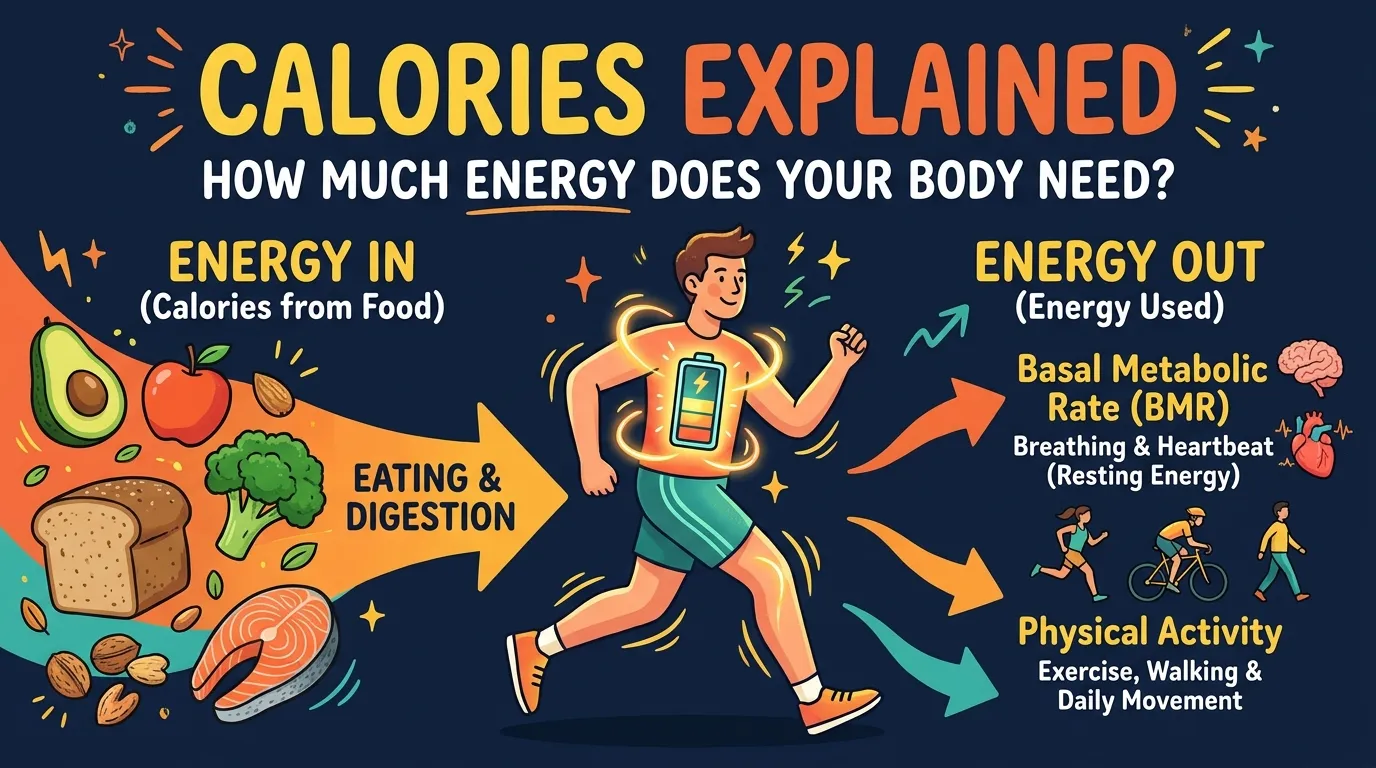
Have you ever looked at a food label and wondered what the calorie number actually means? Or why some people seem to need more food energy than others? Calories are an important part of nutrition because they provide the energy your body needs to function, move, grow and stay active.
Understanding Calories can help you make more informed food choices and recognize how your body uses energy throughout the day. However, calories are not simply numbers to count or avoid. Your body needs enough energy to support essential functions, physical activity and overall health.
In this beginner-friendly guide, you’ll learn what calories are, how your body uses them, what affects your daily energy needs and how to build balanced eating habits. We’ll also explain calorie balance, food labels, metabolism and common calorie-related misconceptions.
What Are Calories?
Calories are units used to measure energy. In nutrition, they tell you how much energy a food or drink can provide when your body processes it.
Your body needs energy for almost everything it does, including breathing, circulating blood, maintaining body temperature, digesting food and moving your muscles.
Even when you’re resting, your body continues using energy to keep its systems working.
Calories and Kilocalories Explained
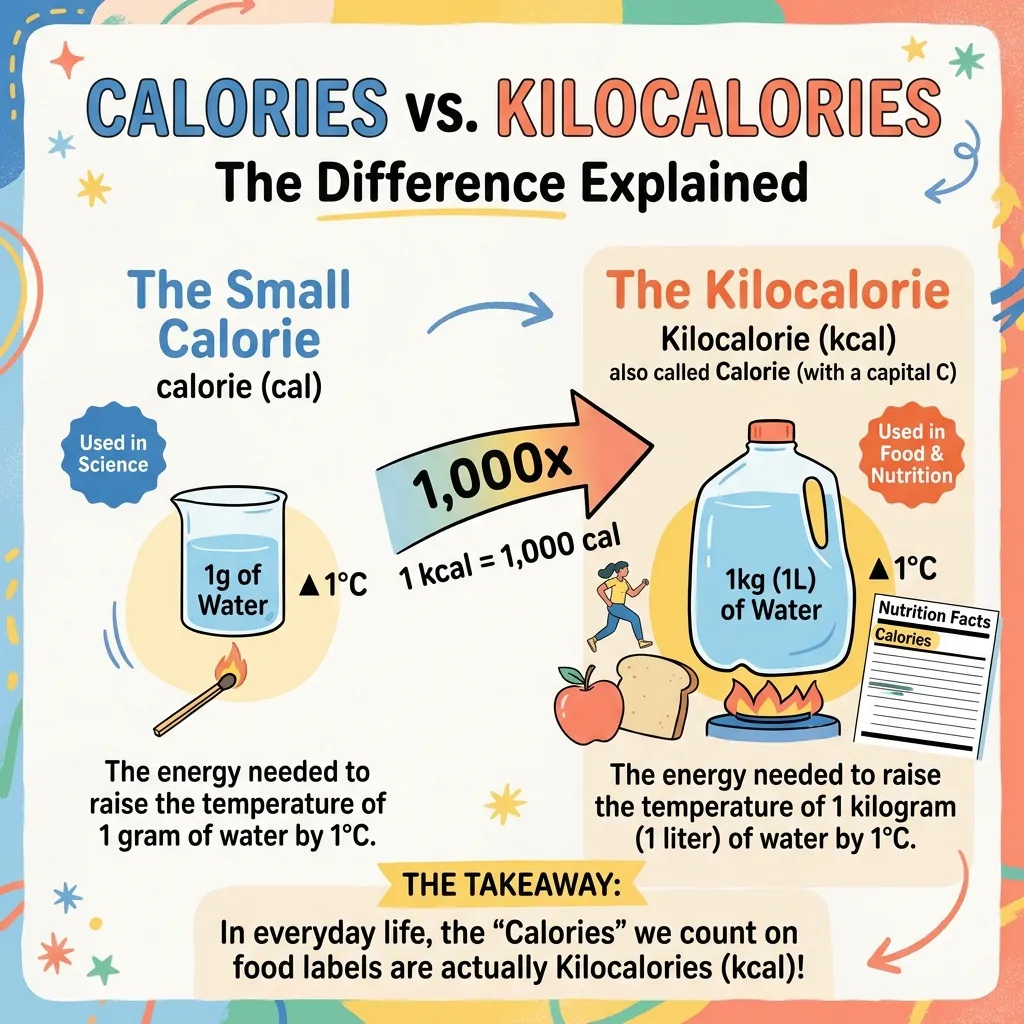
You may see the terms calorie, kilocalorie (kcal) and Calorie used on food packaging.
Technically, one kilocalorie equals 1,000 small calories. However, in everyday nutrition, the word “calorie” commonly refers to a kilocalorie.
For example:
- 100 kcal means 100 food Calories.
- 250 kcal means 250 food Calories.
- 500 kcal means 500 food Calories.
Food labels usually display energy in kilocalories (kcal), sometimes alongside kilojoules (kJ).
Why Calories Matter
Calories provide the energy your body needs to perform essential tasks and support daily activities.
They help your body:
- Maintain normal breathing and circulation.
- Support brain and nervous system function.
- Keep muscles working.
- Maintain body temperature.
- Digest and process food.
- Support growth, repair and everyday movement.
Getting enough energy is important because your body cannot function properly without an adequate supply of food energy.
Read More: How Many Calories Are in an Apple? Health Benefits and Nutrition
How Does Your Body Use Calories?
Your body uses energy continuously, not just when you exercise. Different processes contribute to your total daily energy expenditure.
Understanding these processes helps explain why your energy needs vary from person to person.
Basal Metabolic Rate
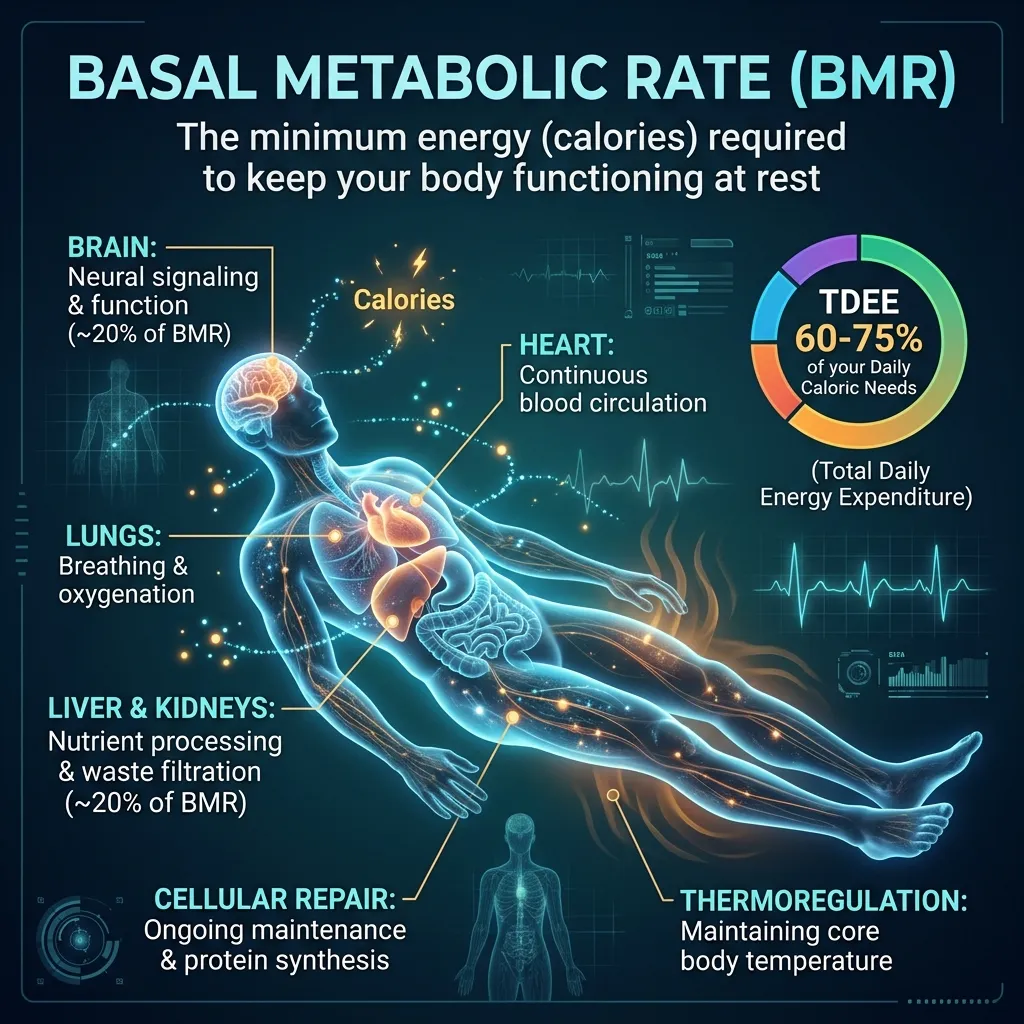
Basal metabolic rate (BMR) refers to the energy your body needs to maintain essential functions while at complete rest under specific conditions.
These functions include:
- Breathing.
- Circulating blood.
- Maintaining body temperature.
- Supporting organ function.
- Keeping cells and tissues working.
Your resting energy needs account for a substantial part of your daily energy use. This is why your body continues using calories even when you are sleeping or sitting quietly.
Physical Activity
Physical activity is another part of your daily energy expenditure. It includes both planned exercise and ordinary movement throughout the day.
Examples include:
- Walking to school or work.
- Climbing stairs.
- Cleaning your home.
- Playing sports.
- Dancing.
- Cycling.
- Strength training.
People who move more throughout the day generally use more energy than people with mostly sedentary routines, although individual differences also matter.
Digestion and Food Processing
Your body also uses energy to digest, absorb and process the food you eat. This is known as the thermic effect of food.
Different nutrients require different amounts of energy to process. Protein generally has a higher thermic effect than carbohydrates and fats.
Although digestion contributes to daily energy use, it is only one part of your overall calorie needs.
How Many Calories Does Your Body Need Each Day?
There is no single calorie requirement that works for everyone. Your daily energy needs depend on several personal factors, including age, body size, sex, activity level, growth and overall health.
A person who exercises regularly may need more energy than someone who spends most of the day sitting. Similarly, children and teenagers have different energy requirements from adults because their bodies are still developing.
General Daily Calorie Estimates for Adults
For a broad reference, the NHS gives approximately 2,000 kcal per day for an average adult woman and 2,500 kcal per day for an average adult man.
These are general population estimates, not exact requirements or recommended targets for every individual.
Your actual needs may be higher or lower depending on:
- Age.
- Height and body size.
- Physical activity.
- Muscle mass.
- Health conditions.
- Pregnancy or breastfeeding.
- Individual metabolism.
How Activity Level Affects Energy Needs
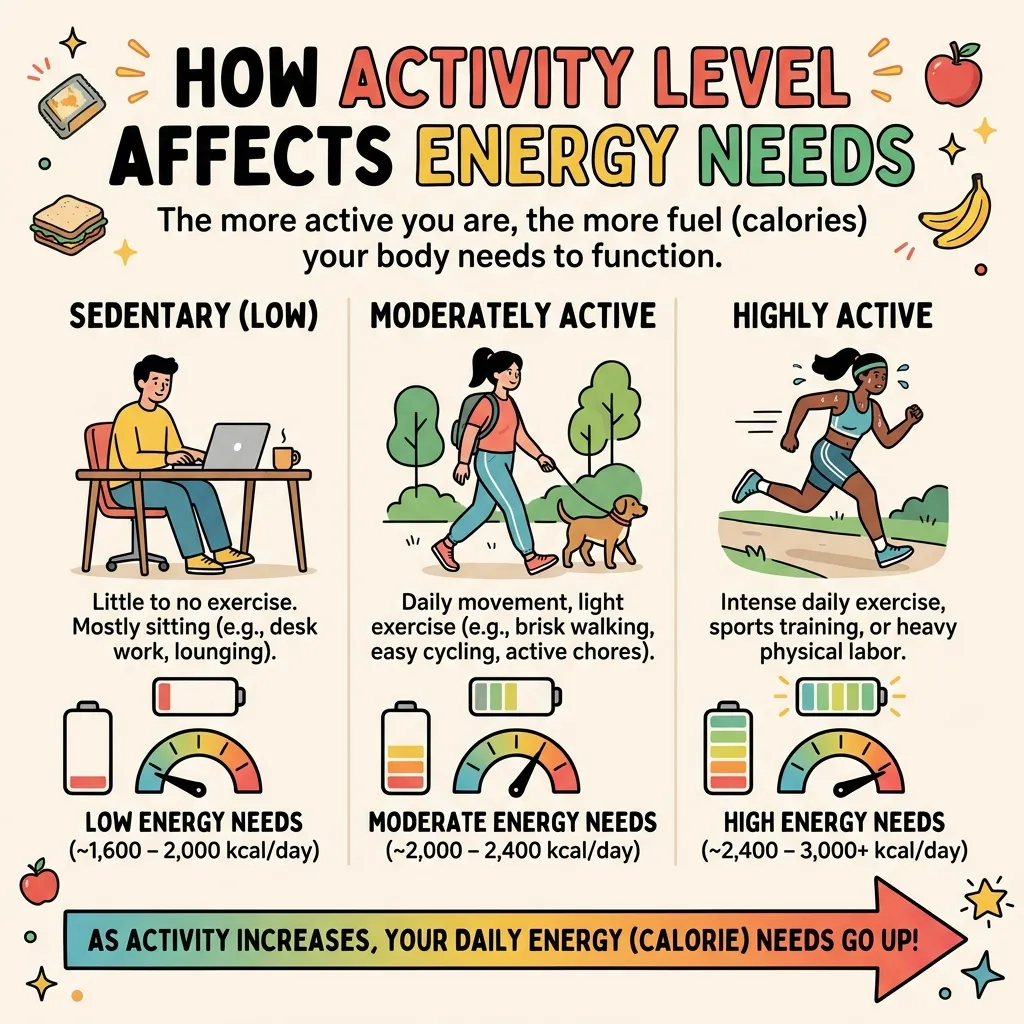
Your daily routine can influence how much energy your body uses.
| Activity level | Typical routine |
|---|---|
| Sedentary | Mostly sitting with little planned exercise |
| Lightly active | Some walking and occasional movement |
| Moderately active | Regular walking, exercise, or active daily tasks |
| Very active | Frequent exercise or physically demanding work |
These descriptions are general. Two people with the same activity label may still have different energy requirements.
Why Growing Bodies Need Special Consideration
Children and teenagers need energy not only for daily activities but also for growth and development.
Their requirements can change as they grow, become more active and move through different stages of development.
For this reason, adult calorie estimates should not automatically be applied to younger people. Children and teenagers should focus on regular, balanced meals and adequate nutrition rather than restrictive calorie targets.
What Factors Affect Your Calorie Needs?
Your energy requirements are influenced by more than just exercise. Several factors work together to determine how much energy your body needs each day.
Age
Energy requirements can change throughout life.
Growing children and teenagers need energy to support development. In adulthood, requirements may change with body composition, activity and other factors.
Older adults may also experience changes in muscle mass and daily movement, which can affect their energy needs.
Body Size and Composition
Body size influences how much energy your body uses.
Generally, larger bodies require more energy to support basic functions. Muscle tissue also uses energy, including while resting, so differences in body composition can influence daily requirements.
Physical Activity
Movement is an important factor in energy expenditure.
Someone who walks frequently, plays sports, or has a physically demanding job may use more energy than someone with a mostly inactive routine.
However, exercise is only one part of the picture. Everyday movement also contributes to total energy use.
Genetics and Metabolism
Metabolism refers to the chemical processes that keep your body functioning.
Genetics, hormones, body composition, age and other individual factors can influence metabolic rate.
This is one reason why two people with similar body measurements and activity levels may not have exactly the same energy requirements.
Health and Life Stages
Certain health conditions and life stages can affect energy needs.
For example, pregnancy, breastfeeding, recovery from illness and periods of growth may change how much energy and nutrition the body requires.
If you have a medical condition or specific nutritional needs, a qualified healthcare professional or registered dietitian can help provide appropriate guidance.
Calories in Different Nutrients
Not all nutrients provide the same amount of energy. The three main energy-providing macronutrients are carbohydrates, protein and fat.
Alcohol also provides energy, although it is not an essential nutrient.
Calories in Carbohydrates
Carbohydrates provide approximately 4 kcal per gram.
They are an important energy source for the body and are found in foods such as:
- Rice.
- Bread.
- Oats.
- Potatoes.
- Fruits.
- Beans.
- Whole grains.
Carbohydrates are especially useful for supporting everyday activity and providing energy to the brain and muscles.
Choosing fiber-rich sources, such as whole grains, fruits and vegetables, can also support digestive health.
Calories in Protein
Protein provides approximately 4 kcal per gram.
It is important for building and repairing tissues, supporting muscles and producing enzymes and hormones.
Common protein sources include:
- Eggs.
- Fish.
- Chicken.
- Milk and yogurt.
- Beans.
- Lentils.
- Tofu.
- Nuts and seeds.
Protein is essential for health, so it should not be overlooked when planning balanced meals.
Calories in Fat
Fat provides approximately 9 kcal per gram, making it the most energy-dense of the three main macronutrients.
Dietary fat helps your body absorb certain vitamins, supports cell function and provides essential fatty acids.
Sources include:
- Avocados.
- Olive oil.
- Nuts.
- Seeds.
- Fatty fish.
- Dairy products.
Rather than avoiding fat completely, include a variety of nutritious fat sources in your eating pattern.
Calories Per Gram: Quick Comparison
| Nutrient | Energy per gram |
|---|---|
| Carbohydrates | 4 kcal |
| Protein | 4 kcal |
| Fat | 9 kcal |
| Alcohol | 7 kcal |
These figures are general nutrition estimates. The energy your body obtains from a particular food can also depend on its composition and how it is digested.
Understanding Calorie Balance
Calorie balance describes the relationship between the energy you get from food and drinks and the energy your body uses.
It is one factor involved in changes in body weight, but it should be understood alongside health, nutrition and individual circumstances.
Energy Balance
When energy intake and energy expenditure are approximately equal over time, body weight may remain relatively stable.
However, daily energy intake and use naturally fluctuate. One meal or one day does not determine your long-term energy balance.
When Energy Intake Exceeds Energy Use
If you consistently consume more energy than your body uses, the extra energy can be stored, including as body fat.
This process happens over time and is influenced by many factors, including activity, metabolism and individual health.
It is not necessary for every meal to have exactly the same calorie amount as the energy you use.
When Energy Intake Is Below Energy Use
When your body receives less energy than it uses over an extended period, it may draw on stored energy.
However, consistently eating too little can make it difficult to meet your nutritional needs and may affect energy levels, concentration, recovery and overall health.
Adequate food intake is especially important during growth, pregnancy, illness and periods of high physical activity.
How to Read Calories on Food Labels
Food labels can help you understand the energy and nutrients in packaged foods. Learning how to read them makes it easier to compare products and understand serving sizes.
Check the Serving Size
The first thing to look at is the serving size.
A package may contain multiple servings, even if it looks like one portion. If you eat more or less than the listed serving, the calories you consume will also change.
For example, if a label lists 150 kcal per serving and you eat two servings, you consume approximately 300 kcal.
Look at Calories Per Serving
The calorie number tells you how much energy one listed serving provides.
Compare similar products using the same serving size whenever possible. This gives you a more useful comparison than looking at the front of the package alone.
Check the Nutritional Information
Calories are only one part of a food’s nutritional value.
Also look at:
- Protein.
- Carbohydrates.
- Dietary fiber.
- Total fat.
- Saturated fat.
- Added sugars.
- Sodium.
A nutritious food can contain more calories than another food while also providing more fiber, protein, vitamins, or minerals.
Pay Attention to Added Ingredients
The calories in a meal can change depending on how it is prepared.
For example, adding butter, oil, cheese, dressings, or sweetened sauces can increase the total energy content.
When comparing meals, consider all the ingredients rather than focusing on one item.
How to Build Balanced Meals Without Obsessing Over Calories
Understanding energy needs can be useful, but healthy eating involves more than counting numbers.
A balanced meal provides a variety of nutrients and enough food to support your daily activities.
Include Different Food Groups
Try to include a combination of:
- Vegetables and fruits: Provide vitamins, minerals and fiber.
- Whole grains and starchy foods: Supply carbohydrates and energy.
- Protein-rich foods: Support muscle maintenance and tissue repair.
- Healthy fat sources: Provide essential fatty acids and help absorb certain vitamins.
Eating different foods throughout the day helps provide a wider range of nutrients.
Add Protein to Main Meals
Protein can come from both animal and plant-based foods.
For example, you can include eggs at breakfast, lentils at lunch and fish, chicken, tofu, or beans at dinner.
Combining protein with vegetables and carbohydrate-rich foods can help create satisfying meals.
Choose Fiber-Rich Foods
Fiber is found in foods such as:
- Oats.
- Whole-wheat bread.
- Lentils.
- Beans.
- Apples.
- Berries.
- Broccoli.
- Carrots.
Including these foods regularly supports digestive health and contributes to a varied diet.
Listen to Hunger and Fullness Cues
Your appetite can change depending on activity, sleep, stress, health and other factors.
Eating when hungry and recognizing comfortable fullness can help you develop a healthier relationship with food.
You do not need to make every food decision based on a calorie number.
Common Calorie Myths to Avoid
There is a lot of confusing information about calories online. Understanding a few common myths can help you make more informed choices.
Myth 1: All Calories Are Nutritionally the Same
A calorie measures energy, but foods provide different combinations of nutrients.
For example, a serving of fruit and a sugary drink may provide similar energy, but they do not offer the same fiber, vitamins, minerals, or overall nutritional value.
The quality and variety of your food choices matter.
Myth 2: You Only Burn Calories During Exercise
Your body uses energy throughout the day, even while resting or sleeping.
Breathing, circulation, digestion and maintaining body temperature all require energy.
Exercise increases energy expenditure, but it is not the only activity that uses calories.
Myth 3: Eating Fat Automatically Causes Weight Gain
Fat contains more calories per gram than carbohydrates and protein, but that does not mean all fat-containing foods should be avoided.
Foods such as avocados, nuts, seeds and olive oil provide unsaturated fats and other useful nutrients.
The overall eating pattern matters more than labeling one nutrient as automatically unhealthy.
Myth 4: You Must Count Every Calorie to Eat Healthily
Calorie tracking is not necessary for everyone.
Many people can support their nutritional health by eating regular, varied meals, choosing a range of nutritious foods and paying attention to hunger and fullness.
Food should provide nourishment and enjoyment, not become a source of constant stress.
Myth 5: Everyone Needs the Same Number of Calories
Energy requirements differ from person to person.
Age, body size, activity, growth, health and life stage all influence how much energy someone needs.
A general calorie estimate should never be treated as a universal target.
Healthy Habits That Support Your Energy Needs
Instead of focusing only on calorie numbers, build everyday habits that help support your energy, nutrition and overall well-being.
Eat Regular, Balanced Meals
Try to include a variety of food groups throughout the day.
Skipping meals or regularly ignoring hunger can make it harder to meet your nutritional needs.
Choose meals that provide a combination of carbohydrates, protein, fats and fiber.
Stay Physically Active
Regular movement supports physical and mental health.
You can include activities you enjoy, such as walking, cycling, swimming, dancing, gardening, or playing a sport.
The goal is to make movement a sustainable part of your routine rather than treating exercise as a way to compensate for eating.
Drink Enough Water
Water supports digestion, circulation, temperature regulation and many other body functions.
Drink regularly throughout the day, with additional fluids when the weather is hot or you are physically active.
Water is generally a good everyday choice, although individual fluid needs can vary.
Get Enough Sleep
Sleep supports recovery, concentration, mood and normal body functions.
Try to maintain a consistent sleep schedule and create a comfortable environment that helps you rest.
Good sleep is an important part of overall health, alongside nutritious food and physical activity.
Focus on Long-Term Consistency
Healthy habits are built through everyday choices, not through perfect meals or strict rules.
Aim for a varied diet, enjoyable movement, sufficient rest and a positive relationship with food.
Small, sustainable habits are often easier to maintain than extreme routines.
Frequently Asked Questions
What Are Calories in Simple Words?
Calories are units of energy. They measure how much energy food and drinks provide to your body. Your body uses this energy for basic functions, movement, digestion and other daily activities.
How Many Calories Does an Average Adult Need Per Day?
The NHS gives broad estimates of around 2,000 kcal per day for an average adult woman and 2,500 kcal for an average adult man. However, individual needs vary with age, body size, activity and health.
Do You Burn Calories While Sleeping?
Yes. Your body continues using energy while you sleep to support breathing, circulation, brain activity, temperature regulation and other essential processes.
Which Nutrient Has the Most Calories Per Gram?
Fat provides approximately 9 kcal per gram, compared with 4 kcal per gram for carbohydrates and protein. This makes fat the most energy-dense of the three main macronutrients.
Are All Calories the Same?
Calories measure energy, but foods differ in their nutritional value. A food may provide fiber, protein, vitamins and minerals, while another may provide mostly energy with fewer nutrients. Both the energy content and the overall nutritional quality of food matter.
Can You Eat Healthily Without Counting Calories?
Yes. Counting calories is not required for everyone. Eating a variety of nutritious foods, having regular meals and paying attention to your body’s needs can support a balanced eating pattern.
Does Exercise Increase Your Daily Calorie Needs?
Physical activity uses energy, so people who exercise regularly or have physically demanding routines may need more energy. The amount depends on the type, duration and intensity of activity, along with individual factors.
Why Do Two People Need Different Amounts of Calories?
People differ in age, height, body composition, activity level, genetics and health. These differences affect how much energy their bodies use throughout the day.
Conclusion
Calories are simply a way to measure the energy your body receives from food and drinks. That energy supports everything from breathing and digestion to walking, exercising, learning and maintaining normal body functions.
Understanding how your body uses energy can help you make more informed food choices. However, your nutritional needs are individual and there is no single calorie target that works for everyone.
Rather than focusing only on numbers, aim for balanced meals, regular movement, enough sleep and a varied diet that provides the nutrients your body needs. A healthy approach to food is about nourishment, consistency and supporting your overall well-being.



One Comment on “Calories Explained: How Much Energy Does Your Body Need?”