
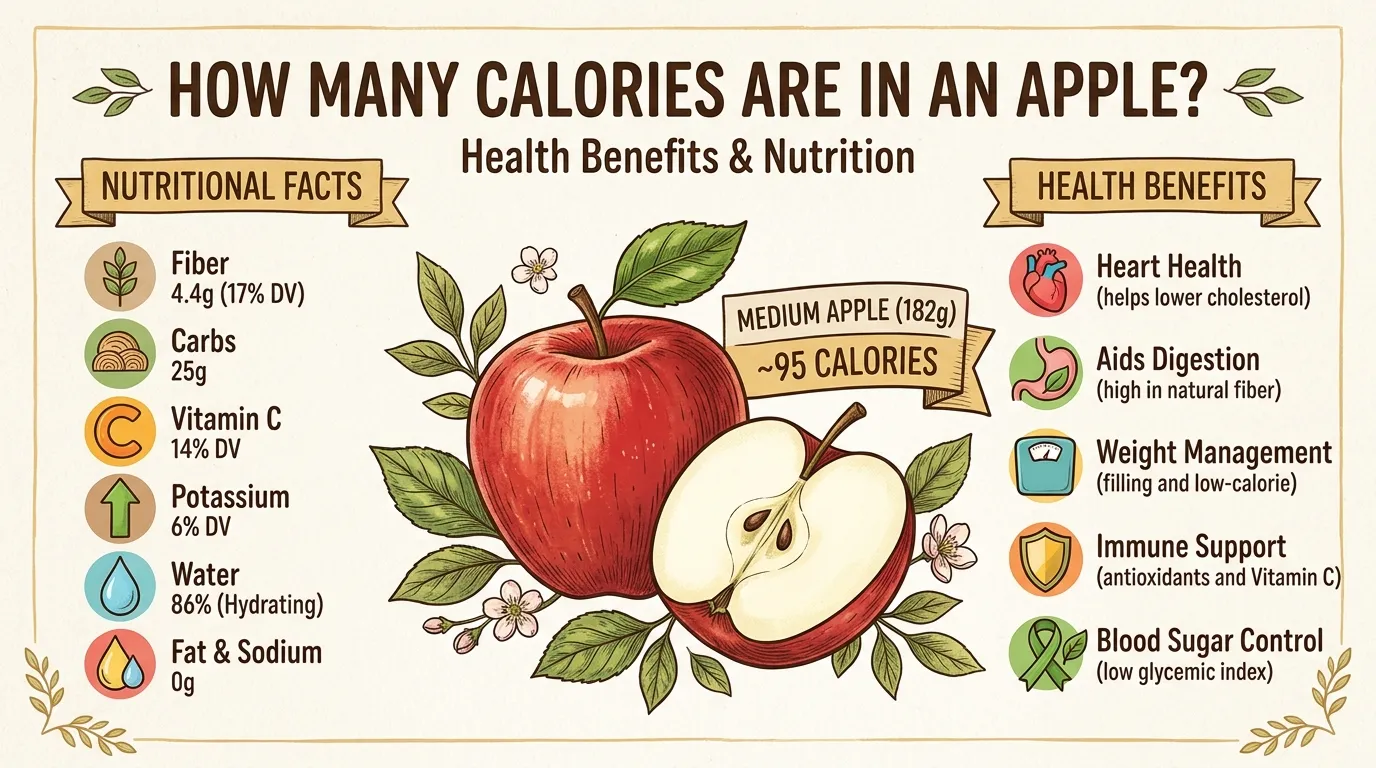
Apples are one of the most popular fruits because they are sweet, refreshing, easy to carry and simple to add to everyday meals. Whether you enjoy a crisp apple as a quick snack, slice it into oatmeal, or pair it with peanut butter, this fruit offers a convenient way to add fiber and essential nutrients to your diet.
Understanding apple calories can help you make informed food choices and better understand how apples fit into your daily eating habits. The number of calories in an apple depends mainly on its size, variety and how it is prepared. A small apple contains fewer calories than a large one, while dried apples and apple-based desserts can have considerably different nutritional values.
Beyond their calorie content, apples provide dietary fiber, natural carbohydrates, vitamin C and beneficial plant compounds. These nutrients contribute to a balanced diet and make apples a useful addition to meals and snacks.
In this guide, you will learn how many calories are in different apple sizes, explore their nutritional value and health benefits and discover simple ways to enjoy apples as part of a healthy eating routine.
How Many Calories Are in an Apple?
The number of calories in an apple varies according to its weight and size. As a general estimate, a medium raw apple with its skin contains approximately 95 calories.
Smaller apples provide fewer calories, while larger apples contain more because they offer a greater amount of edible fruit. The variety can also affect the nutritional values slightly, although portion size is usually the more important factor.
Here is an approximate calorie guide for raw apples with their skin:
| Apple Size | Approximate Weight | Calories |
|---|---|---|
| Small apple | 149 grams | 77 calories |
| Medium apple | 182 grams | 95 calories |
| Large apple | 223 grams | 116 calories |
| 100 grams of apple | 100 grams | 52 calories |
| Half a medium apple | 91 grams | 48 calories |
These values are estimates based on typical raw apple nutrition data. Actual values may differ depending on the apple’s variety, size and edible weight.
If you are tracking your food intake, weighing the edible portion or selecting a matching serving size in a nutrition database can provide a more useful estimate.
Apple Nutrition Facts
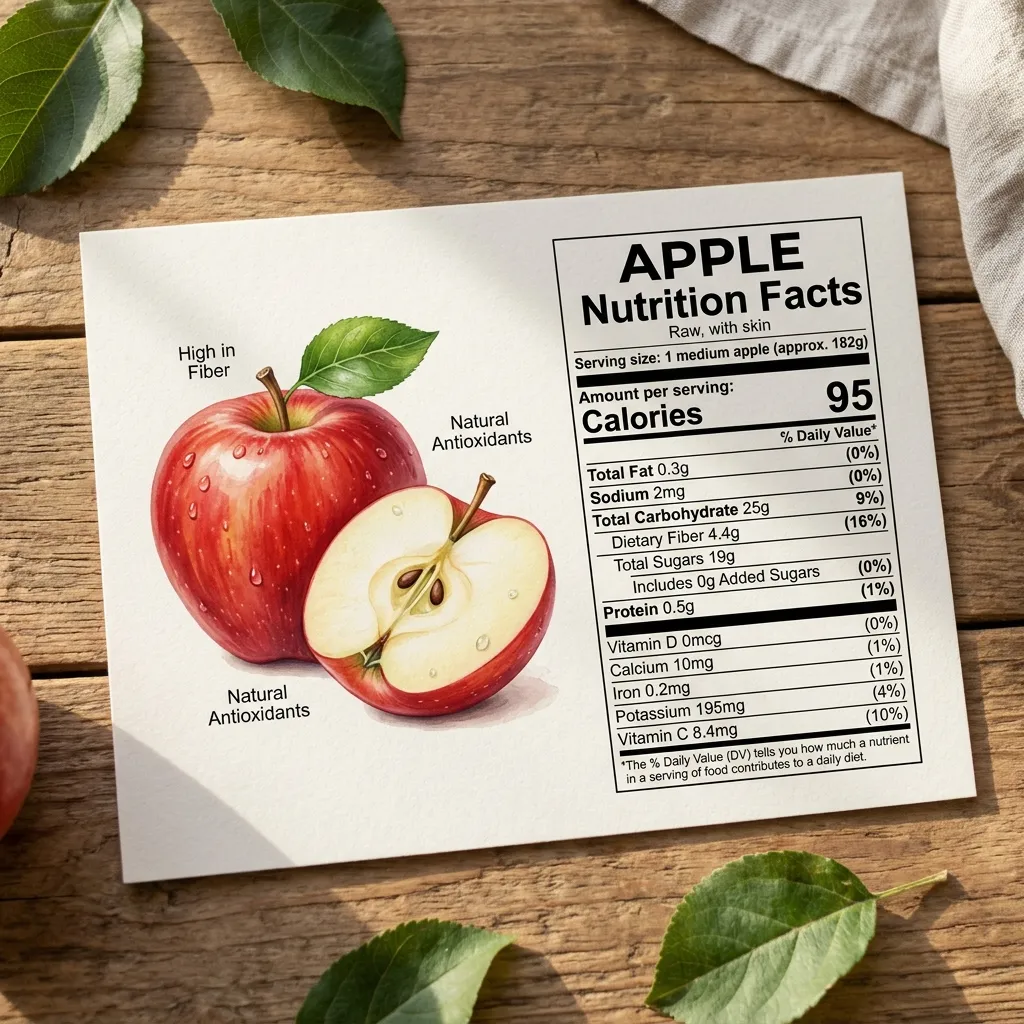
Apples contain carbohydrates, a small amount of protein, very little fat and several important nutrients. They also provide water and dietary fiber, making them a refreshing fruit that can fit into many different eating patterns.
A medium raw apple with its skin contains approximately the following nutrients:
| Nutrient | Approximate Amount |
|---|---|
| Calories | 95 |
| Carbohydrates | 25 grams |
| Dietary fiber | 4.4 grams |
| Total sugars | 19 grams |
| Protein | 0.5 grams |
| Total fat | 0.3 grams |
| Vitamin C | 8.4 milligrams |
| Potassium | 195 milligrams |
| Water | Approximately 156 grams |
Nutrient amounts are approximate and can vary by apple variety and size. The sugar listed is naturally present in the fruit, not necessarily added sugar.
Carbohydrates in Apples
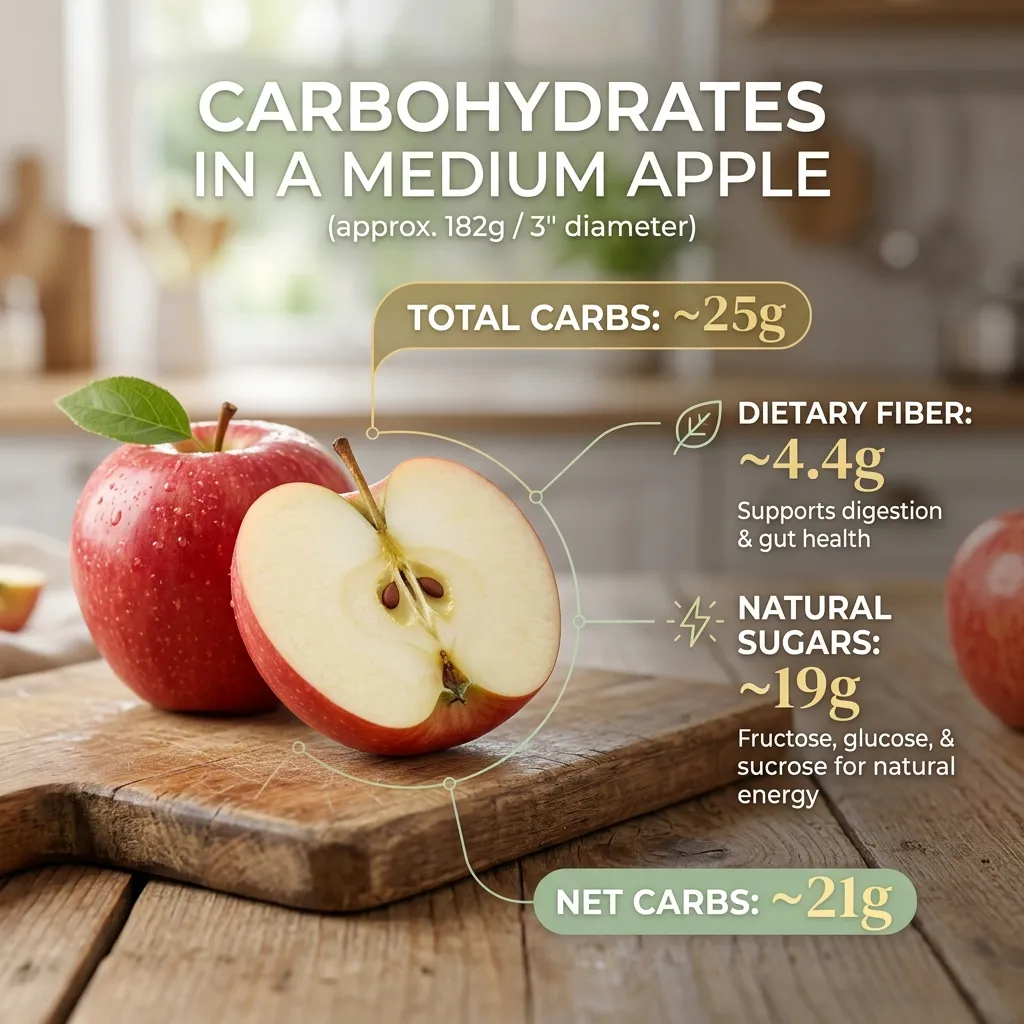
Most of the energy in apples comes from carbohydrates. These include naturally occurring sugars as well as dietary fiber.
Carbohydrates provide energy for daily activities, while fiber supports digestive health and can contribute to a feeling of fullness.
Although apples taste sweet, they also contain water and fiber. Eating a whole apple is different from drinking apple juice because juice generally provides less fiber per comparable serving.
Read More: Avocado Calories and Nutrition: Is It Good for Weight Management?
Fiber in Apples
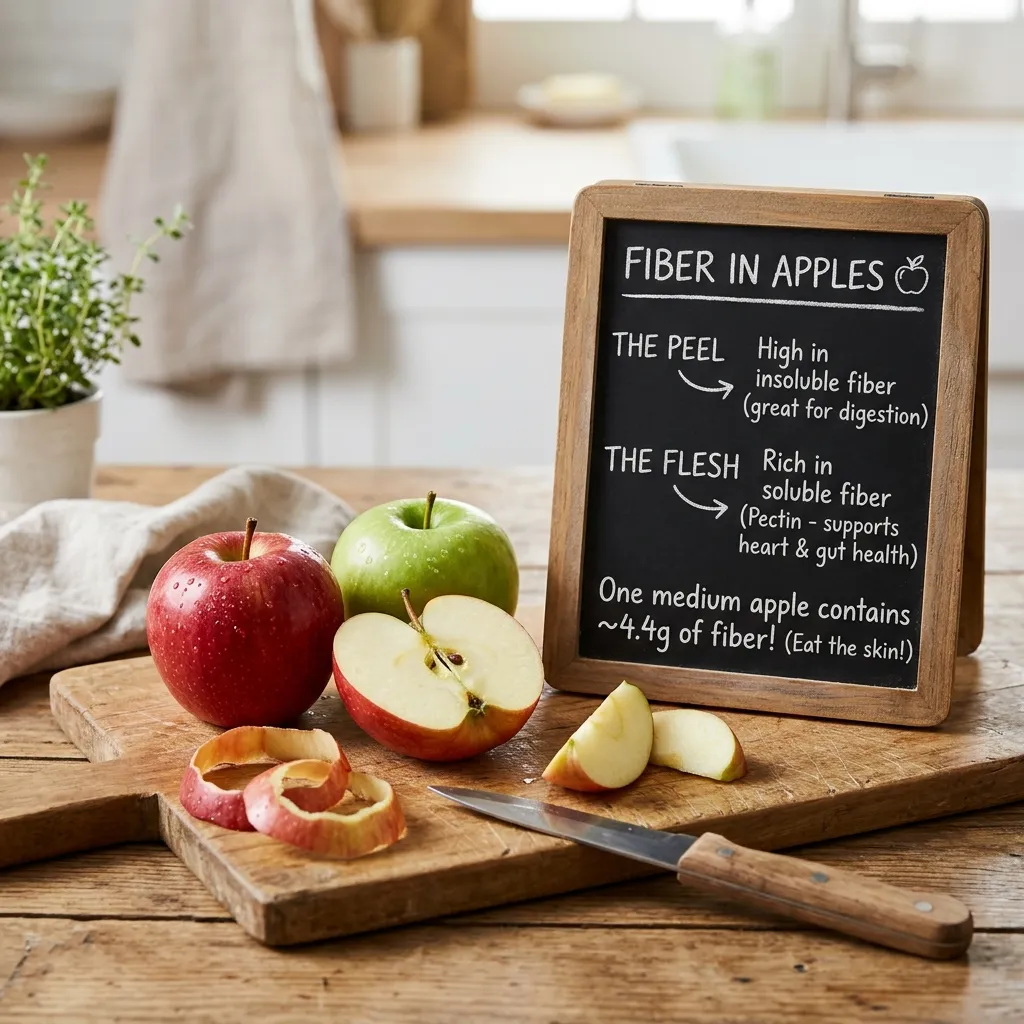
Apples are a useful source of dietary fiber, particularly when you eat them with their skin.
Fiber supports regular bowel movements and helps maintain digestive health. It can also contribute to fullness when included in balanced meals and snacks.
A medium apple provides around 4.4 grams of fiber, although the exact amount varies with its size and variety.
Vitamins and Minerals
Apples provide vitamin C, potassium and smaller amounts of other vitamins and minerals.
Vitamin C supports normal immune function, collagen formation and the body’s ability to absorb iron from plant foods. Potassium helps support normal muscle function, nerve signaling and fluid balance.
Apples are not the richest source of every nutrient, but they can contribute to your overall intake when eaten alongside a variety of fruits, vegetables, whole grains and other nutritious foods.
Health Benefits of Eating Apples
Apples offer more than a convenient snack. Their fiber, water and plant compounds make them a valuable addition to a varied, balanced diet.
Supports Digestive Health
Apples contain both soluble and insoluble fiber. Soluble fiber includes pectin, a type of fiber found in apple flesh and skin.
Dietary fiber supports healthy digestion and helps maintain regular bowel movements. Getting enough fiber from a variety of foods, including fruits, vegetables, legumes and whole grains, is an important part of digestive health.
If you are increasing your fiber intake, do so gradually and drink enough fluids to help your digestive system adjust.
Helps You Feel Satisfied
Whole apples contain water and fiber, which can contribute to fullness. Their crisp texture also encourages chewing, making them a satisfying option for many people.
Pairing an apple with a source of protein or healthy fat, such as plain yogurt, nuts, or peanut butter, can make a snack more substantial.
Individual responses vary, so choose combinations that fit your appetite, preferences and daily nutritional needs.
Provides Antioxidant Plant Compounds
Apples contain plant compounds, including polyphenols and flavonoids, that have antioxidant properties.
These compounds help protect cells from damage associated with oxidative stress. Apple skin contains many of these beneficial compounds, which is one reason eating a washed apple with its skin can be a practical choice.
No single fruit can prevent every disease, but eating a variety of colorful plant foods helps provide a broad range of beneficial nutrients and compounds.
Contributes to Heart-Healthy Eating
Apples provide dietary fiber and plant compounds that can contribute to an overall heart-healthy eating pattern.
Soluble fiber is associated with benefits for cholesterol management, although the effect of a particular food depends on the wider diet and individual circumstances.
For heart health, combine fruit intake with a balanced eating pattern that includes vegetables, whole grains, legumes, nuts and appropriate sources of protein.
Supports a Balanced Diet
Apples are easy to include in breakfast, lunch, snacks and desserts. Their natural sweetness can add flavor to meals without requiring added sugar.
They can be eaten whole, sliced into salads, mixed with oatmeal, or paired with other foods. This flexibility makes them useful for people with different food preferences and routines.
Their nutritional benefits are best understood as part of an overall balanced diet rather than as a result of eating one particular food.
Apple Calories by Variety
Different apple varieties have distinct flavors, textures and levels of sweetness. However, the size and weight of the apple usually have a greater influence on its total calorie content than the variety name alone.
Here are several common varieties and what to know about their calories.
Red Delicious Apples
Red Delicious apples are known for their deep red skin and relatively mild, sweet flavor.
A medium apple of this variety will generally provide calories in a range similar to other medium-sized raw apples. The exact amount depends on its weight and growing conditions.
Their crisp flesh makes them suitable for snacks, fruit plates and simple salads.
Granny Smith Apples
Granny Smith apples are recognizable by their green skin and tart flavor.
Their calorie content is broadly comparable to that of other apples of similar size. Their tartness can make them a good choice for people who prefer less-sweet-tasting fruit.
Try adding sliced Granny Smith apples to salads or pairing them with cheese, yogurt, or nuts.
Gala Apples
Gala apples are often sweet, crisp and convenient for everyday snacking.
A medium Gala apple typically has a calorie content similar to other medium apples, although individual fruit sizes vary.
Their mild sweetness also makes them a useful addition to oatmeal, lunch boxes and homemade fruit salads.
Fuji Apples
Fuji apples are generally sweet and crisp and they can grow quite large.
Because some Fuji apples are heavier than a typical medium apple, their total calorie content may be higher. Checking the weight is more useful than relying on the variety name alone.
Fuji apples can be enjoyed fresh or sliced into snacks and salads.
Honeycrisp Apples
Honeycrisp apples are popular for their juicy flesh and crisp texture.
Their calories depend on their size and weight, just as they do with other varieties. A large Honeycrisp apple will generally contain more calories than a small one.
Enjoy it whole or combine slices with yogurt, oats, or nut butter for a more filling snack.
How Many Calories Are in Half an Apple?
Half an apple is a convenient portion when you want a smaller snack or need only part of a fruit for a recipe.
Half of a medium apple weighing approximately 182 grams contains around 48 calories. The exact amount depends on the size of the original apple and whether the portion includes the core or seeds in the weight measurement.
You can add half an apple to oatmeal, blend it into a smoothie, or pair it with a small serving of nuts.
If you save the remaining portion, store it in an airtight container in the refrigerator. A little lemon juice can help slow browning, although browning alone does not mean the apple is unsafe to eat.
Calories in Apples With and Without the Skin
Apple skin contains dietary fiber and beneficial plant compounds, while the flesh provides water, carbohydrates and nutrients.
Eating a whole apple with its skin is generally a practical way to get more of the fruit’s fiber and plant compounds. Wash the apple under running water before eating it.
Removing the skin reduces some of the fiber and plant compounds you consume, but the peeled flesh still provides carbohydrates, water and other nutrients.
The calorie difference between an apple with its skin and the same apple without its skin is generally modest. The total will depend on how much skin and flesh are removed.
Choose whichever preparation you prefer and can comfortably include in your eating routine.
Fresh Apples vs. Apple Juice vs. Dried Apples
Apples can be eaten in several forms, but their nutritional profiles differ depending on how they are processed and served.
Fresh Apples
Fresh whole apples provide water, carbohydrates, fiber and plant compounds.
Their water content contributes to their volume, while the intact fruit structure makes them a convenient option for snacks and meals. Eating them with the skin provides additional fiber compared with eating the peeled flesh alone.
Apple Juice
Apple juice provides carbohydrates and natural sugars but generally contains much less fiber than a whole apple.
A serving of juice can also be easier to consume quickly than a whole fruit. Calorie content varies according to the serving size and whether the product contains added sugar.
If you enjoy apple juice, check the nutrition label and consider how it fits into your overall eating pattern.
Dried Apples
Dried apples have had much of their water removed, making them smaller and more concentrated by weight.
As a result, a small handful of dried apples can contain more calories per gram than fresh apple slices. Some commercial products also contain added sugar or other ingredients.
Check the package label for the serving size and nutritional information. Dried apples can be a convenient snack, but it is helpful to recognize that a small volume may represent a larger amount of fruit.
Apple Pie and Other Apple Desserts
Apple pie, apple crumble and other baked desserts contain ingredients beyond apples, such as flour, butter, sugar and pastry.
Their calorie content can therefore be considerably higher than that of a plain apple. Recipes and serving sizes make a significant difference.
You can still enjoy apple desserts as part of a balanced diet. If you are tracking calories, use the recipe information or a suitable database entry to estimate the portion.
Are Apples Good for Weight Management?
Apples can fit into a weight-management plan because they provide water, fiber and natural sweetness in a convenient whole-food form.
A medium apple contains approximately 95 calories, making it an easy snack to include in many different eating patterns. However, no single fruit automatically causes weight loss or prevents weight gain.
Weight management is influenced by overall food intake, physical activity, sleep, health conditions, medications and other individual factors.
Choose Whole Fruit More Often
Whole apples provide fiber and require more chewing than juice. This can make them a satisfying choice for some people.
Including whole fruit in meals and snacks can also help you add variety to your diet.
Combine Apples With Other Nutritious Foods
An apple can be paired with plain yogurt, nuts, seeds, or nut butter to create a snack that provides a combination of carbohydrates, protein and fat.
For example, apple slices with yogurt offer a different nutritional balance from an apple eaten alone.
The best combination depends on your preferences, appetite and individual nutritional needs.
Avoid Unnecessary Food Restrictions
You do not need to eliminate foods you enjoy or rely on a single fruit to manage your weight.
Focus on a sustainable eating pattern that provides enough energy and nutrients. If you need help setting an appropriate calorie target, a registered dietitian or qualified healthcare professional can offer individualized guidance.
Healthy Ways to Add Apples to Your Daily Diet
Apples are versatile and require little preparation, making them easy to use in different meals.
Apple and Oatmeal Breakfast
Slice an apple and add it to oatmeal while cooking or sprinkle it over the finished bowl.
Cinnamon can add flavor, while nuts, seeds, or yogurt can contribute additional nutrients. Adjust the ingredients and serving sizes to suit your appetite.
Apple and Yogurt Snack
Combine apple slices with plain yogurt for a quick snack.
The apple provides carbohydrates and fiber, while yogurt can provide protein and calcium. You can add a small amount of nuts or seeds if you enjoy extra texture.
Fresh Apple Salad
Add chopped apples to a salad with leafy greens, carrots, nuts and a dressing you enjoy.
The fruit adds sweetness and crunch, creating a contrast with savory ingredients. If you are tracking your intake, remember to include the dressing and other additions in your estimate.
Apple and Nut Butter
Pair apple slices with peanut butter or another nut butter for a simple snack.
Nut butter provides fat and some protein, making the combination more substantial than fruit alone. Because nut butter is energy-dense, use the portion that suits your preferences and needs.
Homemade Apple Smoothie
Blend apple pieces with yogurt, milk, or a suitable plant-based alternative.
You can also add oats or other fruit. Keep in mind that blending does not automatically reduce the calories in the ingredients and straining the mixture can remove some of its fiber.
Baked Apples
Bake apple halves with cinnamon and a little water until tender.
This method creates a warm dessert or breakfast topping without requiring a pastry crust. Additional ingredients, such as sugar, butter, or syrup, will affect the total calorie content.
Common Mistakes When Tracking Apple Calories
Even a simple food can be recorded inaccurately when portion sizes and preparation methods are overlooked.
Assuming Every Apple Has the Same Calories
Apples vary considerably in size and weight. A small apple and a large apple can have noticeably different calorie totals.
Choose the serving that matches the fruit you eat instead of automatically recording every apple as medium-sized.
Confusing Apple Juice With Whole Apples
Apple juice does not provide the same amount of fiber as a whole apple and can have a different calorie content per serving.
When logging food, select the correct entry for fresh apple, juice, dried apple, or another apple-based product.
Forgetting Added Ingredients
Peanut butter, honey, sugar, caramel and other toppings can contribute additional calories.
If you add these ingredients, include them in your record when tracking your intake.
Ignoring Serving Sizes on Packaged Products
Dried apple snacks and packaged apple products may list nutrition information per serving rather than per package.
Check the label carefully so you know whether the displayed values match the amount you consumed.
Treating Calories as the Only Measure of Nutrition
Calories provide information about energy, but they do not explain the entire nutritional value of a food.
Consider fiber, vitamins, minerals, food variety and your overall dietary pattern when making food choices.
Frequently Asked Questions
How Many Calories Are in a Medium Apple?
A medium raw apple with its skin contains approximately 95 calories. The exact amount varies according to its size, weight and variety.
How Many Calories Are in a Small Apple?
A small apple weighing around 149 grams contains approximately 77 calories. A smaller or larger fruit may have a different calorie total.
How Many Calories Are in a Large Apple?
A large apple weighing approximately 223 grams contains around 116 calories. The actual value depends on its edible weight and variety.
How Many Calories Are in 100 Grams of Apple?
One hundred grams of raw apple with its skin contains approximately 52 calories. This measurement can be useful when you weigh fruit for a recipe or food diary.
Is an Apple High in Sugar?
Apples contain naturally occurring sugars, with a medium apple providing approximately 19 grams of total sugar. They also contain water and dietary fiber, which distinguish whole fruit from many sweetened foods and beverages.
Is It Better to Eat an Apple With the Skin On?
Eating an apple with its skin provides more fiber and certain plant compounds than eating the peeled flesh alone. Wash the apple thoroughly before eating it.
Are Green Apples Lower in Calories Than Red Apples?
Not necessarily. The calorie content of an apple depends mainly on its size and weight. Green and red varieties can have similar calorie values when their portions are comparable.
Are Apples a Good Snack for Weight Management?
Apples can be a convenient snack because they provide water, fiber and natural sweetness. Whether they support an individual’s weight-management goals depends on the person’s overall diet, activity and nutritional needs.
Do Cooked Apples Have More Calories Than Raw Apples?
Cooking an apple without adding ingredients does not automatically add calories. However, cooking methods can change its water content, which affects calories per gram. Sugar, butter, syrup and other additions increase the total calorie content.
Are Apple Calories Different in Apple Juice?
Yes. The calorie content of apple juice depends on the serving size and product. Juice generally provides less fiber than a whole apple, so compare the nutrition information for the specific serving you consume.
Conclusion
Understanding apple calories can help you make informed choices about portions and see how this popular fruit fits into your daily diet. A medium raw apple contains approximately 95 calories and provides carbohydrates, dietary fiber, vitamin C, potassium and beneficial plant compounds.
Apples can contribute to digestive health, help make snacks satisfying and add variety to a balanced eating pattern. Their nutritional value depends on how they are served, with whole apples generally providing more fiber than apple juice and dried apples containing more calories per gram because much of their water has been removed.
Enjoy apples in the way that works best for you, whether fresh, sliced into oatmeal, paired with yogurt, or baked with cinnamon. Pay attention to portion sizes when needed, but remember that overall dietary balance matters more than any single calorie number.
With their convenience, versatility and useful nutrients, apples can be a simple and enjoyable part of everyday eating.




One Comment on “How Many Calories Are in an Apple? Health Benefits and Nutrition”