Introduction
Every year when Ramadan arrives, I notice the same problem around me. People fast all day, then eat too much at iftar and feel tired, heavy, and sleepy for the rest of the night. I have made this mistake myself more than once.
The truth is that fasting itself is not hard on the body when meals are planned well. What makes the month difficult is usually the food we choose at suhoor and iftar.
In this article, I will share a simple and healthy plan for both meals, based on foods that are easy to find and easy to prepare at home.
Why Planning Your Meals Matters in Ramadan
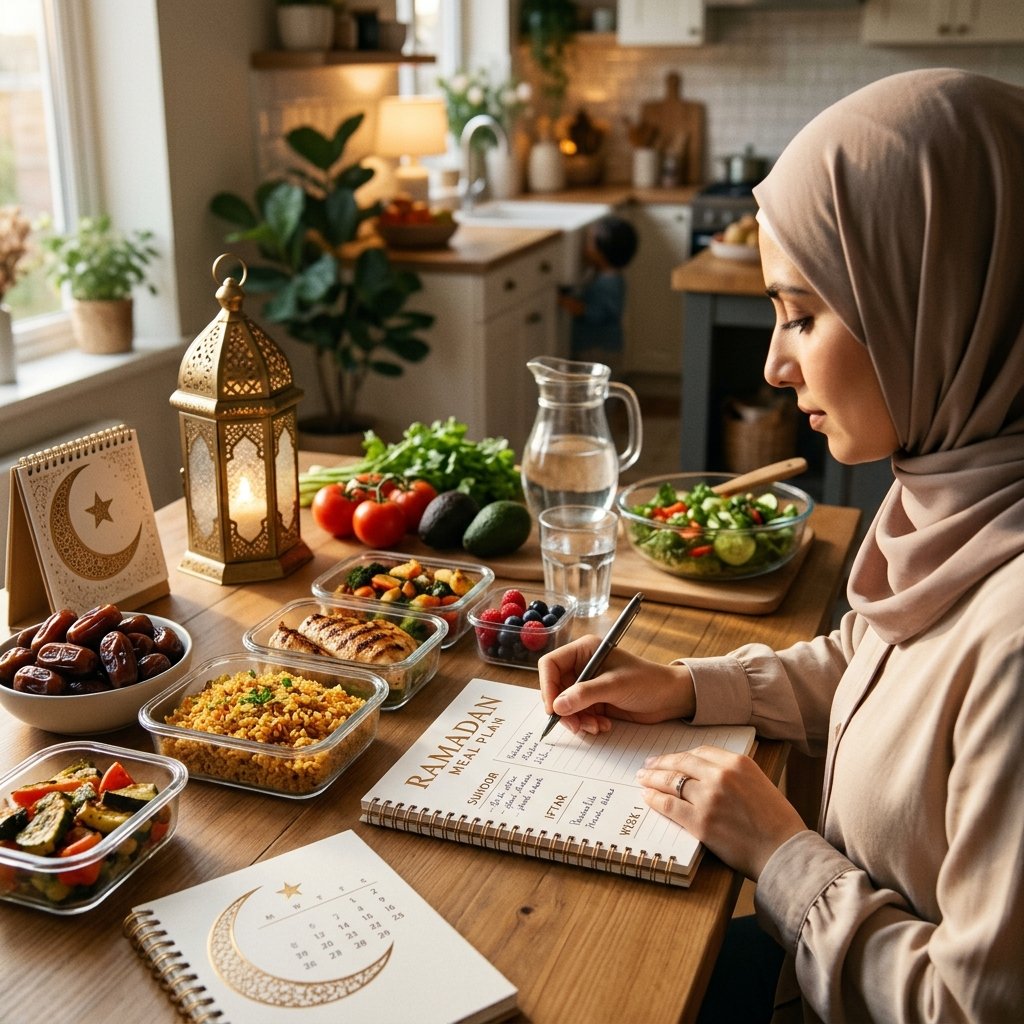
During Ramadan, you only have two main chances to feed your body. That is why each meal needs to count.
A good suhoor gives you energy for the long day ahead. A balanced iftar helps your body recover without making you feel uncomfortable. When both meals are planned, you feel stronger, think more clearly, and enjoy your worship more.
What to Eat at Suhoor
Suhoor should keep you full for as long as possible. I always prefer foods that digest slowly, because they release energy little by little.
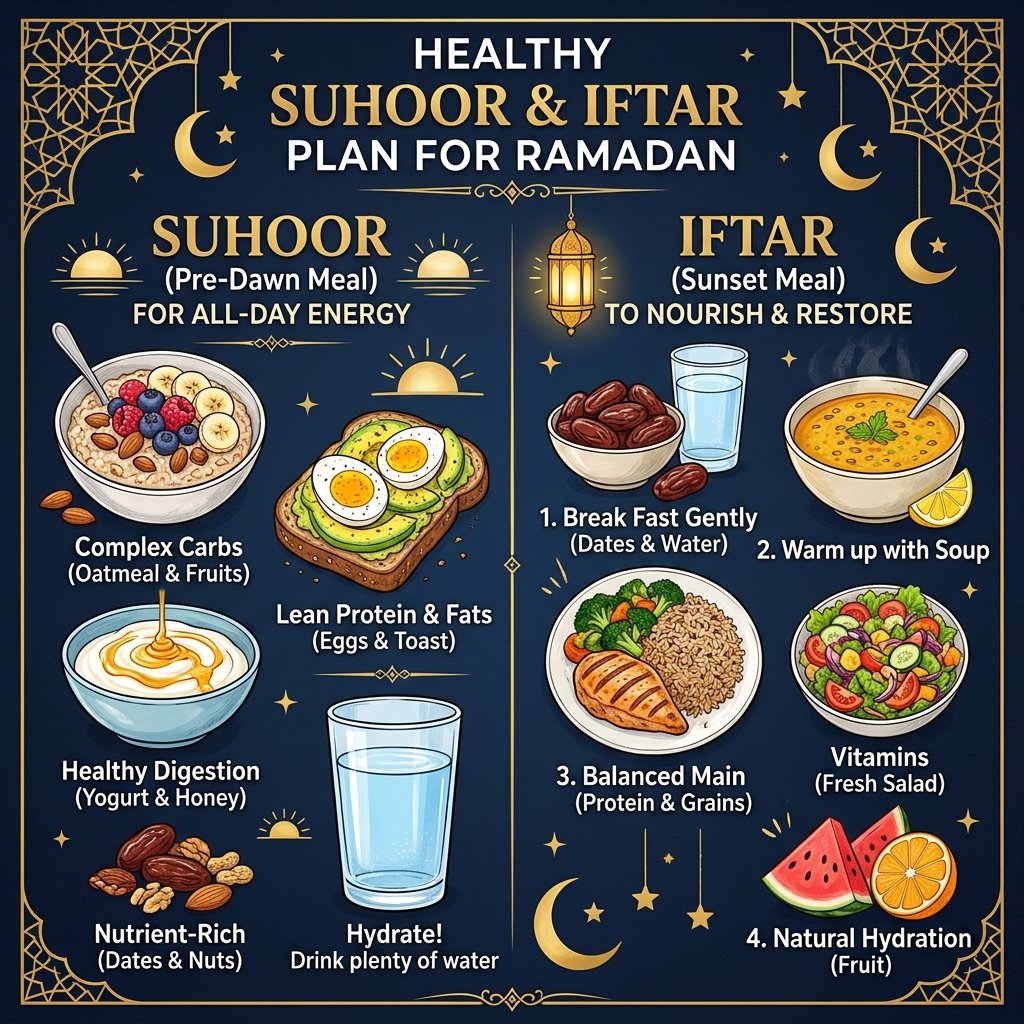
Oats, whole wheat roti, eggs, and yogurt are all excellent choices. Oats cooked with milk and topped with a few nuts make a very filling bowl. An omelette with vegetables and one paratha made with less oil also works well.
Dates, bananas, and a handful of almonds are easy additions. They give natural energy and take only a minute to prepare.
Try to avoid very salty foods and heavy fried items at suhoor. They make you thirsty much earlier in the day.
Drink Enough Water Between Iftar and Suhoor
Most of the tiredness people feel during fasting comes from dehydration, not hunger. I have learned that drinking water properly at night makes a big difference the next day.
Instead of drinking a lot at once, spread your water across the evening. A glass at iftar, a glass after prayers, a few glasses before bed, and another glass at suhoor is a good pattern.
Milk, lassi, and coconut water are also helpful. Tea and coffee should be limited because they can make you lose more fluid.
How to Break Your Fast at Iftar
The Sunnah of breaking the fast with dates and water is also the best advice for your body. Dates give quick energy, and water starts hydrating you right away.
After that, I like to wait a little, pray Maghrib, and then sit down for the main meal. This gives the stomach time to wake up slowly instead of being shocked by a large plate of food.
A bowl of soup or a simple fruit chaat is a good second step. Then move on to your main meal, which should include protein, vegetables, and a modest portion of rice or roti.
Be Careful with Fried and Sugary Foods
Samosas, pakoras, and sweet drinks are part of our iftar tradition, and I enjoy them too. The problem begins when they fill the whole table.
Too much fried food can cause acidity, bloating, and heaviness. Sugary drinks give a quick boost, followed by a sudden drop in energy.
A better approach is to choose one or two favorites and keep the portion small. You can also bake or air fry snacks instead of deep frying them. Fresh juice, or water with a little lemon, is a lighter option than packaged drinks.
Eat Slowly and Avoid Overeating
After a full day without food, it is very easy to eat too fast. The stomach needs about twenty minutes to tell the brain it is full.
I try to put my spoon down between bites and stop when I feel comfortably satisfied, not stuffed. This one habit has saved me from many uncomfortable nights.
Add Light Activity and Enough Sleep
A short walk about an hour after iftar helps digestion and improves your mood. It does not need to be long. Fifteen to twenty minutes is enough.
Sleep also matters more than people think. Staying awake until late and then waking up for suhoor leaves you exhausted. Try to sleep early after Taraweeh, even if it is only for a few hours, and rest a little during the day if your schedule allows.
A Simple Sample Plan
For suhoor, you could have oats with milk and nuts, one boiled egg, a banana, and plenty of water.
For iftar, start with dates and water. After prayer, have a bowl of soup, grilled chicken or lentils with vegetables, one roti, and a small salad. Finish with fruit or a light dessert if you wish.
This kind of routine is easy to follow all month and does not need expensive ingredients.
A Quick Note on Health Conditions
If you have diabetes, high blood pressure, or any other medical condition, please speak with your doctor before Ramadan. Some people need changes in medicine timing or meal portions, and a doctor can guide you properly.
Final Thoughts
A healthy Ramadan does not need a complicated diet. It only needs balanced meals, enough water, slow eating, and a little movement.
In my opinion, the best plan is the one you can follow every day without stress. Start with small changes this week, and you will feel the difference in your energy and focus.