Introduction
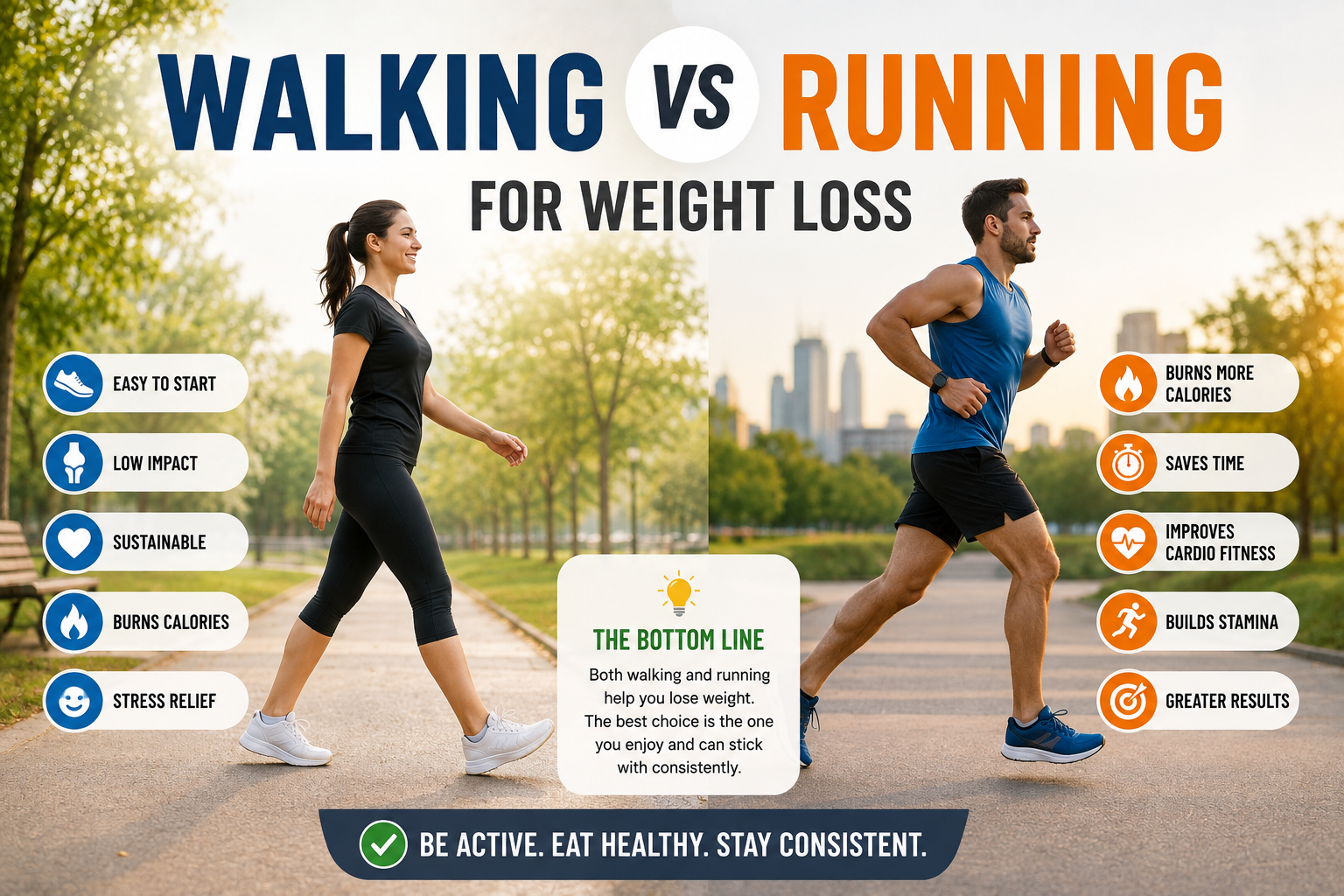
When people decide to lose weight, one of the first questions they usually ask is whether walking or running is better. I have wondered the same thing myself because both activities are simple, require very little equipment, and can be done almost anywhere. The good news is that both walking and running can help with weight loss, but each offers different benefits depending on your fitness level, lifestyle, and personal goals.
In my opinion, there is no single answer that works for everyone. Some people enjoy the challenge of running, while others prefer the comfort and consistency of walking. Instead of trying to decide which one is perfect, I think it is more important to understand how each exercise affects the body and which one you are more likely to continue in the long term.
In this article, I will compare walking and running for weight loss, explain the advantages of both, and share my thoughts on which option may be the best depending on your situation.
How Weight Loss Actually Works
Before comparing walking and running, I believe it is important to understand how weight loss happens.
The body loses weight when it burns more calories than it consumes. This is known as a calorie deficit. Exercise helps increase the number of calories burned, while healthy eating helps control the number of calories consumed.
Walking and running both contribute to creating this calorie deficit. The difference is mainly how quickly they burn calories and how much effort they require.
Benefits of Walking
Walking is one of the easiest forms of exercise anyone can start. It does not require special skills, expensive equipment, or a gym membership.
One reason I like walking is that almost everyone can do it regardless of age or fitness level. Even a thirty minute walk each day adds movement to your routine and supports gradual weight loss.
Walking is also gentle on the joints, making it an excellent choice for beginners, older adults, or people recovering from injuries.
Another benefit is that walking is easy to maintain. Many people can walk every day without feeling exhausted, which makes it easier to stay consistent over several months.
Benefits of Running
Running is a more intense form of exercise that burns calories faster than walking.
Whenever I run, I notice that my heart rate increases much more quickly, making it a powerful cardiovascular workout. Running strengthens the heart, improves endurance, and helps burn a significant number of calories in a shorter period.
For people with busy schedules, running can be an efficient way to exercise because even twenty to thirty minutes can provide noticeable benefits.
Running also helps improve athletic performance and builds stronger muscles in the legs and core.
Which Burns More Calories
One of the biggest differences between walking and running is calorie burn.
Running generally burns more calories because the body works much harder during the activity. A person who runs for thirty minutes usually burns considerably more calories than someone walking for the same amount of time.
However, this does not automatically mean running is the better choice.
If someone enjoys walking enough to do it every day while only managing one short run each week, walking may actually produce better long term results because consistency always matters more than intensity.
Walking Is Easier to Maintain
This is one reason I often recommend walking to beginners.
Many people start running with excitement but stop after a few weeks because it feels too difficult. Walking feels more comfortable, creates less fatigue, and can easily become part of a daily routine.
You can walk before breakfast, after dinner, during lunch breaks, or even while talking on the phone.
Healthy habits that become part of everyday life usually produce better long term weight loss than workouts that feel impossible to maintain.
Running Saves Time
For people who have very busy schedules, running can be extremely helpful.
If I only have twenty minutes available, running allows me to burn more calories than walking during the same period.
This makes running a practical option for those who want maximum results in minimum time.
However, it is still important to increase running gradually to reduce the risk of injury.
Walking Is Better for Beginners
If someone has not exercised in a long time, I usually believe walking is the smarter starting point.
It places less stress on the knees, ankles, and hips while allowing the body to improve endurance safely.
As fitness improves, faster walking, hill walking, or short jogging intervals can be added naturally.
Starting slowly often prevents injuries that could interrupt progress.
Running Builds Fitness Faster
Running challenges both the heart and muscles more intensely.
With regular practice, many people notice improved stamina, faster metabolism, and better athletic performance.
Although running is demanding, it can produce impressive fitness improvements when combined with proper recovery and balanced nutrition.
The Importance of Healthy Eating
No matter whether you choose walking or running, exercise alone cannot overcome poor eating habits.
I always believe nutrition plays the biggest role in successful weight loss.
Eating lean protein, vegetables, fruits, whole grains, and healthy fats while limiting sugary drinks and processed foods creates the foundation for lasting results.
Exercise simply makes the process even more effective.