
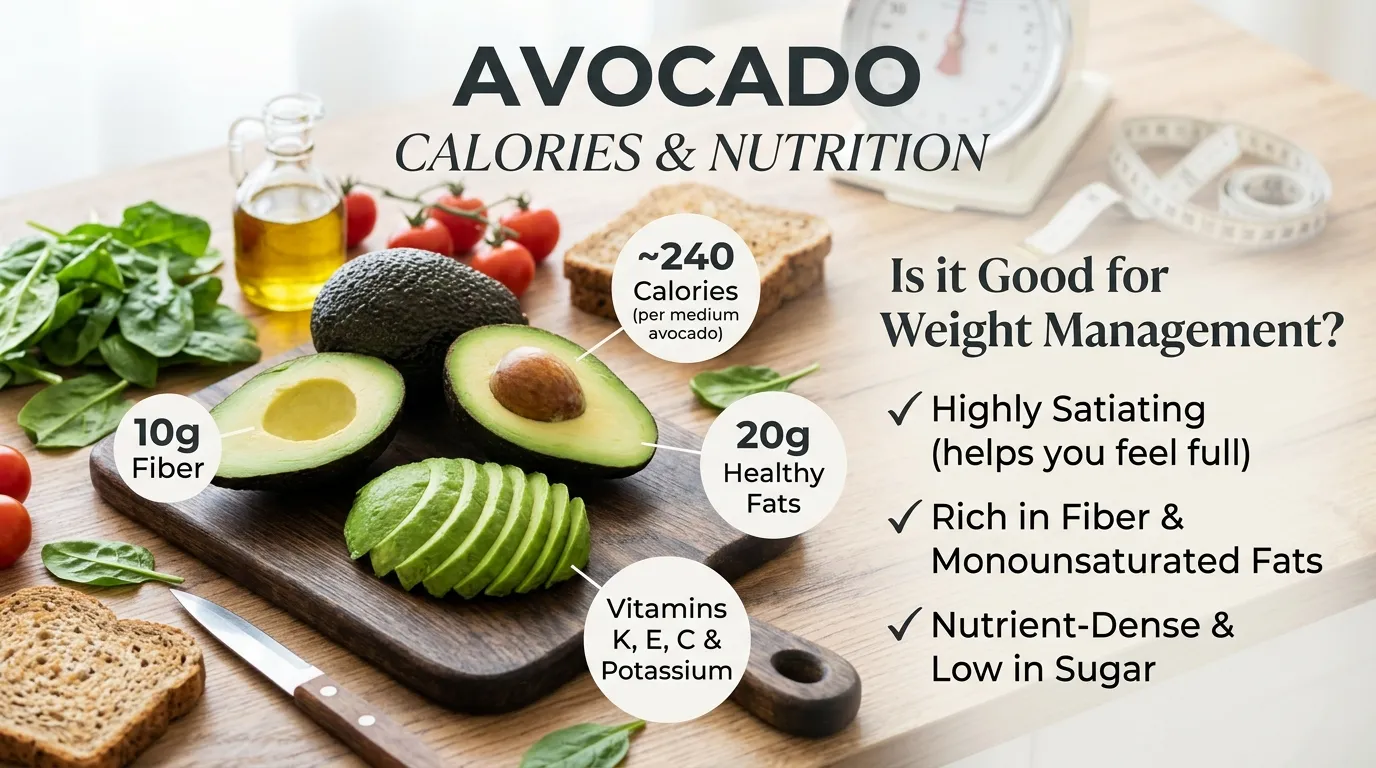
Avocados are creamy, delicious and packed with nutrients, making them a popular addition to everything from breakfast toast to fresh salads. However, because they contain more fat and calories than many other fruits, you may wonder whether they are a good choice when trying to manage your weight.
Understanding Avocado Calories can help you enjoy this nutritious fruit while making balanced food choices. Avocados provide fiber, healthy unsaturated fats, vitamins and minerals that support overall health. At the same time, their calorie content makes portion awareness useful.
In this guide, you’ll discover how many calories are in different avocado servings, what nutrients they provide and how they may fit into a balanced eating pattern. You’ll also find simple serving ideas, practical tips and answers to common nutrition questions.
How Many Calories Are in an Avocado?
Avocados are relatively calorie-dense compared with many other fruits because most of their calories come from fat. However, much of this fat is monounsaturated fat, which is considered a heart-friendly type of dietary fat.
According to USDA-based nutrition data, 100 grams of raw avocado contains approximately 160 calories. The exact amount in one fruit depends on its size and how much edible flesh it contains.
Calories Per 100 Grams
A 100-gram portion of raw avocado provides approximately:
- Calories: 160
- Fat: 14.7 grams
- Carbohydrates: 8.5 grams
- Protein: 2 grams
- Fiber: 6.7 grams
These values make avocado a source of healthy fats and dietary fiber. It also provides relatively little protein, so pairing it with protein-rich foods can create a more balanced meal.
Calories in Different Serving Sizes
The number of calories changes depending on how much avocado you eat. Here is a simple serving guide:
| Avocado serving | Approximate calories |
|---|---|
| 30 grams | 48 |
| 50 grams | 80 |
| 75 grams | 120 |
| 100 grams | 160 |
| 150 grams | 240 |
| 200 grams | 320 |
These estimates use approximately 160 calories per 100 grams. Actual values may vary slightly depending on the variety and size of the fruit.
Calories in One Whole Avocado
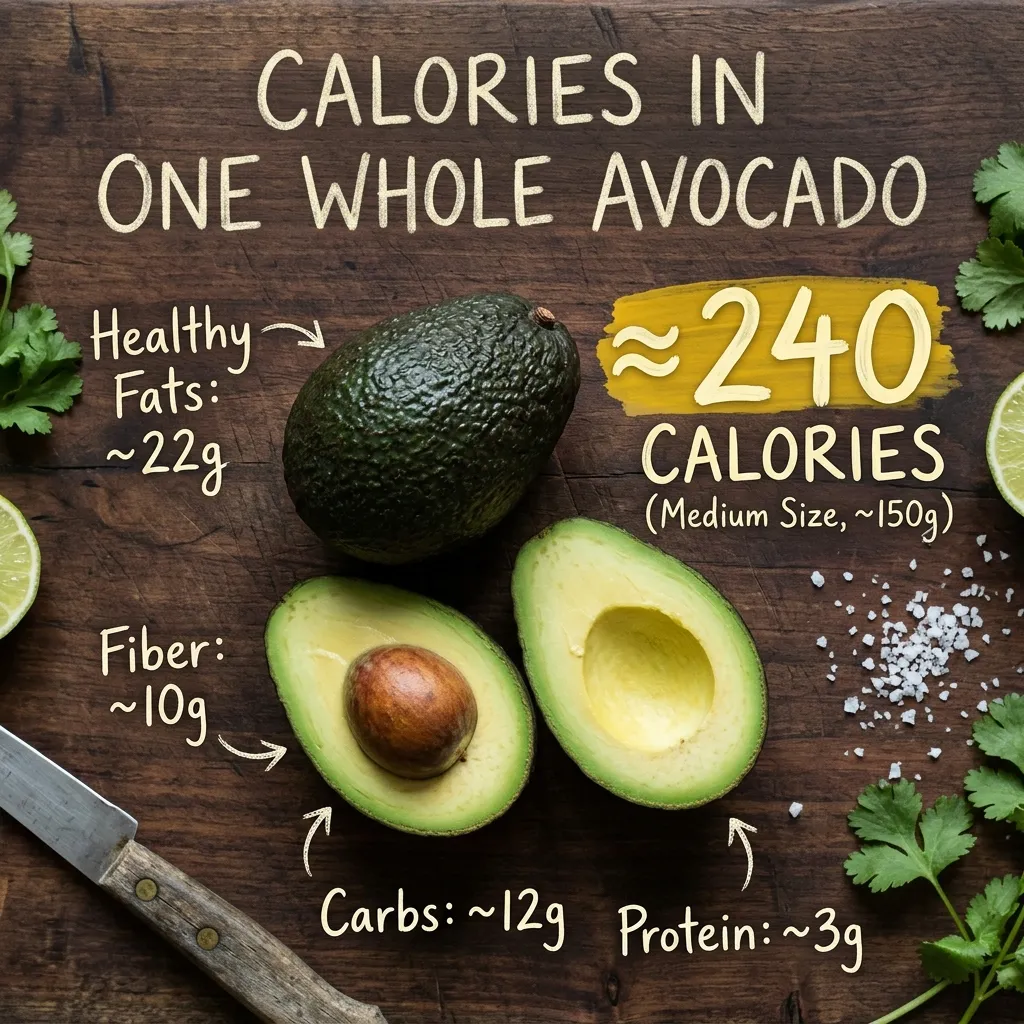
A whole avocado can contain quite a few calories, especially when it is large. One USDA reference serving of approximately 201 grams of edible avocado provides around 322 calories.
However, not every avocado weighs the same. Some are small, while others contain considerably more flesh. Checking the edible portion rather than judging by the fruit’s outside size gives you a more accurate estimate.
Avocado Nutrition Facts
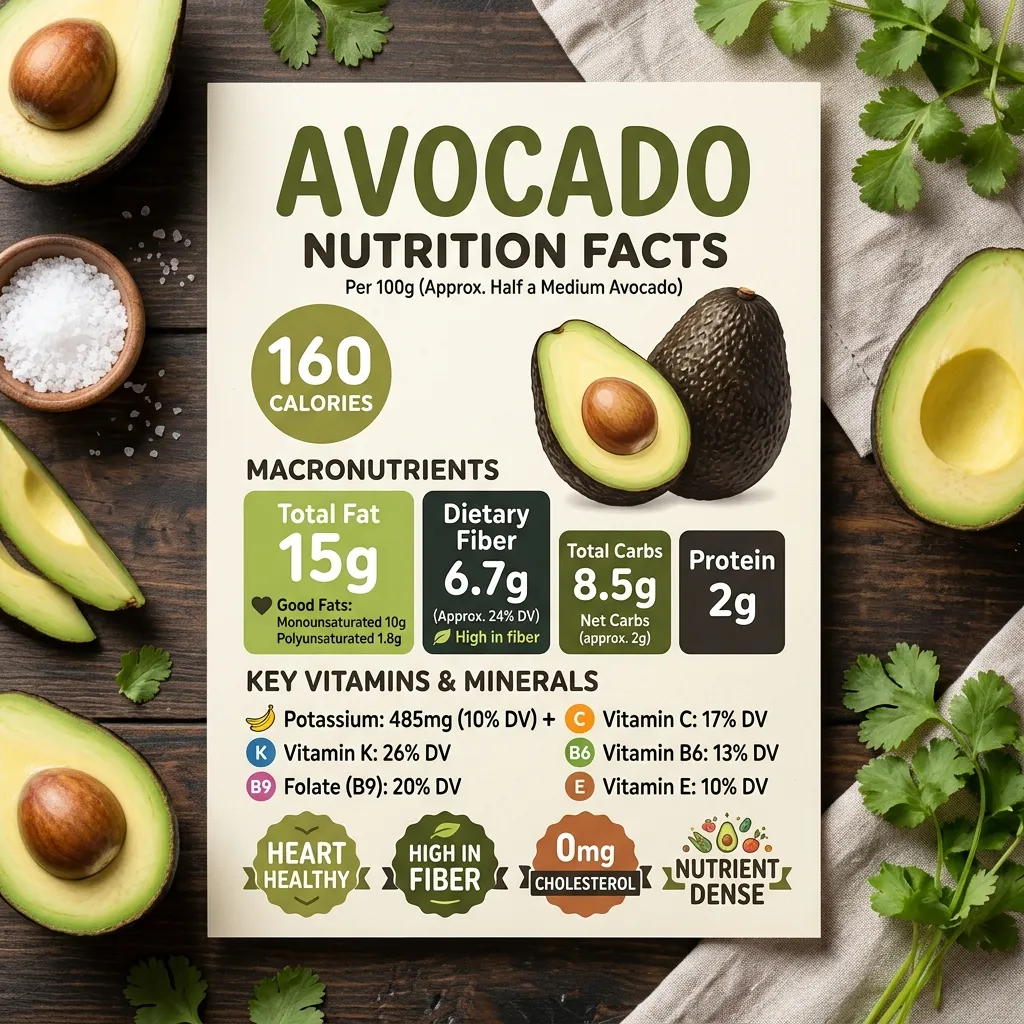
Avocados offer more than just calories. They contain several nutrients that contribute to a balanced diet, including monounsaturated fats, fiber, potassium, folate and vitamins.
Read More: How Many Calories Are in Rice? White Rice vs. Brown Rice
Complete Nutrition Breakdown
Here is an approximate nutrition breakdown for 100 grams of raw avocado:
| Nutrient | Amount |
|---|---|
| Calories | 160 kcal |
| Total fat | 14.7 g |
| Saturated fat | 2.1 g |
| Carbohydrates | 8.5 g |
| Dietary fiber | 6.7 g |
| Sugars | 0.7 g |
| Protein | 2 g |
| Potassium | 485 mg |
| Vitamin C | 10 mg |
| Vitamin E | 2.1 mg |
| Vitamin K | 21 mcg |
| Folate | 81 mcg |
Avocado nutrition can vary with the variety and serving size, so these numbers should be treated as estimates rather than exact values for every fruit.
Healthy Fats
One of the most notable features of avocado is its fat content. Most of its fat is monounsaturated, particularly oleic acid.
These fats can be part of a heart-conscious eating pattern when they replace some sources of saturated fat. For example, mashed avocado can be used instead of butter or a creamy spread on toast.
Although these fats offer nutritional benefits, they still provide calories. Enjoying avocado as part of a balanced meal is more useful than assuming that healthy fats can be eaten without considering portions.
Dietary Fiber
Avocado is a good source of dietary fiber, providing approximately 6.7 grams per 100 grams.
Fiber supports digestive health and helps add substance to meals. Foods containing fiber may also help you feel satisfied after eating, although individual experiences differ.
Adding avocado to a meal with vegetables, whole grains and protein can make the meal more filling and satisfying.
Vitamins and Minerals
Avocados contain several important micronutrients, including:
- Potassium: Helps support normal muscle function, fluid balance and healthy blood pressure.
- Vitamin K: Plays an important role in normal blood clotting.
- Vitamin E: Acts as an antioxidant that helps protect cells.
- Vitamin C: Supports immune function and collagen production.
- Folate: Helps the body make DNA and supports normal cell growth.
- Vitamin B6: Supports normal protein metabolism and nervous system function.
These nutrients make avocado a useful addition to a varied eating pattern.
Is Avocado Good for Weight Management?
Yes, avocado can fit into a balanced eating pattern that supports weight management. However, it is important to understand what it can and cannot do.
Avocado is not a fat-burning food and eating it alone will not automatically lead to weight loss. Its fiber and unsaturated fats may contribute to satisfying meals, but its calorie content also deserves attention.
Research has examined the relationship between avocado consumption and body weight. A systematic review of randomized controlled trials found that avocado consumption did not significantly change body weight or body composition compared with control diets. It also did not appear to promote weight gain in the studies reviewed.
This suggests that avocado can be included in a balanced diet without assuming it will cause weight gain or produce weight loss by itself.
How Fiber May Help With Fullness
Fiber adds bulk to food and supports normal digestion. Because avocado contains a meaningful amount of fiber, it can contribute to meals that feel more satisfying.
For example, adding avocado to whole-grain toast with an egg creates a combination of fiber, carbohydrates, fats and protein.
A balanced combination of nutrients can make a meal more satisfying than relying on a single ingredient.
How Healthy Fats Fit Into a Balanced Diet
The unsaturated fats in avocado provide energy and help the body absorb fat-soluble vitamins from foods.
Including sources of unsaturated fat in meals can be part of a nutritious eating pattern. Avocado is one option, alongside nuts, seeds and olive oil.
The key is balance. Since avocado contains more calories per gram than many fruits and vegetables, it is useful to consider how it fits with the other ingredients in your meal.
Why Overall Eating Habits Matter
No single food determines your body weight. Your overall eating habits, activity, sleep, health and other individual factors all play a role.
Avocado can contribute valuable nutrients, but it works best alongside a variety of fruits, vegetables, whole grains and protein sources.
Rather than focusing on one food as a weight-loss solution, aim for meals that are balanced, enjoyable and satisfying.
Best Ways to Eat Avocado
Avocado is naturally versatile. Its mild flavor and creamy texture make it easy to add to both simple snacks and complete meals.
Here are some practical ways to enjoy it.
Avocado Toast
Avocado toast is a simple breakfast or snack that combines creamy avocado with whole-grain bread.
How to prepare it:
- Toast one slice of whole-grain bread.
- Mash a portion of ripe avocado with a fork.
- Spread it over the toast.
- Add black pepper, lemon juice, or tomato slices.
- Include an egg or another protein source if you want a more substantial meal.
The ingredients you add will change the total calories, so consider the entire serving rather than counting only the avocado.
Fresh Avocado Salad
A fresh salad is an easy way to combine avocado with vegetables and other nutritious ingredients.
Ingredients:
- Chopped avocado
- Cucumber
- Tomatoes
- Lettuce or spinach
- Lemon juice
- A little black pepper
Preparation:
- Wash and chop the vegetables.
- Cut the avocado into small cubes.
- Combine everything in a bowl.
- Add lemon juice and black pepper.
- Toss gently and serve fresh.
For a more complete meal, add chickpeas, beans, chicken, or another protein source.
Avocado and Egg Breakfast
Avocado and eggs make a satisfying combination because they provide different nutrients.
How to prepare it:
- Cook an egg according to your preference.
- Slice or mash a portion of avocado.
- Serve with whole-grain toast.
- Add tomatoes or spinach on the side.
This meal provides protein from the egg, fiber from the avocado and bread and a mixture of other nutrients.
Avocado Smoothie
Avocado can also be blended into a creamy smoothie. Its mild taste works well with fruit and milk.
Ingredients:
- A small portion of ripe avocado
- One banana
- One cup of milk or an unsweetened alternative
- A few ice cubes
- Cinnamon, if desired
Preparation:
- Add the avocado and banana to a blender.
- Pour in the milk.
- Add ice cubes and cinnamon.
- Blend until smooth.
- Serve immediately.
Remember that bananas, milk, sweeteners and other additions contribute to the smoothie’s total calories.
How Much Avocado Should You Eat?
There is no single serving size that is right for everyone. Your needs depend on your overall eating pattern, appetite, activity and individual nutritional requirements.
A smaller portion can be a convenient way to enjoy avocado alongside other foods without making it the main ingredient in every meal.
Start With a Practical Portion
If you are adding avocado to a meal, you might begin with approximately 30 to 50 grams. This provides around 48 to 80 calories based on average nutrition values.
You can adjust the amount according to your preferences and the other foods in your meal.
Consider the Whole Meal
Avocado is often served with other calorie-containing ingredients, such as cheese, mayonnaise, oil, nuts, or creamy dressings.
Instead of looking at avocado in isolation, consider how all the ingredients work together.
For example, avocado toast with an egg and vegetables offers a different nutritional balance from avocado toast covered with several additional spreads and toppings.
Enjoy Variety
Avocado does not need to be your only source of healthy fats or fiber. Nuts, seeds, olive oil, beans, fruits and vegetables can all contribute to a varied diet.
Eating a range of foods helps provide different nutrients and keeps meals interesting.
Common Mistakes to Avoid When Eating Avocado
Avocado is nutritious, but a few common habits can make it harder to understand its place in your meals.
Assuming Healthy Fats Have No Calories
Avocado contains mostly unsaturated fats, but fat still provides energy. A food can be nutritious and calorie-dense at the same time.
Enjoying avocado in reasonable portions helps you benefit from its nutrients while keeping your overall meals balanced.
Forgetting About Toppings and Additions
Avocado is often combined with ingredients such as mayonnaise, cheese, oil and sauces.
These additions can increase the calories in a meal. If you want to understand the meal’s overall nutrition, remember to include everything you add.
Treating Avocado as a Complete Meal
Although avocado contains several useful nutrients, it is relatively low in protein.
Eating it alone may not provide the nutritional variety you want from a complete meal. Pair it with eggs, beans, yogurt, chicken, tofu, or another protein source.
Believing Avocado Automatically Causes Weight Loss
Avocado does not directly burn body fat. Its fiber and fats can contribute to satisfying meals, but no individual food guarantees a particular change in body weight.
A balanced eating pattern matters much more than relying on one ingredient.
Tips for Choosing and Storing Avocados
Choosing a ripe avocado makes it easier to enjoy its creamy texture and natural flavor. Proper storage can also help reduce food waste.
How to Choose a Ripe Avocado
Look for an avocado that feels slightly soft when you gently press it. It should not feel extremely mushy or have large sunken areas.
Other useful tips include:
- Choose fruit without deep cuts or damaged skin.
- Avoid avocados with a strong unpleasant smell.
- Select firmer fruit if you plan to use it several days later.
- Let unripe avocados ripen at room temperature.
The skin color can vary depending on the variety, so softness is often a more useful indicator than color alone.
How to Store a Cut Avocado
Once an avocado has been cut, its flesh can turn brown when exposed to air. This is a natural process called oxidation.
To help slow it down:
- Keep the unused portion with the seed if practical.
- Add a little lemon or lime juice to the exposed flesh.
- Cover it tightly or place it in an airtight container.
- Refrigerate it promptly.
- Use it as soon as possible and check its freshness before eating.
The brown color caused by oxidation does not automatically mean the avocado has spoiled. However, discard it if it develops mold, an unpleasant smell, or other signs of spoilage.
Frequently Asked Questions
How Many Calories Are in 100 Grams of Avocado?
One hundred grams of raw avocado contains approximately 160 calories. It also provides around 14.7 grams of fat, 8.5 grams of carbohydrates, 2 grams of protein and 6.7 grams of fiber.
Is Avocado High in Calories?
Yes, avocado is more calorie-dense than many other fruits because it contains a relatively high amount of fat. However, most of this fat is monounsaturated and avocado also provides fiber, vitamins and minerals.
Can I Eat Avocado While Managing My Weight?
Yes. Avocado can be part of a balanced eating pattern because it provides fiber and unsaturated fats. The amount you eat and how it fits into your overall meals are more important than avoiding it completely.
Does Avocado Burn Belly Fat?
No. There is no strong evidence that avocado specifically burns belly fat. It can contribute to nutritious, satisfying meals, but changes in body composition depend on many factors rather than one particular food.
Is It Better to Eat Avocado in the Morning or at Night?
There is no universal best time to eat avocado. You can enjoy it at breakfast, lunch, or dinner depending on your preferences and how it fits into your meals.
Is Avocado a Good Source of Protein?
Avocado contains a small amount of protein, approximately 2 grams per 100 grams. It is better known for its unsaturated fats and fiber. Pair it with eggs, beans, dairy products, tofu, or another protein-rich food when building a balanced meal.
Is Eating a Whole Avocado Every Day Okay?
Whether a whole avocado fits into your daily eating pattern depends on its size and your individual nutritional needs. Since a large avocado can provide more than 300 calories, some people may prefer a smaller portion alongside other foods. There is no requirement to eat a whole avocado every day to enjoy its nutrients.
Which Is Healthier: Avocado or Butter?
Avocado and butter have different nutritional profiles. Avocado provides fiber and mostly unsaturated fats, while butter contains more saturated fat and very little fiber. Using avocado instead of butter in some meals can be one way to include more plant-based unsaturated fats.
Conclusion
Avocado is a nutrient-rich fruit that provides healthy unsaturated fats, dietary fiber, potassium and several important vitamins. Although it contains more calories than many other fruits, that does not mean you need to avoid it when following a balanced eating pattern.
Understanding Avocado Calories helps you make informed choices about serving sizes and meal combinations. Enjoy it on toast, in salads, with eggs, or blended into a smoothie and pair it with other foods to create satisfying meals.
Most importantly, remember that no single food determines weight management. A varied, balanced eating pattern and healthy everyday habits matter far more than labeling individual foods as good or bad.




One Comment on “Avocado Calories and Nutrition: Is It Good for Weight Management?”