
Rice is one of the most popular staple foods around the world. It is commonly served with vegetables, chicken, fish, beans, curries and many other everyday meals. Whether you enjoy a bowl of fluffy white rice or prefer the nutty flavor of brown rice, this versatile grain can be part of a balanced eating pattern.
However, many people wonder how many calories rice contains and whether white rice or brown rice is the better nutritional choice. The answer depends on several factors, including the type of rice, serving size, cooking method and ingredients added during preparation.
Rice Calories can vary depending on whether you measure the grain before or after cooking. Cooked rice contains absorbed water, which changes its weight and calorie concentration per 100 grams. For this reason, it is important to compare similar serving sizes when looking at nutritional information.
White rice and brown rice also differ in their fiber content, processing and certain nutrients. Brown rice retains its bran and germ layers, while white rice has these outer layers removed during processing. These differences affect their nutritional profiles and textures.
This guide explains how many calories are in different servings of cooked rice, compares white and brown rice, explores their nutritional benefits and provides practical tips for including rice in balanced everyday meals.
Understanding How Rice Calories Are Calculated
Rice provides carbohydrates that supply energy for everyday activities. However, its calorie content depends on the amount you eat and whether you measure it dry or cooked.
Understanding these differences can help you interpret nutrition information more accurately.
Understand Calories in Cooked Rice
Cooking rice involves absorbing water, which increases its weight and volume.
For example, 100 grams of dry rice contains considerably more calories than 100 grams of cooked rice because cooked rice contains additional water.
The calories do not disappear during ordinary cooking. They are simply distributed across a heavier portion.
Compare Serving Sizes Carefully
Different serving sizes can contain different amounts of calories.
A small bowl of rice will naturally contain fewer calories than a large restaurant serving.
When comparing white and brown rice, use the same measurement method, such as calories per 100 grams of cooked rice.
Consider the Type of Rice
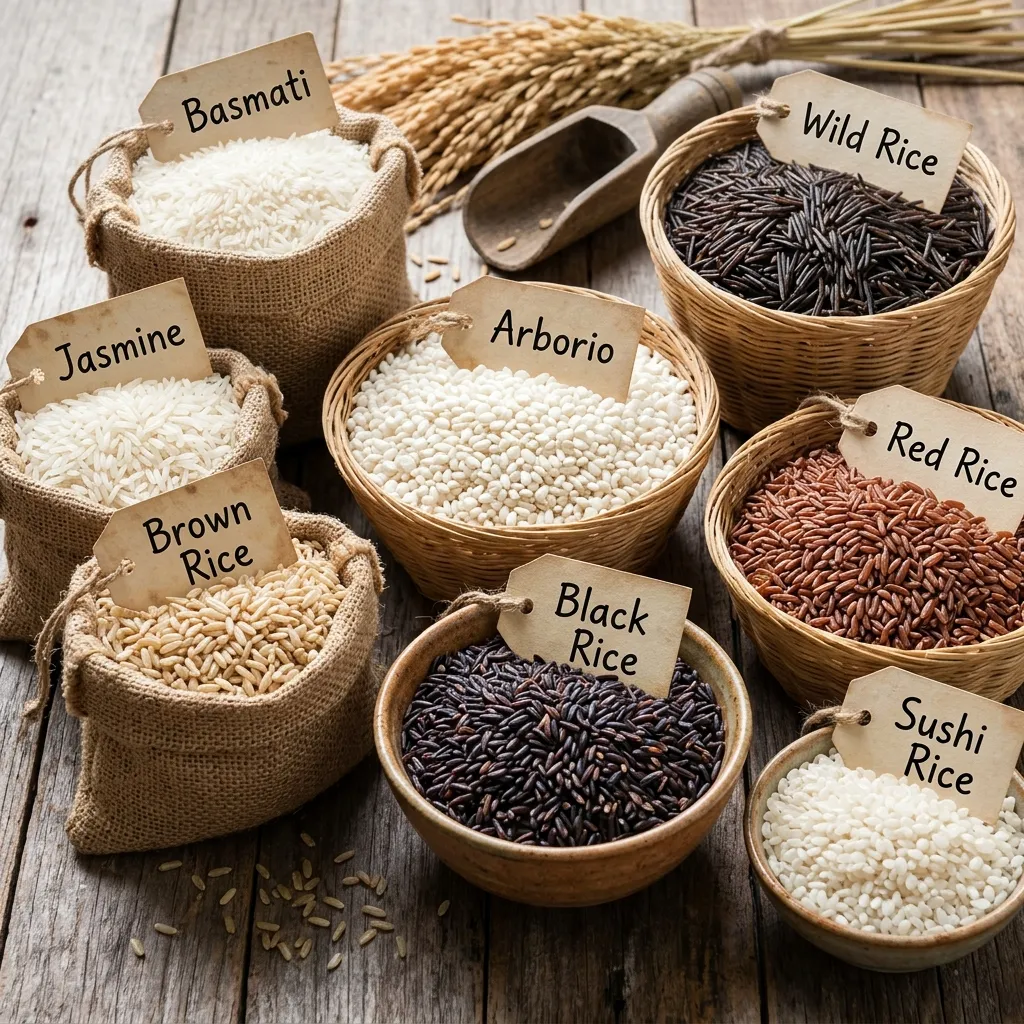
Different rice varieties have slightly different nutritional compositions.
Common varieties include:
- White long-grain rice
- Brown long-grain rice
- Basmati rice
- Jasmine rice
- Short-grain rice
- Wild rice
Their calorie content can vary depending on the variety and preparation method.
Read More: Calorie Counter Guide: How to Track Your Daily Food Intake
Include Cooking Ingredients in Your Calculations
Plain boiled rice has a different calorie content from rice cooked with oil, butter, coconut milk or other ingredients.
For example, adding oil while preparing fried rice increases its overall calorie content.
If you are comparing rice dishes, remember to consider the additional ingredients rather than looking only at the rice itself.
How Many Calories Are in White Rice?
White rice is a widely consumed grain known for its soft texture, mild flavor and versatility.
During processing, the bran and germ layers are removed, leaving the starchy endosperm.
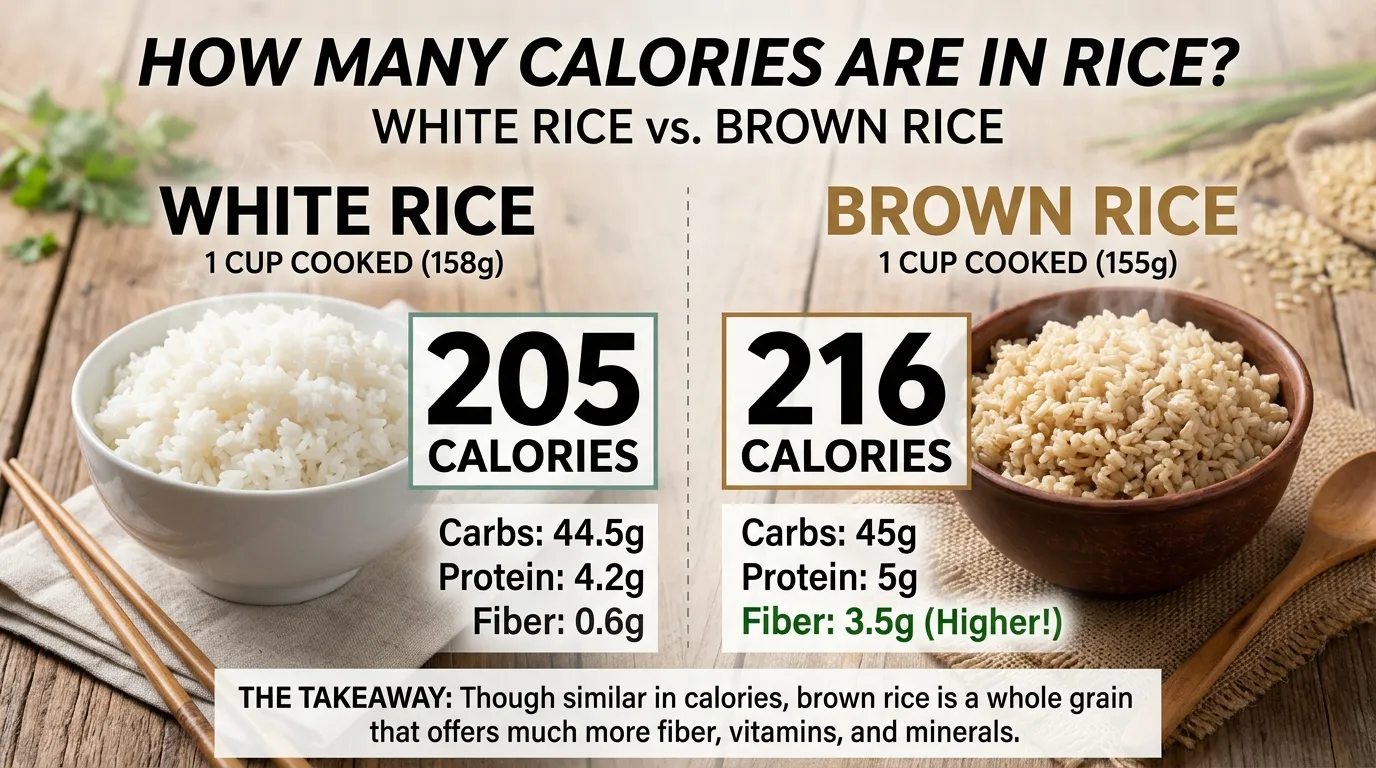
According to USDA FoodData Central values for cooked long-grain white rice, 100 grams provides approximately 130 calories. A standard cooked cup weighing about 158 grams contains approximately 205 calories.
Calories in White Rice Per 100 Grams
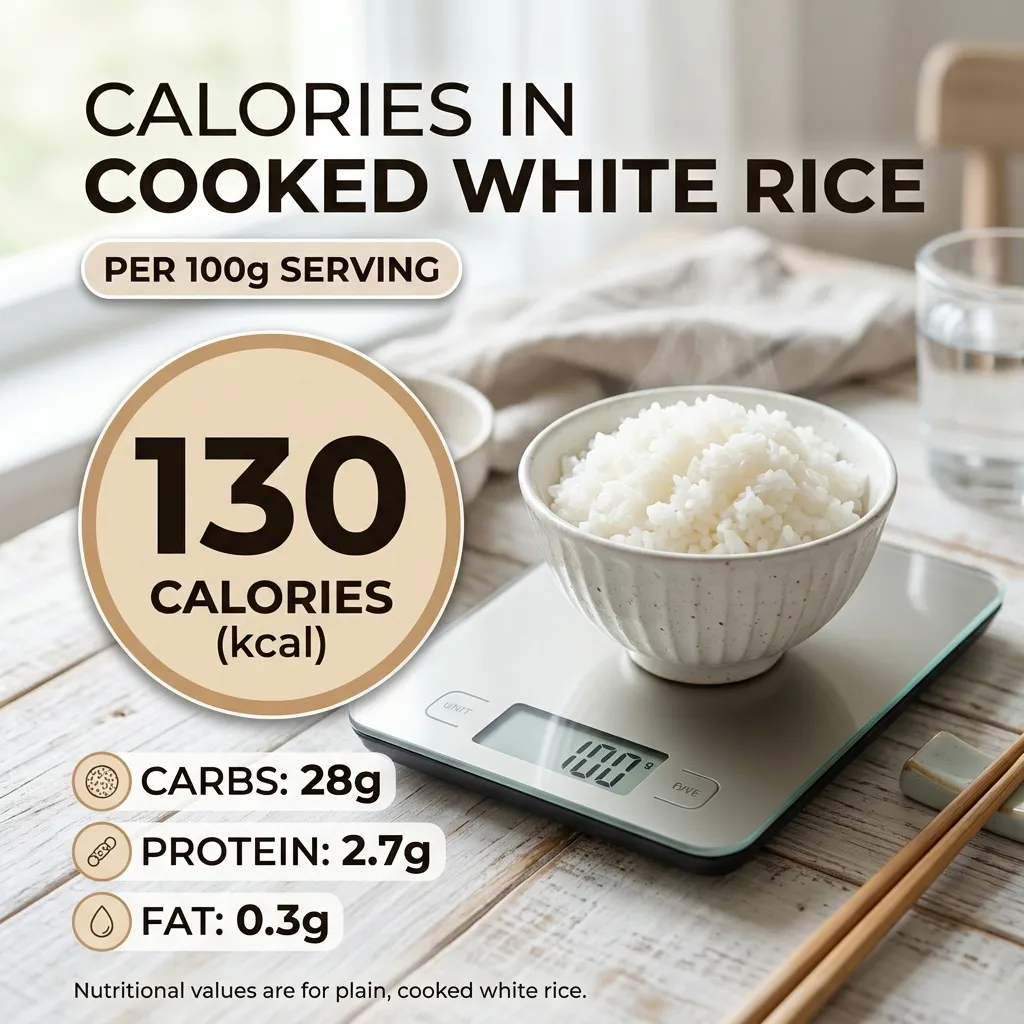
A 100-gram serving of cooked white long-grain rice contains approximately:
- Calories: 130 kcal
- Carbohydrates: 28.2 grams
- Protein: 2.7 grams
- Fat: 0.3 grams
- Fiber: 0.4 grams
These values describe plain cooked rice without additional cooking fats or sauces.
Calories in One Cup of White Rice
One standard cup of cooked long-grain white rice weighs approximately 158 grams.
It contains around:
- Calories: 205 kcal
- Carbohydrates: 44.5 grams
- Protein: 4.3 grams
- Fat: 0.4 grams
The actual amount can vary depending on how tightly the rice is packed and how much water it absorbs.
Calories in Half a Cup of White Rice
Half a cup of cooked white rice weighs approximately 79 grams.
It provides around:
- Calories: 103 kcal
- Carbohydrates: 22.3 grams
- Protein: 2.1 grams
- Fat: 0.2 grams
This can be a useful reference when comparing smaller portions.
Why White Rice Is Commonly Used
White rice is popular because it cooks relatively quickly and has a mild flavor.
Its soft texture makes it suitable for different dishes, including:
- Vegetable rice
- Chicken rice
- Rice bowls
- Homemade pulao
- Rice porridge
- Rice served with lentil curry
It is also easy to combine with vegetables and protein-rich foods to create balanced meals.
How Many Calories Are in Brown Rice?
Brown rice is a whole grain that retains its bran and germ layers.
These outer layers contribute fiber, minerals and other nutrients. Brown rice generally has a firmer texture and a slightly nutty flavor compared with white rice.
According to USDA-based nutritional data, 100 grams of cooked long-grain brown rice provides approximately 123 calories. A standard USDA cup weighing about 202 grams contains approximately 248 calories. <Cite refs={[“turn757907search1″,”turn757907search2”]}/>
Calories in Brown Rice Per 100 Grams
A 100-gram serving of cooked brown long-grain rice contains approximately:
- Calories: 123 kcal
- Carbohydrates: 25.6 grams
- Protein: 2.7 grams
- Fat: 1 gram
- Fiber: 1.6 grams
The exact nutritional values can vary depending on the rice variety and preparation method.
Calories in One Cup of Brown Rice
One standard USDA cup of cooked long-grain brown rice weighs approximately 202 grams.
It contains around:
- Calories: 248 kcal
- Carbohydrates: 51.7 grams
- Protein: 5.5 grams
- Fat: 2 grams
- Fiber: 3.2 grams
Brown rice has more calories per standard cup in this particular comparison because the measured cup weighs more than the white rice cup.
Calories in Half a Cup of Brown Rice
Half a cup of cooked brown rice weighs approximately 101 grams.
It provides around:
- Calories: 124 kcal
- Carbohydrates: 25.9 grams
- Protein: 2.8 grams
- Fat: 1 gram
- Fiber: 1.6 grams
These values are approximate and depend on the rice variety and cooking conditions.
Why Brown Rice Is Nutritionally Different
Brown rice retains more of its original grain structure because its bran and germ remain intact.
This contributes to its higher fiber content compared with ordinary white rice.
It also provides nutrients such as magnesium, manganese and certain B vitamins.
Its slightly chewy texture makes it suitable for:
- Vegetable rice bowls
- Brown rice salads
- Chicken and rice meals
- Lentil and rice dishes
- Homemade grain bowls
White Rice vs. Brown Rice: Nutritional Comparison
White and brown rice both provide carbohydrates and can contribute to a balanced eating pattern.
However, their processing methods affect their nutritional composition.
The following comparison uses USDA-based values for cooked long-grain rice per 100 grams. <Cite refs={[“turn757907search5″,”turn757907search6″,”turn757907search2”]}/>
| Nutrient | White Rice | Brown Rice |
|---|---|---|
| Calories | 130 kcal | 123 kcal |
| Carbohydrates | 28.2 g | 25.6 g |
| Protein | 2.7 g | 2.7 g |
| Fat | 0.3 g | 1.0 g |
| Fiber | 0.4 g | 1.6 g |
Compare Their Fiber Content
One of the main nutritional differences between white and brown rice is their fiber content.
Brown rice retains its bran layer, which contributes more dietary fiber.
Fiber supports digestive health and can help meals feel satisfying.
White rice contains less fiber because its outer layers are removed during processing.
Compare Their Protein Content
Both white and brown rice provide small amounts of protein.
In the comparison above, their protein content is similar per 100 grams of cooked rice.
However, rice should not be considered a complete protein source for every nutritional need.
You can combine it with foods such as lentils, beans, eggs, chicken or fish to create more varied meals.
Compare Their Fat Content
Both varieties are naturally low in fat when prepared without additional cooking oils or butter.
Brown rice contains slightly more natural fat because it retains the germ layer.
The overall fat content of a prepared rice dish depends more heavily on the ingredients used during cooking.
Compare Their Texture and Flavor
White rice has a softer texture and mild flavor.
Brown rice is generally firmer, chewier and slightly nuttier.
The best choice often depends on your preferred taste, cooking time and the type of meal you are preparing.
Calories in Different Rice Serving Sizes
Understanding serving sizes makes it easier to compare rice varieties and estimate the nutritional content of everyday meals.
The following table provides approximate calorie values for plain cooked long-grain rice.
| Serving Size | White Rice | Brown Rice |
|---|---|---|
| 50 grams | 65 kcal | 62 kcal |
| 100 grams | 130 kcal | 123 kcal |
| 150 grams | 195 kcal | 185 kcal |
| 200 grams | 260 kcal | 246 kcal |
| 1 standard cup | 205 kcal | 248 kcal |
| Half a standard cup | 103 kcal | 124 kcal |
The cup measurements use the different USDA serving weights for each variety: approximately 158 grams for white rice and 202 grams for brown rice. This is why comparing calories per 100 grams provides a clearer comparison of their calorie density.
Calories in a Small Bowl of Rice
A small bowl can contain different amounts depending on its size and how much rice is added.
For example, a 100-gram serving of cooked white rice provides approximately 130 calories.
The same weight of cooked brown rice provides approximately 123 calories.
Using a kitchen scale can help you understand the weight of your usual serving.
Calories in a Large Bowl of Rice
A larger serving naturally contains more rice and therefore more calories.
For example, 200 grams of cooked white rice provides approximately 260 calories.
The same weight of brown rice provides approximately 246 calories.
Remember that these values refer to plain rice without additional ingredients.
Calories in Dry Rice Before Cooking
Dry rice contains more calories per 100 grams than cooked rice because it has not yet absorbed water.
For example, 100 grams of dry white rice contains approximately 365 calories, while 100 grams of dry brown rice contains approximately 367 calories.
Once cooked, both varieties absorb water and become heavier.
For accurate food tracking, make sure you use nutritional values that match whether your rice was measured dry or cooked. <Cite refs={[“turn757907search4″,”turn757907search3”]}/>
Nutritional Benefits of Including Rice in Your Meals
Rice is a versatile grain that can provide useful nutrients as part of a varied eating pattern.
Both white and brown rice have characteristics that make them suitable for different meals and preferences.
Provides Carbohydrates for Energy
Rice is primarily a source of carbohydrates.
Carbohydrates provide energy that supports everyday activities such as walking, studying, working and exercising.
Including appropriate carbohydrate sources in meals is an important part of balanced nutrition.
Brown Rice Provides Dietary Fiber
Brown rice contains more fiber than ordinary white rice.
Dietary fiber supports normal digestive function and contributes to a varied, nutritious eating pattern.
Combining brown rice with vegetables, beans and other whole foods can further increase the fiber content of your meals.
Contains Important Minerals
Rice provides several minerals that contribute to normal body functions.
Brown rice contains magnesium and manganese, while enriched white rice may provide added nutrients such as iron and certain B vitamins.
The exact nutritional composition depends on the rice variety and whether it has been enriched.
Naturally Low in Fat
Plain boiled rice contains relatively little fat.
This makes it easy to combine with other ingredients according to your nutritional preferences.
However, adding large amounts of oil, butter or creamy sauces changes the nutritional profile of the final dish.
Offers Versatility in Everyday Cooking
Rice can be used in breakfast, lunch and dinner recipes.
You can prepare it with vegetables, serve it with lentils or combine it with protein-rich foods.
Its versatility makes it a practical ingredient for different cuisines and cooking styles.
White Rice vs. Brown Rice: Which One Should You Choose?
Both varieties can be included in a balanced eating pattern.
The better option depends on your nutritional needs, taste preferences and how you prepare your meals.
Choose Brown Rice for More Fiber
If you want a whole-grain option with more fiber, brown rice is a useful choice.
Its bran and germ layers provide additional nutrients that are reduced during the processing of white rice.
It also works well in grain bowls, salads and vegetable-based dishes.
Choose White Rice for a Softer Texture
White rice is suitable if you prefer a softer texture and milder flavor.
It is also convenient for dishes that require a lighter, fluffier grain.
Some people find it easier to digest, although individual experiences vary.
Consider Enriched White Rice
Some white rice products are enriched with nutrients removed during processing.
Depending on the product, enrichment may add nutrients such as iron and B vitamins.
Check the nutrition label to understand what your particular rice provides.
Consider Your Overall Eating Pattern
You do not need to choose only one type of rice.
You can enjoy white rice with lentils, vegetables and chicken on some days and brown rice in salads or grain bowls on others.
Eating a variety of nutritious foods is more important than treating one type of rice as universally better.
Healthy Ways to Prepare Rice at Home
The way you prepare rice can influence its overall nutritional value.
Plain cooking methods allow you to enjoy rice without adding unnecessary ingredients.
Prepare Plain Boiled Rice
Boiling rice in water is one of the simplest preparation methods.
Rinse the rice if desired, add the appropriate amount of water and cook according to the variety’s instructions.
Avoid adding excessive butter or oil if you prefer a simpler preparation.
Try Vegetable Rice
Vegetable rice combines grains with colorful vegetables.
You can include carrots, peas, beans, bell peppers and spinach.
Add a suitable protein source, such as beans, chicken or tofu, to make the meal more balanced.
Prepare Homemade Chicken Rice
Chicken rice combines carbohydrates and protein in one convenient meal.
Cook chicken with garlic, onions and suitable seasonings.
Serve it with plain rice and a side of vegetables or salad.
Make Lentil and Rice Bowls
Lentils and rice are a popular combination in many cuisines.
Prepare cooked lentils with tomatoes, onions and spices.
Serve them alongside rice and fresh vegetables for a varied meal.
Use Cooking Oil Carefully
Oil and butter can increase the calorie content of rice dishes.
Measure the amount used during preparation instead of pouring it directly into the pan.
You can also use herbs, garlic, lemon juice and spices to add flavor.
Common Mistakes to Avoid When Eating Rice
Rice is a nutritious carbohydrate source, but certain cooking and serving habits can change the nutritional value of your meals.
Understanding these mistakes can help you make more informed food choices.
Comparing Dry and Cooked Rice
One common mistake is comparing the calories in dry rice with the calories in cooked rice.
Dry rice contains less water and therefore has more calories per 100 grams.
Always compare the same preparation state when reviewing nutritional information.
Ignoring Serving Sizes
A bowl of rice can contain considerably more than a standard serving.
Different bowls and household measuring cups can make portion estimates difficult.
Weighing cooked rice occasionally can help you understand your usual serving size.
Adding Too Much Oil or Butter
Oil, butter and ghee contribute additional calories to rice dishes.
Using excessive amounts can significantly change the nutritional content of a meal.
Try measuring cooking fats and using herbs and spices to enhance flavor.
Forgetting Vegetables and Protein
A meal consisting only of rice may provide carbohydrates but limited variety.
Add vegetables and protein-rich foods such as lentils, beans, eggs, chicken or fish.
This creates a more balanced combination of nutrients.
Assuming Brown Rice Always Has Fewer Calories
Brown rice is often considered the healthier option because it contains more fiber.
However, calorie comparisons depend on the serving size and measurement method.
For example, a standard cup of brown rice contains more calories than a standard cup of white rice in the USDA comparison because the brown rice cup weighs more.
Tips for Including Rice in a Balanced Eating Pattern
Rice can fit into different meals without requiring complicated preparation methods.
A few practical habits can help you enjoy it as part of a varied diet.
Combine Rice With Vegetables
Add colorful vegetables to your rice meals.
Broccoli, spinach, carrots, peas and bell peppers provide fiber, vitamins and minerals.
You can serve them alongside plain rice or mix them into homemade rice dishes.
Include Protein-Rich Foods
Pair rice with foods such as chicken, fish, eggs, beans or lentils.
These ingredients provide protein and make your meals more varied.
Experiment With Different Rice Varieties
Try white rice, brown rice, basmati rice and other varieties.
Different types offer different textures and flavors, making everyday meals more interesting.
Choose Cooking Methods You Enjoy
Boiled, steamed and baked rice dishes can all be included in balanced meals.
Experiment with seasonings, herbs and vegetables to create flavors you enjoy.
Store Cooked Rice Safely
Cooked rice should be cooled promptly and refrigerated in a suitable covered container.
Avoid leaving it at room temperature for extended periods.
When reheating, make sure it is thoroughly heated and avoid repeatedly cooling and reheating the same batch.
Frequently Asked Questions
How many calories are in 100 grams of cooked rice?
One hundred grams of cooked long-grain white rice contains approximately 130 calories, while the same weight of cooked brown rice contains approximately 123 calories. Values vary by rice variety and cooking method.
How many calories are in one cup of cooked white rice?
One standard USDA cup of cooked long-grain white rice weighs approximately 158 grams and contains around 205 calories. The amount can vary depending on the variety and how the rice is measured.
How many calories are in one cup of cooked brown rice?
One standard USDA cup of cooked long-grain brown rice weighs approximately 202 grams and contains around 248 calories. This higher cup value reflects the larger weight of the measured serving.
Does brown rice have fewer calories than white rice?
Per 100 grams in the USDA long-grain cooked comparison, brown rice has approximately 123 calories and white rice has approximately 130 calories. However, the difference is small, and serving size matters.
Which rice has more fiber?
Brown rice generally contains more fiber because it retains its bran layer. In the comparison used in this article, cooked brown rice provides approximately 1.6 grams of fiber per 100 grams, compared with 0.4 grams in white rice.
Does cooking rice change its calorie content?
Cooking increases the weight of rice because it absorbs water. This lowers the number of calories per 100 grams of cooked rice compared with dry rice, but it does not mean the calories disappear.
Is white rice a healthy food?
White rice can be part of a balanced eating pattern. It provides carbohydrates and can be combined with vegetables, legumes and protein-rich foods to create nutritious meals.
Is brown rice better nutritionally than white rice?
Brown rice generally provides more fiber and retains more of the grain’s original nutrients. However, enriched white rice can also provide important nutrients. Both varieties can fit into a varied eating pattern.
Does adding oil increase rice calories?Yes. Oil, butter and ghee add calories to rice dishes. The total amount depends on how much cooking fat is used and how many servings the prepared dish contains.
Can I eat rice every day?
Rice can be included regularly in a balanced diet. It is helpful to vary your food choices and combine rice with vegetables, protein sources and other whole foods to obtain a wider range of nutrients.
Conclusion
Rice is a versatile grain that can provide energy and contribute to a balanced eating pattern. Both white and brown rice offer carbohydrates, some protein and several important nutrients, although their fiber content and processing methods differ.
When comparing Rice Calories, it is important to consider serving sizes and whether the rice is measured dry or cooked. Cooked white rice provides approximately 130 calories per 100 grams, while cooked brown rice provides around 123 calories per 100 grams in the long-grain comparison used in this guide.
Brown rice offers more fiber, while white rice provides a softer texture and can be a convenient option for many everyday meals. Neither variety needs to be completely avoided.
The best approach is to enjoy rice in a way that suits your preferences and nutritional needs. Combine it with vegetables, protein-rich foods and other nutritious ingredients to create satisfying meals that support a varied and balanced lifestyle.




One Comment on “How Many Calories Are in Rice? White Rice vs. Brown Rice”