
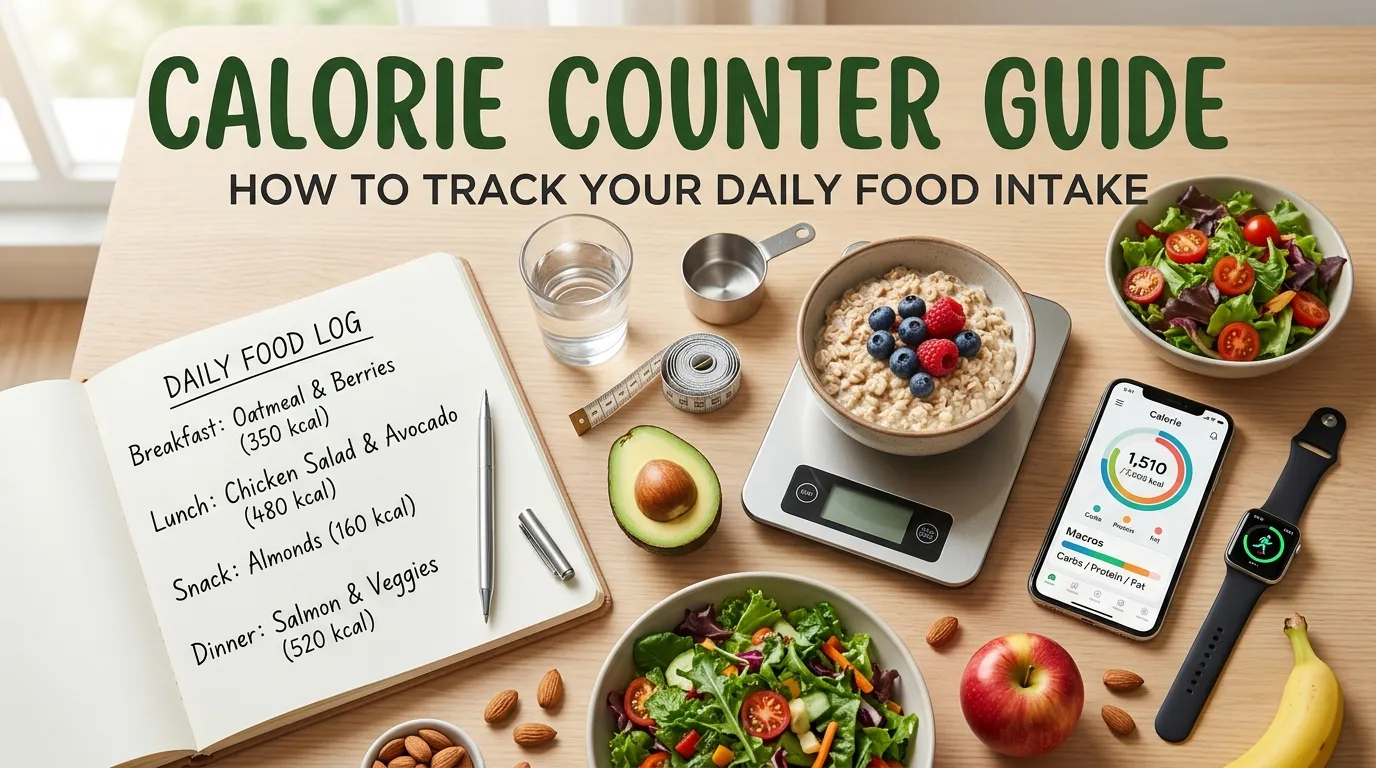
Tracking what you eat can help you better understand your eating habits, recognize portion sizes and make more informed food choices. Whether your goal is to manage your weight, support an active lifestyle, or simply become more aware of your daily nutrition, a calorie counter can make the process easier to follow.
A calorie counter helps you estimate how much energy you get from the foods and drinks you consume throughout the day. By recording your meals, snacks and beverages, you can develop a clearer picture of your eating patterns and see how they relate to your personal health goals.
You do not need to change your entire diet overnight to get started. With a few simple habits, accurate food entries and a balanced approach, tracking your daily food intake can become a manageable part of your routine.
This guide explains how calorie counting works, how to use a calorie counter effectively, how to estimate portions and how to avoid common tracking mistakes. You will also learn how to interpret your results without letting numbers take over your relationship with food.
What Is a Calorie Counter?
A calorie counter is a tool that helps you estimate the calories in the foods and beverages you consume. It may be a mobile app, a website, a food diary, or a nutrition-tracking spreadsheet.
Most calorie counters use food databases that contain nutritional information for individual ingredients, packaged products, restaurant meals and common serving sizes. When you enter what you have eaten, the tool estimates the calories and may also display nutrients such as protein, carbohydrates, fat, fiber and sodium.
For example, you might record your breakfast as oatmeal, milk and a banana. A calorie counter combines the estimated nutritional values of these foods to calculate the approximate total for that meal.
The accuracy of the result depends on the information you provide. Selecting the correct food, entering an appropriate serving size and accounting for ingredients such as cooking oil can make your daily record more useful.
A calorie counter is best viewed as an estimation tool rather than a perfect measurement of everything your body consumes or uses.
Why Track Your Daily Food Intake?
Recording your meals can reveal patterns that are difficult to notice when you rely on memory alone. You may discover that your portions are larger than expected, that you frequently skip meals, or that certain meals leave you feeling more satisfied than others.
Here are some potential benefits of tracking your food intake.
Understand Your Eating Habits
Keeping a food record helps you see what you typically eat across the day. You can identify regular meals, frequent snacks, sugary drinks and other patterns that might otherwise go unnoticed.
This information can help you make gradual changes based on your actual habits instead of following a restrictive diet that may not suit your lifestyle.
Become More Aware of Portion Sizes
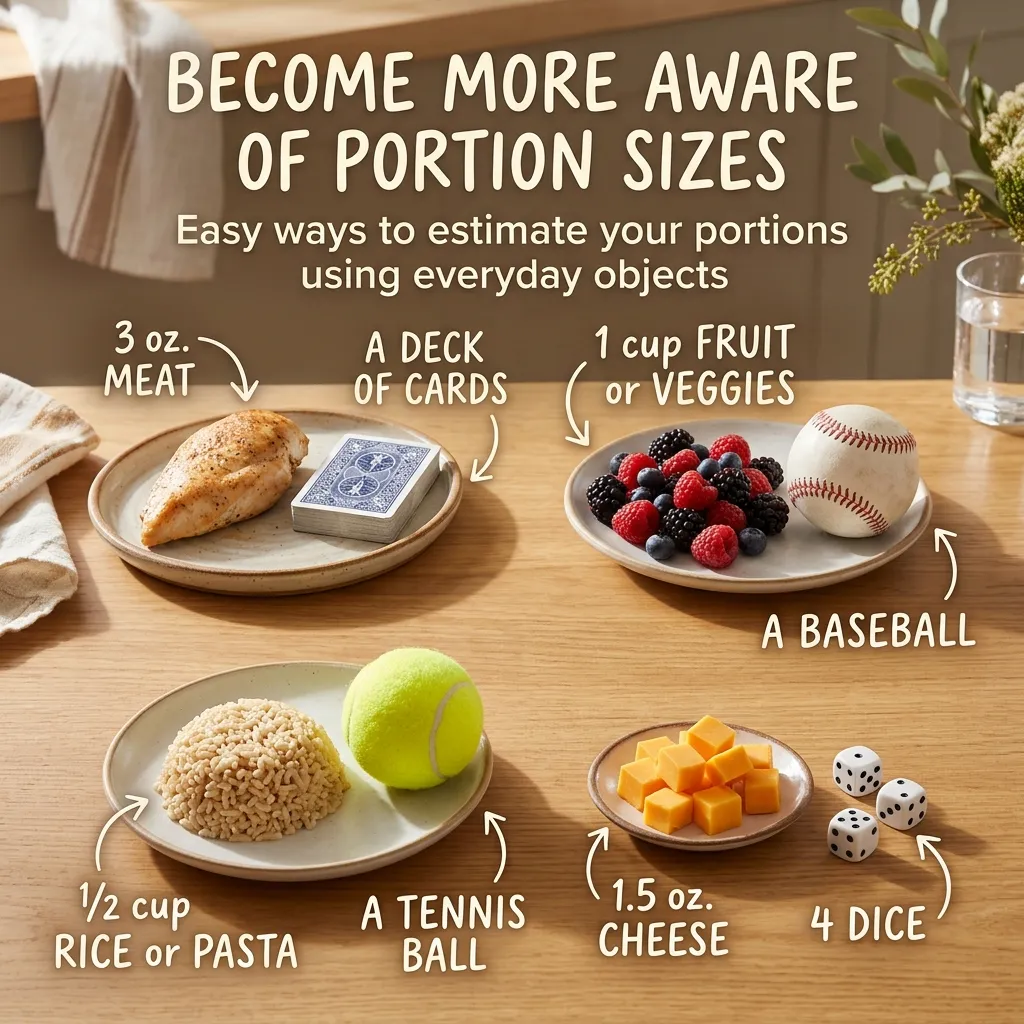
A food’s calorie content depends partly on how much you eat. A small serving of nuts, for example, contains fewer calories than a large handful of the same food.
Using a calorie counter alongside measuring cups, a kitchen scale, or standard serving sizes can help you develop a more realistic understanding of portions.
Read More: A Simple Diet Plan for Weight Loss With Balanced Meals
Monitor Nutritional Balance
Calories are only one part of nutrition. Two meals with similar calorie totals can provide very different amounts of protein, fiber, vitamins and minerals.
Many tracking tools allow you to review macronutrients and other nutritional information. This can help you notice whether your meals include a variety of foods, such as vegetables, fruits, whole grains, protein sources and healthy fats.
Support Personal Health Goals
Some people track calories to support weight management, while others use food records to understand their intake during periods of increased physical activity.
Tracking can provide useful information, but your needs depend on factors such as age, body size, activity level, medical history and individual goals. A calorie target should not be treated as a universal number that works for everyone.
How to Choose the Right Calorie Counter
The best calorie counter is one that fits your routine and is easy to use consistently. You do not need the most complicated app or the largest collection of features to begin tracking your meals.
Consider these features when choosing a tool.
A Reliable Food Database
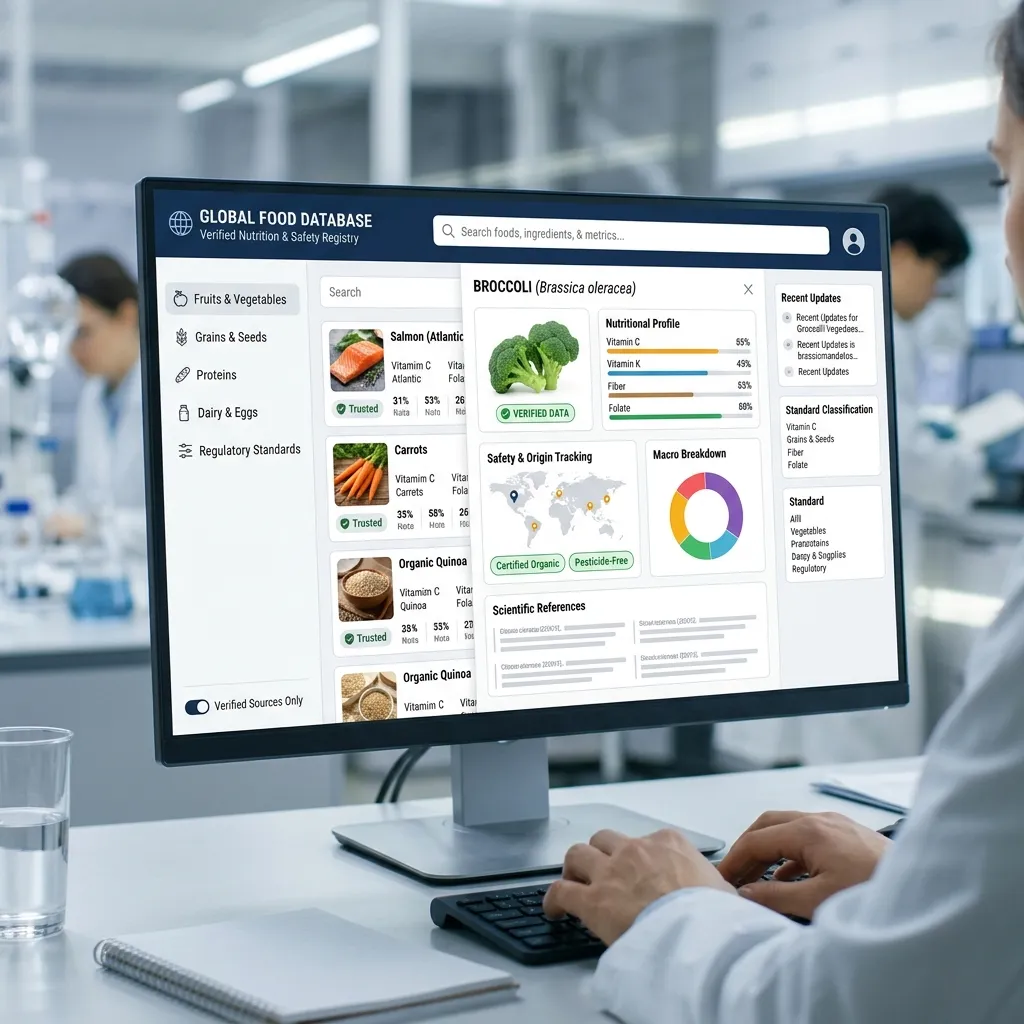
Look for a calorie counter with a broad food database that includes common ingredients, packaged foods and the types of meals you regularly eat.
If you prepare traditional home-cooked meals, check whether the tool allows you to enter individual ingredients or create custom recipes. This is especially helpful when a dish does not appear in the database under its exact name.
Remember that database entries can vary in accuracy. Compare serving sizes and nutritional information with product labels when available.
Easy Food Logging
A simple interface can make daily tracking less time-consuming. Helpful features may include saved meals, recent food entries, recipe creation and barcode scanning for packaged products.
Choose the features that genuinely make your routine easier. You do not need to use every feature offered by an app.
Portion-Size Options
A useful tool should let you enter different serving sizes, such as grams, milliliters, cups, tablespoons, or individual pieces.
Flexible serving options make it easier to record the amount you actually consumed rather than accepting the default portion automatically.
Nutrient Tracking
If you want to understand more than calorie totals, consider a tool that also tracks protein, carbohydrates, fat and fiber.
Additional information can be helpful, but more data is not always better. Start with the details that support your goals and avoid becoming overwhelmed by unnecessary measurements.
Privacy and Cost
Before choosing an app, review its privacy policy, data-sharing practices, subscription fees and optional features.
A free food diary or basic calorie counter may provide everything you need. Paid features are worth considering only if they offer meaningful benefits for your routine.
How to Use a Calorie Counter Step by Step
Starting with a calorie counter is straightforward. The most important part is creating a record that reflects your usual eating habits as accurately as possible.
Step 1: Set a Clear Goal
Begin by deciding why you want to track your food intake.
Your goal might be to understand your eating habits, learn about portion sizes, monitor your nutritional balance, or support a weight-management plan recommended for you.
A clear goal helps determine which information you need to record. For example, someone learning about balanced meals may find protein, fiber and meal variety more useful than focusing exclusively on the daily calorie total.
If you need a specific calorie target, consider getting personalized guidance from a registered dietitian or another qualified healthcare professional.
Step 2: Enter the Food You Eat
Record your meals and snacks as you consume them or as soon afterward as practical. This reduces the chance of forgetting ingredients or estimating portions from memory at the end of the day.
Include breakfast, lunch, dinner, snacks and drinks that contain calories. Depending on your tracking goals, you may also record sauces, spreads, dressings, cooking oils and other additions.
For example, a simple breakfast entry might include:
- Two slices of whole-grain bread
- One egg
- A small amount of cooking oil
- One cup of milk
- One medium orange
The calorie counter will estimate the total using the serving sizes and food entries you select.
Step 3: Select the Correct Food Entry
Many foods appear under several names in a nutrition database. Search results may include raw, cooked, roasted, fried, salted, or packaged versions of the same ingredient.
Choose the entry that most closely matches what you actually ate.
For example, cooked rice and uncooked rice have different weights and nutritional values per serving. If you record a cooked portion using an uncooked-rice entry, your estimate may be substantially inaccurate.
For packaged foods, the nutrition label is often the most practical reference. Check whether the information applies to the entire package or to a single serving.
Step 4: Enter Your Portion Size
After selecting the food, enter the amount you consumed.
If the database offers a serving size in grams, you can use a kitchen scale when practical. Measuring cups and spoons can also help with common ingredients, particularly liquids and small additions.
If you are eating a packaged product, check the serving size listed on the label and compare it with the amount you actually ate.
Avoid assuming that one package, bowl, plate, or restaurant serving always equals one standard serving. Portions vary considerably.
Step 5: Review Your Daily Record
At the end of the day, review your entries to make sure you have not forgotten important items.
Check that you recorded drinks, cooking ingredients, sauces, snacks and second servings when relevant. Correct obvious mistakes, but do not worry about making every estimate perfect.
If your calorie counter also tracks nutrients, review the overall pattern rather than judging individual foods in isolation.
The purpose is to learn from your eating habits, not to achieve a flawless numerical record every day.
How to Estimate Food Portions More Accurately
Portion size is one of the biggest factors affecting the usefulness of a calorie counter. Even when you select the correct food, entering an inaccurate amount can change the estimated total.
These practical methods can help improve your records.
Use a Kitchen Scale When Practical
A kitchen scale provides a more consistent way to measure ingredients than guessing their weight.
Place your food on the scale, select the appropriate unit and record the amount. If you are weighing a packaged product, check whether the nutrition information is provided per 100 grams, per serving, or another quantity.
You do not need to weigh every food forever. Using a scale occasionally can help you become more familiar with common portions.
Learn Common Household Measures
Measuring cups and spoons are convenient for foods such as milk, cooking oil, cereal, flour and sauces.
However, a cup of one food does not necessarily weigh the same as a cup of another. When the calorie counter provides several measurement options, select the one that matches your food and serving.
Pay Attention to Cooking Ingredients
Cooking oil, butter, dressings, sauces, sugar and spreads can contribute additional calories to a meal.
When preparing food at home, consider how much of these ingredients you use and how much ends up in your portion.
For a shared recipe, you can enter the ingredients for the entire dish, calculate its estimated nutritional total and divide that total by the number of portions. This provides a practical estimate when the portions are reasonably similar.
Estimate Restaurant Meals Carefully
Restaurant dishes may contain ingredients and serving sizes that are difficult to measure precisely.
When available, use the restaurant’s published nutrition information. Otherwise, choose a database entry that resembles the dish and record a reasonable estimate.
Treat restaurant estimates as approximate rather than assuming that the number displayed is exact.
How to Track Home-Cooked Meals
Home-cooked meals can be more difficult to record because they often contain several ingredients mixed together. Fortunately, a recipe-based approach can make tracking easier.
Record Each Ingredient
Begin by listing the main ingredients in your recipe. Include cooking oil, sauces, dressings and other additions that contribute meaningful amounts of energy.
For example, a homemade vegetable rice dish might contain rice, mixed vegetables, oil and seasonings. Entering each ingredient separately can provide a more useful estimate than choosing a generic dish that may use a different recipe.
Calculate the Total Recipe
Add the ingredients to a recipe entry in your calorie counter, if that feature is available.
The tool can estimate the nutritional value of the complete dish based on the amounts you enter. Keep in mind that the result depends on the accuracy of the ingredient information and measurements.
Divide the Recipe Into Portions
Once the recipe is recorded, divide the total into the number of portions you prepare.
If a recipe makes four similar servings, divide the estimated total calories and nutrients by four to estimate the amount in each serving.
For greater consistency, you can weigh the finished dish and record the weight of your own portion. This is especially useful when servings are not all the same size.
Understanding Calories and Nutrients
A calorie counter often displays several types of nutritional information. Understanding the difference between them can help you use the tool more effectively.
Calories
Calories measure the energy provided by food and drinks. Your body uses this energy for essential functions, daily movement, digestion and physical activity.
Your energy needs vary according to individual circumstances. A calorie total that is appropriate for one person may be unsuitable for another.
Protein
Protein supports tissue maintenance and repair and plays an important role in many body functions.
Foods that provide protein include eggs, fish, poultry, dairy products, beans, lentils, tofu, nuts and seeds.
A calorie counter that tracks protein can help you see whether your meals regularly include protein-rich foods.
Carbohydrates
Carbohydrates provide energy and are found in foods such as grains, fruits, vegetables, beans, milk and many other foods.
Whole grains, fruits, legumes and vegetables can also provide fiber and other valuable nutrients. Rather than avoiding carbohydrates as a group, consider the overall quality and variety of the foods you eat.
Dietary Fat
Fat provides energy and helps the body absorb certain vitamins. Sources include olive oil, nuts, seeds, avocados, dairy products and many other foods.
The type of fat and the overall balance of your diet matter. A calorie counter can show estimated fat intake, but the number alone does not tell you whether your entire diet is nutritionally balanced.
Fiber and Other Nutrients
Fiber supports digestive health and is found in foods such as vegetables, fruits, whole grains, beans and lentils.
Some calorie counters also display sodium, sugar and selected vitamins and minerals. These details can help you explore your eating patterns, although the information available varies between products.
A balanced approach considers food quality, variety and overall nutritional needs rather than relying on calorie totals alone.
How to Interpret Your Daily Calorie Total
Your daily calorie total is an estimate of the energy you consumed from the foods and drinks you recorded. It is not a complete measure of your health, nutritional status, or long-term progress.
Look at Patterns Over Time
A single day’s food record may not reflect your usual habits. Meal timing, appetite, activity, social events and other factors can cause your intake to vary from one day to another.
Reviewing several days of records may help you identify patterns, such as frequently missing meals or relying on a limited range of foods.
Use these observations to make thoughtful adjustments rather than reacting to one unusually high or low total.
Remember That Estimates Are Imperfect
Nutrition labels, food databases, portion measurements and restaurant estimates all have limitations.
Even careful tracking cannot account for every variation in ingredients, preparation, or individual digestion. Avoid treating small differences between recorded totals as meaningful evidence of success or failure.
Consistency and reasonable accuracy are more useful than trying to record every number perfectly.
Consider Your Energy, Hunger and Well-Being
Numbers should not be the only way you evaluate your eating habits.
Notice whether your meals are satisfying, whether you have enough energy for daily activities and whether your food choices provide a variety of nutrients.
If tracking causes anxiety, guilt, obsessive checking, or pressure to restrict food, consider pausing and speaking with a qualified healthcare professional. People with a history of disordered eating may find calorie tracking unhelpful or triggering.
Common Calorie Counting Mistakes
A calorie counter is only as useful as the information entered into it. Avoiding a few common mistakes can make your food records more realistic.
Forgetting Drinks and Small Additions
Coffee drinks, juice, sweetened tea, cooking oil, sauces and spreads can be easy to overlook.
When relevant to your goals, record these items along with your main meals. You do not need to track every tiny ingredient obsessively, but regularly overlooking significant additions can make your estimates less useful.
Choosing the Wrong Database Entry
A search result may look similar to your food but describe a different preparation method or serving size.
Check the details before adding it to your record. For packaged products, compare the entry with the nutrition label when possible.
Guessing Every Portion
Estimating portions can be convenient, particularly when eating outside the home. However, repeated guesses may produce an inaccurate overall picture.
Use a scale or measuring tools when practical and learn to recognize common portions over time. For restaurant meals, accept that your estimate may be less precise.
Focusing Only on Calories
A meal with a low calorie total is not automatically more nutritious or satisfying than a larger meal.
Consider protein, fiber, food variety and your overall eating pattern. Your body needs sufficient energy and a range of nutrients to function well.
Trying to Be Perfect
Some foods do not have exact database matches and some meals cannot be measured accurately.
Do your best, record reasonable estimates and continue with your routine. Skipping meals or making extreme food choices to compensate for an imperfect entry can be counterproductive.
Treating the App as a Medical Professional
A calorie counter provides information, not a personalized medical assessment.
If you have a medical condition, are pregnant or breastfeeding, are under 18, or have specific nutritional requirements, seek appropriate professional guidance before using calorie targets to guide your diet.
Tips for Building a Sustainable Food-Tracking Habit
Tracking becomes easier when you create a simple routine that fits your daily life.
Keep Your Entries Simple
Start by recording your main meals, snacks and relevant drinks. Add more detail as you become comfortable with the process.
If a complicated tracking system makes you less likely to use it, choose a simpler method.
Save Meals You Eat Frequently
If your calorie counter allows you to save meals or recipes, use that feature for foods you prepare regularly.
This reduces repeated data entry and helps you maintain consistency. Review saved recipes occasionally if you change their ingredients or portion sizes.
Plan Meals Without Becoming Rigid
Looking at your usual meals in advance can help you make shopping lists, prepare ingredients and create balanced combinations.
However, leave room for flexibility. Your appetite, schedule and preferences may change and it is normal for daily intake to vary.
Focus on Learning
Use your records to understand your habits rather than to judge yourself.
You might discover that adding a protein source helps a meal feel more satisfying, that preparing snacks in advance makes busy days easier, or that measuring cooking oil occasionally improves your portion awareness.
Small, practical observations are often more useful than constantly chasing a particular number.
Take Breaks When Needed
Food tracking does not have to be permanent. Some people use it for a short period to learn about portions, while others prefer a general food diary without calorie totals.
If tracking becomes stressful or interferes with your enjoyment of food, take a break and consider another approach to nutrition awareness.
Frequently Asked Questions
What Is the Best Calorie Counter for Beginners?
The best calorie counter for beginners is one that is easy to navigate, contains foods you commonly eat and lets you enter realistic serving sizes. A simple food diary can work just as well if you prefer not to use an app.
How Do I Calculate the Calories in My Food?
Find the food in a reliable nutrition database or check its packaging label. Select the correct preparation method, enter the amount you consumed and use the displayed estimate. For home-cooked meals, calculate the ingredients and divide the recipe into portions.
Should I Track Everything I Eat?
If you choose to count calories, recording your main meals, snacks and calorie-containing drinks can provide a more complete estimate. Include significant ingredients such as cooking oil and sauces when practical. However, tracking every detail is not necessary for everyone and it should not cause distress.
Are Calorie Counter Apps Accurate?
Calorie counter apps can provide useful estimates, but their accuracy varies. Results depend on the food database, selected serving size, preparation method and information you enter. Nutrition labels and measured portions can improve the quality of your records, although they cannot guarantee perfect accuracy.
Can I Track Calories in Homemade Food?
Yes. Enter the ingredients and quantities used in the recipe, calculate the estimated total and divide it by the number of portions. If the portions differ in size, weighing the finished dish and your serving can help you estimate your share more accurately.
Do I Need a Kitchen Scale to Count Calories?
No. A kitchen scale is helpful but not essential. Measuring cups, spoons, package serving sizes and reasonable estimates can also be used. A scale may be particularly useful when learning about portions or measuring ingredients with highly variable serving sizes.
Should I Count Calories Every Day?
That depends on your needs, preferences and goals. Some people find short-term tracking useful for learning about food portions, while others prefer a general food diary or intuitive eating approach. Daily calorie counting is not necessary for everyone and may be unsuitable for people who experience anxiety or restrictive behavior around food.
Is Counting Calories Enough to Eat a Balanced Diet?
No. Calories indicate energy intake, but they do not describe the full nutritional quality of a diet. Food variety, protein, fiber, vitamins, minerals, satisfaction and individual health needs are also important.
Why Does My Calorie Total Change From Day to Day?
Daily intake can change because of differences in appetite, meal timing, physical activity, social occasions and food choices. Tracking methods can also introduce variation. Focus on broader patterns instead of judging yourself based on a single day’s total.
Is a Calorie Counter Suitable for Everyone?
Not necessarily. People with a history of disordered eating, those who find food tracking distressing and individuals with specific medical or nutritional needs may benefit from other approaches. Children and teenagers should not use calorie targets for weight management without appropriate guidance from a qualified healthcare professional.
Conclusion
A calorie counter can help you understand your daily food intake, become more familiar with portion sizes and recognize patterns in your eating habits. By recording meals consistently, selecting accurate food entries and paying attention to serving sizes, you can build a more useful picture of your nutrition.
Remember that calorie estimates are not perfect and that calories are only one part of a balanced diet. Food quality, variety, satisfaction and your individual needs matter just as much when considering your overall eating habits.
Start with a simple tracking routine, use the information as a learning tool and make changes gradually when they support your well-being. The most helpful approach is one that provides useful insight without creating unnecessary stress or taking the enjoyment out of eating.



One Comment on “Calorie Counter Guide: How to Track Your Daily Food Intake”