
Starting a fitness journey can feel overwhelming when you are unfamiliar with exercises, workout schedules and fitness equipment. You might want to build strength, improve your stamina, or feel more energetic throughout the day, but knowing where to begin is not always easy. Fortunately, you do not need an expensive gym membership or an advanced training plan to start making progress.
A beginner workout routine provides a simple way to introduce regular physical activity into your lifestyle. By combining basic strength exercises, light cardiovascular activity and recovery days, you can gradually improve your fitness without putting unnecessary pressure on your body.
The best approach is to start with exercises that match your current abilities. Movements such as squats, wall push-ups, glute bridges and planks can help you develop strength and coordination while teaching you the fundamentals of proper exercise technique. As your body adapts, you can gradually increase the difficulty of your workouts.
However, building a stronger, fitter body takes more than completing a few exercises. Consistency, balanced nutrition, sufficient sleep and realistic expectations all contribute to long-term progress. Learning how to exercise safely and allowing your body time to recover are equally important.
This guide explains how to build a beginner workout routine, which exercises to include, how to organize your weekly schedule and how to make steady progress as your fitness improves.
Understanding How a Beginner Workout Routine Works
A beginner workout routine is a structured plan that introduces you to exercise through manageable movements, appropriate training intensity and regular recovery. Its purpose is to help you develop a foundation of strength, cardiovascular fitness, balance and coordination.
Unlike an advanced training program, a beginner plan does not require complicated exercises or demanding sessions every day. You can start with simple bodyweight movements and gradually introduce resistance or more challenging variations as you become comfortable.
A balanced routine typically includes strength training, cardiovascular activity, mobility exercises and rest days. Combining these elements helps you develop a more complete approach to fitness rather than concentrating on a single goal.
Combine Strength and Cardio Exercises
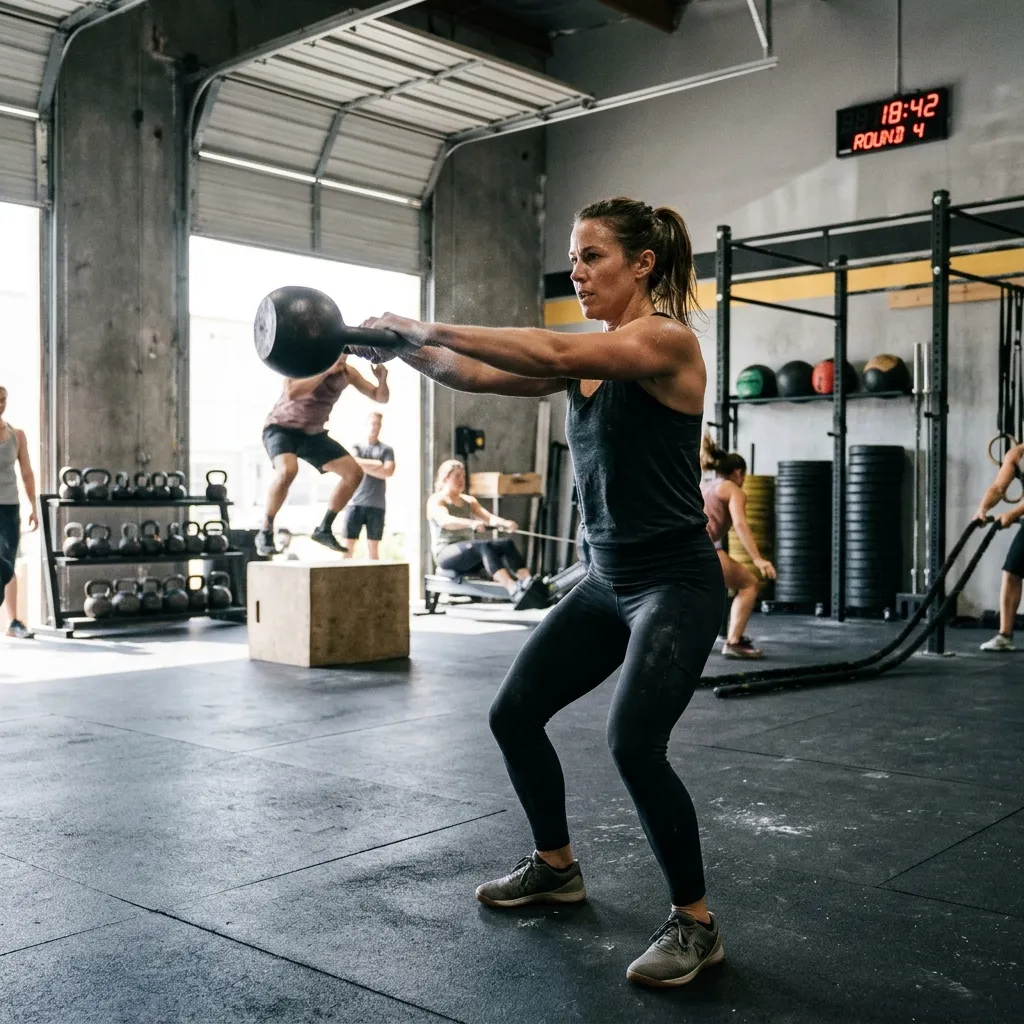
Strength training and cardiovascular activity serve different purposes, but both are valuable parts of a balanced fitness plan.
Strength exercises such as squats, push-ups, lunges and glute bridges challenge your muscles and help develop muscular strength and endurance. You can begin with bodyweight variations before adding resistance when appropriate.
Cardiovascular activities such as walking, cycling, dancing and marching in place increase your heart rate and help improve your ability to sustain physical activity.
You do not need to perform every type of exercise during every session. Instead, organize your week so that strength workouts and cardiovascular activities complement one another.
For example, you might complete a full-body strength session on Monday, go for a comfortable walk on Tuesday and perform another strength session on Wednesday. This approach provides variety while allowing you to build a consistent exercise habit.
Read More: Healthy Weight Loss Smoothies for a Quick and Nutritious Breakfast
Start With Simple Movements
Learning basic movement patterns is more important than attempting advanced exercises when you are new to fitness.
Squats teach you how to bend your hips and knees while maintaining control. Push-ups develop upper-body strength, while glute bridges help strengthen the muscles around your hips. Planks and bird dogs introduce simple ways to develop core stability.
Begin with variations that allow you to maintain comfortable, controlled movement. If a traditional push-up feels too difficult, for example, you can start with your hands against a wall or on a stable elevated surface.
As your strength and coordination improve, you can gradually choose more challenging variations.
Choose Appropriate Exercise Intervals
Beginners do not need to exercise continuously for long periods to establish a useful routine.
For strength training, you can start with one or two sets of approximately 8–12 repetitions for many exercises, adjusting the number according to your abilities and the movement involved. Rest between sets so you can maintain good technique.
For cardiovascular activity, begin with a comfortable duration, such as 10–15 minutes of walking and increase the time gradually.
The goal is to find a manageable starting point that you can repeat consistently without excessive fatigue.
Allow Time for Recovery
Your muscles and other body systems need time to adapt to new physical demands.
Performing challenging full-body strength sessions every day may leave you feeling excessively tired and make it harder to maintain good technique. Beginners often benefit from scheduling strength workouts on two or three nonconsecutive days each week.
On other days, you can walk, perform gentle mobility exercises, or take a complete rest day when needed.
Recovery is not wasted time. It is an essential part of developing a sustainable fitness routine.
Benefits of Following a Beginner Workout Routine
Regular physical activity can support several aspects of your health and everyday functioning. When you begin with manageable exercises and gradually increase your activity, you create opportunities to develop strength, endurance and greater confidence in your physical abilities.
The benefits you experience will depend on your starting fitness level, exercise choices, consistency and other lifestyle factors.
Build Overall Body Strength
Strength training challenges your muscles through controlled movements and resistance.
Exercises such as squats, incline push-ups, glute bridges and rows target different muscle groups throughout your body. Practicing these movements regularly can help you develop the strength needed for everyday activities.
For example, stronger leg muscles can make standing up from a chair or climbing stairs easier. Improved upper-body strength can support lifting and carrying objects.
You do not need to lift heavy weights immediately. Bodyweight exercises and light resistance can provide an appropriate starting point while you learn proper technique.
Improve Cardiovascular Fitness
Cardiovascular fitness describes how effectively your body supports sustained physical activity.
Walking, cycling, swimming and other aerobic activities encourage your heart and lungs to work more actively. Over time, regular participation can help improve your ability to complete everyday activities without becoming as easily fatigued.
Beginners can start with short walks or other comfortable activities and gradually increase their duration.
Choose movements that fit your preferences and physical abilities. Enjoyable activities are often easier to maintain over the long term.
Support Healthy Weight Management
Physical activity contributes to energy expenditure and can support healthy weight management when combined with appropriate nutrition and other sustainable habits.
Strength training also helps you develop and maintain muscle, while cardiovascular activity provides additional opportunities to move throughout the day.
However, results vary from person to person. A beginner workout routine does not guarantee a particular amount of weight loss or a specific body shape.
Instead of focusing exclusively on the number on the scale, consider other signs of progress, such as improved stamina, greater strength, better movement control and increased consistency.
Develop Better Balance and Coordination
Many beginner exercises require you to control your body while moving your arms, legs and torso together.
Movements such as reverse lunges, bird dogs and controlled standing knee raises encourage coordination and body awareness. These skills can become useful when performing everyday activities that require stability.
Start with supported variations if you feel unsteady. For example, holding a sturdy chair while practicing a reverse lunge can help you learn the movement with additional support.
Gradually increase the challenge only when you can perform the exercise comfortably.
Establish a Consistent Exercise Habit
Starting with a manageable workout can make regular exercise feel less intimidating.
Instead of trying to change your entire lifestyle in one week, you can focus on completing two or three short strength sessions and adding comfortable movement on other days.
Each completed session gives you an opportunity to practice your exercises and build confidence.
Over time, a consistent routine can become a familiar part of your weekly schedule rather than another demanding responsibility.
Prepare Your Body Before Starting a Workout
Warming up helps your body transition from rest to exercise. It gradually increases movement, prepares the muscles you will use and gives you an opportunity to check how your body feels before beginning more demanding activities.
Spend approximately 3–5 minutes performing comfortable movements before your strength session.
March in Place
Marching in place is a simple way to begin warming up without requiring equipment or much space.
Stand upright with your feet approximately hip-width apart. Lift one knee at a time while moving your arms naturally.
Start slowly and gradually increase your pace as you become more comfortable. Keep your shoulders relaxed and maintain a steady rhythm.
Continue for approximately 30–60 seconds.
If you prefer exercising outdoors, a gentle walk can serve a similar purpose.
Perform Arm Circles
Arm circles help prepare your shoulders for upper-body exercises such as push-ups and rows.
Stand comfortably and extend your arms out to the sides at shoulder height, if that position feels comfortable.
Make small circles with your arms, gradually increasing their size without forcing the movement.
Continue for approximately 15–20 seconds, then reverse the direction.
Keep your neck relaxed and avoid raising your shoulders toward your ears.
Practice Gentle Squats
Gentle squats introduce the movement pattern you will use during your strength workout.
Stand with your feet approximately shoulder-width apart and your toes pointing slightly outward if that feels natural.
Push your hips backward and bend your knees as though you are sitting on a chair. Lower your body only as far as you can comfortably control.
Press through your feet to return to standing.
Perform approximately 8–10 slow repetitions, focusing on balance and smooth movement.
Include Shoulder Rolls
Shoulder rolls provide a gentle way to move your upper body before exercise.
Stand upright with your arms relaxed beside you.
Slowly roll your shoulders forward, upward, backward and downward. Repeat several times before reversing the direction.
Avoid forcing the movement or creating unnecessary tension in your neck.
These simple warm-up exercises help prepare you for the main workout without requiring an elaborate preparation routine.
The Essential Exercises in a Beginner Workout Routine
A useful full-body routine includes exercises that target the major muscle groups while allowing you to practice basic movement patterns.
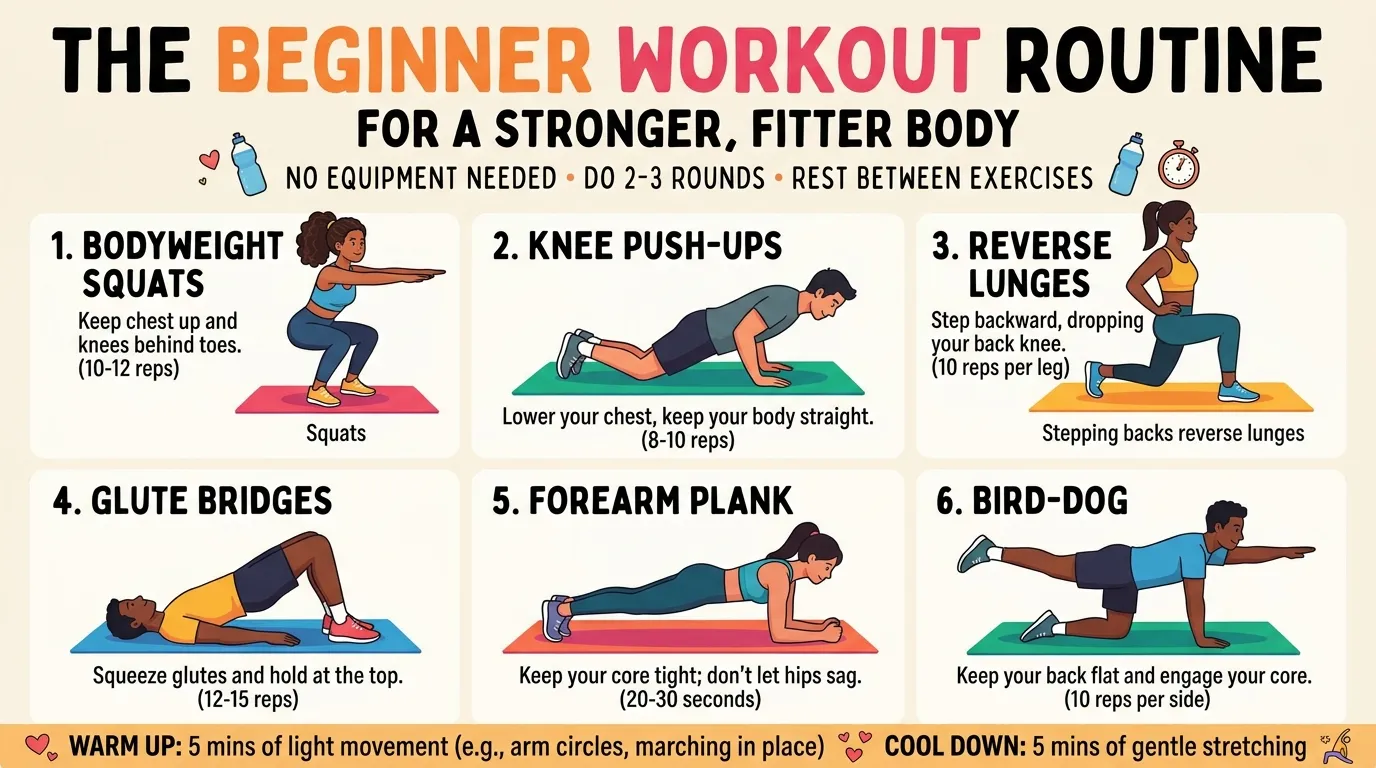
The following exercises can be performed at home with little or no equipment. Choose comfortable variations, move at a controlled pace and rest whenever necessary.
For your first few sessions, begin with one set of each exercise. As the movements become more familiar, you can gradually work toward two or three sets, depending on your recovery and fitness level.
Bodyweight Squats
Bodyweight squats strengthen the quadriceps, glutes and other muscles involved in lower-body movement.
Stand with your feet approximately shoulder-width apart. Keep your chest comfortably lifted and your arms extended in front of you if that helps with balance.
Push your hips backward and bend your knees as though you are sitting down. Lower yourself to a comfortable depth while keeping your feet firmly on the floor.
Press through your feet to return to standing.
Perform approximately 8–12 controlled repetitions.
If squats feel difficult, practice sitting down on a sturdy chair and standing back up. Use the chair for support if needed and gradually improve your control before attempting deeper squats.
Wall or Incline Push-Ups
Push-ups develop the chest, shoulders, triceps and supporting core muscles.
Beginners can start with wall push-ups because they reduce the amount of body weight you need to support.
Stand facing a wall and place your palms against it at approximately shoulder height. Step backward slightly while keeping your feet stable.
Bend your elbows to bring your chest toward the wall. Keep your body aligned rather than bending at the hips.
Push through your hands to return to the starting position.
Perform approximately 8–12 repetitions, or fewer if necessary.
As your strength improves, you can progress to push-ups against a stable elevated surface and eventually try floor push-ups if appropriate.
Glute Bridges
Glute bridges target the glutes and involve the muscles that support hip movement.
Lie on your back with your knees bent and your feet flat on the floor. Position your feet approximately hip-width apart and rest your arms beside your body.
Tighten your abdominal muscles gently and press through your feet to lift your hips.
Raise your hips until your shoulders, hips and knees form a comfortable diagonal line. Avoid arching your lower back excessively.
Pause briefly before lowering your hips slowly to the floor.
Perform approximately 10–12 repetitions.
If you feel discomfort in your lower back, reduce the height of the movement or stop and reassess your technique.
Standing or Seated Rows
Rows strengthen the muscles of your upper back and help balance a routine that includes pushing exercises.
If you have a resistance band designed for exercise, sit or stand according to the band’s instructions and hold it securely.
Pull your hands toward your torso while keeping your shoulders relaxed and your elbows moving backward. Pause briefly, then return to the starting position with control.
Perform approximately 8–12 repetitions using resistance that you can manage comfortably.
If you do not have a resistance band, you can practice the movement without resistance to develop coordination. You can also consider a suitable light dumbbell row when you have access to appropriate equipment and know how to use it safely.
Do not attach a resistance band to an object that cannot support the force safely.
Reverse Lunges
Reverse lunges strengthen the quadriceps and glutes while challenging your balance and coordination.
Stand upright with your feet approximately hip-width apart.
Step one foot backward and bend both knees to lower your body within a comfortable range. Keep your front foot stable and your torso upright.
Push through your front foot to return to standing.
Repeat with the opposite leg.
Begin with approximately 6–8 repetitions per side, using a smaller movement if necessary.
If you feel unsteady, hold a sturdy support while practicing. You can also begin with supported split squats before progressing to full reverse lunges.
Bird Dogs
Bird dogs help develop core stability and coordination while involving the muscles that support your back and hips.
Begin on your hands and knees, with your hands beneath your shoulders and your knees beneath your hips.
Tighten your abdominal muscles gently to keep your torso stable.
Extend one arm forward while extending the opposite leg backward. Move only as far as you can without twisting your body or arching your lower back.
Pause briefly, then return to the starting position.
Repeat on the opposite side.
Perform approximately 6–10 controlled repetitions per side.
Beginners can start by lifting only one arm or one leg at a time before combining the movements.
Forearm Planks
Planks strengthen the muscles responsible for stabilizing your abdomen and torso.
Begin on your forearms and knees or forearms and toes, depending on your current ability.
Position your elbows beneath your shoulders and keep your body aligned. Tighten your abdominal muscles and breathe normally.
Hold the position for approximately 10–20 seconds to start, maintaining control throughout the movement.
If your hips begin to drop or your lower back feels uncomfortable, end the hold and rest.
A knee plank is an appropriate starting variation for many beginners. Gradually increase the holding time as your strength improves.
Marching in Place
Marching in place provides a low-impact cardiovascular option that can fit into a home workout.
Stand upright with your feet approximately hip-width apart.
Lift one knee at a time while moving your arms naturally. Keep your movements controlled and choose a pace that allows you to breathe comfortably.
Continue for approximately 30–60 seconds, or longer if appropriate for your fitness level.
You can use marching as a warm-up, a short cardio interval, or an active recovery movement between strength exercises.
If you prefer a more challenging cardiovascular activity, gradually increase your pace as your fitness improves.
How to Organize Your Beginner Workout Routine
Once you understand the basic exercises, the next step is arranging them into a practical session.
A simple full-body workout does not need to include every exercise you know. Choose a manageable selection that covers the major muscle groups and allows you to maintain good technique.
Start With a Simple Full-Body Session
The following example provides a starting structure for a beginner strength workout.
| Exercise | Suggested repetitions or duration |
|---|---|
| Bodyweight squats | 8–12 repetitions |
| Wall or incline push-ups | 8–12 repetitions |
| Glute bridges | 10–12 repetitions |
| Rows | 8–12 repetitions |
| Reverse lunges | 6–8 repetitions per side |
| Bird dogs | 6–10 repetitions per side |
| Forearm plank | 10–20 seconds |
Begin with one set of each exercise and rest as needed between movements. Depending on your pace and recovery periods, the session may take longer than a few minutes.
You do not need to complete the routine as quickly as possible. Concentrate on learning each movement and maintaining a comfortable level of effort.
If a particular exercise causes pain or feels unsuitable, stop and choose an appropriate alternative.
Choose the Right Number of Sets
A set is a group of repetitions performed before taking a break.
For many beginners, one set per exercise is a reasonable starting point. After the exercises become familiar and recovery feels manageable, you can gradually increase to two sets.
Some people may eventually benefit from three sets, but there is no need to rush toward that level.
Rest between sets until your breathing is comfortable and you feel ready to continue. The appropriate recovery period depends on the exercise, its difficulty and your current fitness.
Use Controlled Repetitions
Performing more repetitions does not automatically make an exercise more effective.
For example, rushing through squats may make it harder to maintain balance and control your knees and hips. Performing push-ups too quickly can also affect your body alignment.
Instead, move smoothly through each repetition and pay attention to your technique.
If you cannot maintain the movement pattern, reduce the repetitions, take a break, or choose an easier variation.
Adjust Your Routine to Your Goals
Your exercise selection can change depending on what you want to improve.
If your main goal is strength, prioritize resistance exercises and gradually make them more challenging.
If you want to improve cardiovascular fitness, include additional walking, cycling, swimming, or another aerobic activity.
If your goal is general fitness, combine strength training with cardiovascular movement and mobility work throughout the week.
You can make adjustments as your abilities and preferences change without rebuilding your entire routine every time.
Create a Weekly Workout Schedule
A weekly schedule helps you distribute exercise and recovery in a way that feels manageable.
Beginners can start with two or three full-body strength sessions on nonconsecutive days and add comfortable cardiovascular activity when possible.
The following example illustrates how you might organize your week.
| Day | Activity | Suggested duration |
|---|---|---|
| Monday | Full-body strength workout | 20–30 minutes |
| Tuesday | Walking or low-impact cardio | 15–25 minutes |
| Wednesday | Full-body strength workout | 20–30 minutes |
| Thursday | Gentle mobility or walking | 10–20 minutes |
| Friday | Full-body strength workout or lighter session | 15–30 minutes |
| Saturday | Enjoyable cardiovascular activity | 20–30 minutes |
| Sunday | Rest or gentle movement | As needed |
These durations are examples rather than strict requirements. Your sessions may be shorter when you are just starting and you can increase your activity gradually as your fitness improves.
If three strength sessions leave you feeling excessively tired, begin with two and reassess how you recover.
Monday: Full-Body Strength
Start the week with a manageable strength session that includes movements for your upper body, lower body and core.
You might perform bodyweight squats, wall push-ups, glute bridges, rows and bird dogs.
Begin with one set of each exercise and rest between movements. Focus on learning the correct technique instead of trying to finish quickly.
Tuesday: Light Cardiovascular Activity
Use Tuesday to add comfortable movement without repeating the previous day’s strength session.
Walking is a practical option because it requires little equipment and can be adjusted to your current fitness level.
You can also choose cycling, swimming, dancing, or another activity you enjoy.
Start at a comfortable pace and gradually increase the duration when it feels manageable.
Wednesday: Strength and Stability
Repeat your full-body workout or choose a slightly different combination of beginner exercises.
For example, include supported reverse lunges, incline push-ups, glute bridges, rows and modified planks.
Pay attention to how your muscles feel after Monday’s session. If you are still experiencing significant soreness or fatigue, choose gentle movement instead of forcing another demanding workout.
Thursday: Mobility and Recovery
Use Thursday for light activity and recovery.
You can take a relaxed walk, perform comfortable shoulder rolls, move your hips gently, or practice other mobility exercises that suit your abilities.
Avoid forcing stretches or pushing your joints into uncomfortable positions.
This day provides an opportunity to remain active without placing the same demands on your muscles as a strength session.
Friday: Repeat Your Strength Workout
If you have recovered comfortably, complete another full-body strength session.
You can repeat the exercises from Monday or make small adjustments based on your experience.
For example, you might perform an additional set of squats or use a slightly more challenging push-up variation if your current version feels comfortable.
Increase only one or two aspects of the workout at a time so you can assess how your body responds.
Saturday: Enjoyable Physical Activity
Choose an activity that makes movement enjoyable.
Walking outdoors, cycling, dancing, or swimming can provide variety and help you develop a more active lifestyle.
You do not need to treat every activity as a formal workout. Everyday movement can also contribute to your overall physical activity.
Sunday: Rest and Recovery
Use Sunday to rest or enjoy gentle movement according to how you feel.
Recovery gives you time to prepare for the next week and reflect on what worked well in your schedule.
If you missed a workout earlier in the week, there is no need to compensate by doubling your exercise on Sunday. Simply return to your routine when you are ready.
How to Progress as Your Fitness Improves
A beginner workout routine should change gradually as your strength, coordination and stamina develop.
Repeating the same exercises can help you learn the movements, but eventually you may need to adjust the challenge to continue making progress.
The most useful approach is to make small, manageable changes rather than increasing every aspect of your workout at once.
Increase Repetitions Gradually
If you can complete your exercises with good technique and without excessive fatigue, consider adding a few repetitions.
For example, you might progress from eight controlled squats to ten or twelve.
Do not increase the number of repetitions if doing so causes you to lose control or experience discomfort.
Quality movement should remain your priority.
Add Another Set
Once one set feels manageable, you can consider adding a second set to selected exercises.
For example, you might perform two sets of squats and push-ups while continuing to perform one set of the more challenging movements.
This allows you to increase your training volume without making every part of the session more demanding.
Take adequate rest between sets and monitor how you feel afterward.
Choose More Challenging Variations
You can gradually progress by changing the exercise variation.
Wall push-ups may eventually lead to incline push-ups, while chair-assisted squats may progress to comfortable bodyweight squats.
Similarly, you can move from knee planks to full planks when you can maintain appropriate body alignment.
Make these changes only when you can perform your current variation comfortably and consistently.
Introduce Light Resistance
As you become more experienced, resistance bands or suitable light dumbbells can add variety to your strength sessions.
Start with resistance that allows you to perform controlled repetitions without straining.
Learn how to use equipment properly and avoid increasing the weight simply because you can complete the movement quickly.
Gradual progression is more sustainable than making large jumps in difficulty.
Track Your Progress
Keeping a simple workout record can help you recognize improvements that may not be obvious from one session to the next.
Record the exercises you performed, the number of sets and repetitions and how challenging the workout felt.
You can also note improvements in movement control, balance and stamina.
Review your notes every few weeks to identify changes you can make to your routine.
Remember that progress is not always linear. Some sessions may feel easier than others and occasional setbacks are a normal part of developing a lasting exercise habit.
Tips for Getting Better Results From Your Workouts
A well-organized routine is only one part of developing fitness. Your exercise technique, recovery habits and approach to consistency also influence your experience.
A few practical adjustments can help you make your workouts more manageable and productive.
Focus on Proper Technique
Correct technique helps you perform exercises with better control and understand which muscles you are working.
Take time to learn the basic movement patterns before increasing repetitions, resistance, or speed.
Use a mirror if it helps you observe your alignment, or consider guidance from a qualified fitness professional when you need help learning an exercise.
If you cannot maintain comfortable control, choose an easier variation.
Eat Balanced Meals
Your body needs energy and nutrients to support normal activity, recovery and muscle maintenance.
Include a variety of foods in your meals, such as vegetables, fruits, whole grains, protein-rich foods and healthy sources of fat.
Protein sources may include eggs, fish, chicken, beans, lentils, yogurt, or other foods that fit your preferences.
You do not need an elaborate diet to begin exercising. Focus on balanced meals and sustainable eating habits rather than extreme restrictions.
If you have specific nutritional needs or a medical condition that affects your diet, seek individualized guidance from an appropriate professional.
Stay Hydrated
Drink water regularly throughout the day and pay attention to your hydration needs during exercise.
Your requirements can vary according to the weather, activity duration, exercise intensity and individual circumstances.
In warm conditions, you may need to pay closer attention to fluid intake.
Keep water accessible during longer sessions and do not ignore symptoms that suggest you need to stop and rest.
Prioritize Sleep
Sleep supports recovery and helps you feel more prepared for daily activities.
Try to maintain a regular sleep schedule and allow enough time for rest.
If you feel unusually tired, consider reducing the intensity of your workout or choosing a lighter activity.
Pushing through persistent exhaustion is not necessary to make progress.
Combine Strength Training With Daily Movement
Your scheduled workouts are only one part of your overall activity.
You can add movement by walking during breaks, taking the stairs when appropriate, doing household tasks, or choosing active hobbies.
These activities can complement your strength sessions and help you develop a more active lifestyle.
Look for small opportunities to move throughout the day rather than relying entirely on your scheduled workout.
Common Workout Mistakes Beginners Should Avoid
When you are new to exercise, it is easy to assume that harder workouts always produce better results. However, several common mistakes can make exercise unnecessarily difficult or interfere with consistency.
Understanding these issues can help you approach your routine more effectively.
Doing Too Much Too Soon
Starting with intense workouts every day can leave you excessively sore and tired.
You may feel motivated to make rapid progress, but your body needs time to adapt to new movements and training demands.
Begin with a manageable number of sessions and increase your activity gradually.
Building a sustainable routine is more useful than completing an exhausting workout that you struggle to repeat.
Skipping the Warm-Up
Beginning demanding exercises immediately after sitting for a long time can make the transition into exercise feel uncomfortable.
Spend a few minutes marching in place, moving your arms and practicing gentle bodyweight movements before your main session.
A warm-up does not need to be complicated, but it should prepare you for the activities you plan to perform.
Ignoring Exercise Modifications
Not every exercise variation is suitable for every beginner.
If a floor push-up feels too difficult, use a wall or stable elevated surface. If reverse lunges challenge your balance, practice with support.
Modifications allow you to develop the necessary movement patterns while working within your current abilities.
You can progress to more challenging versions when you are ready.
Using Poor Technique to Complete More Repetitions
Trying to achieve a high repetition count can encourage rushed or uncontrolled movements.
For example, allowing your knees to move without control during squats or letting your hips sag during push-ups may make an exercise harder to perform comfortably.
Reduce your repetitions when necessary and focus on controlled movement.
If you are unsure how to perform an exercise correctly, seek guidance rather than repeatedly practicing a movement that causes discomfort.
Neglecting Rest and Recovery
More exercise is not always better.
Your muscles need time to recover from challenging strength sessions and inadequate recovery can make it harder to maintain your usual training quality.
Allow recovery time between demanding full-body workouts.
If you experience persistent soreness, unusual fatigue, or declining performance, reassess your schedule and reduce the workload when appropriate.
Expecting Immediate Results
Developing strength, endurance and healthier habits takes time.
You may notice improvements in exercise confidence or movement control before seeing visible changes in your body.
Avoid judging your progress after only a few sessions.
Instead, focus on completing workouts consistently, gradually improving your technique and building habits that you can maintain.
How to Stay Consistent With Your Workout Routine
Consistency is one of the most important parts of a successful fitness plan.
You do not need to feel motivated every day and you do not have to follow a perfect schedule to make progress. Creating a routine that fits your circumstances can make it easier to continue exercising over time.
Choose a Convenient Workout Time
Select a time when exercise can fit naturally into your daily schedule.
Some people prefer exercising in the morning, while others find it easier to work out after work or during a break.
There is no single best time for everyone.
Experiment with different options and choose the one that makes regular participation easiest.
Prepare Your Workout Space
You do not need a dedicated home gym to begin.
Choose a flat, nonslip area with enough space to extend your arms and legs comfortably.
Keep any necessary equipment nearby, such as an exercise mat or resistance band.
A prepared space can reduce the time and effort needed to begin your session.
Set Realistic Weekly Goals
Start with goals that match your current abilities and schedule.
For example, you might aim to complete two strength workouts and take three short walks during your first week.
Once these activities become manageable, you can gradually increase your training or walking time.
Avoid setting so many goals that exercise becomes another source of stress.
Track Small Improvements
Progress can appear in several ways.
You might complete more repetitions, maintain better balance, use a more challenging exercise variation, or recover more comfortably between sets.
Record these changes in a notebook or workout application.
Recognizing small improvements can help you stay encouraged, especially when visible physical changes take longer.
Make Exercise Enjoyable
Choose activities that you genuinely enjoy.
If you dislike a particular cardiovascular exercise, try walking, cycling, dancing, or another suitable option.
You can also listen to music during your workout or exercise with a friend when convenient.
Enjoyment does not replace consistency, but it can make physical activity easier to maintain.
Safety Tips Before Starting a Beginner Workout Routine
Exercise should challenge your body appropriately without forcing you into movements that feel unsafe.
Before beginning a new routine, consider your current fitness level, physical abilities and any health concerns that may affect exercise.
Start at Your Current Fitness Level
Choose movements you can perform with control, even if that means starting with very simple variations.
Chair-assisted squats, wall push-ups and modified planks can be useful options for many beginners.
Increase the difficulty gradually as your strength and coordination improve.
There is no need to compare your progress with someone who has been exercising for years.
Use a Stable Exercise Surface
Choose a flat, nonslip surface with enough room to move safely.
If you use resistance bands, make sure they are suitable for exercise and in good condition.
Avoid unstable chairs, tables, or improvised platforms when performing exercises that require body support.
Use equipment according to its intended purpose and instructions.
Listen to Your Body
Some muscle fatigue and exertion are normal during exercise, but sharp pain, joint pain, or unusual symptoms should not be ignored.
Stop an exercise if it causes pain and do not force yourself to continue through discomfort.
If you experience chest pain, fainting, severe dizziness, or unusual shortness of breath, stop exercising and seek appropriate medical attention.
Allow Enough Recovery Time
You do not need to perform demanding strength exercises every day.
Schedule rest or lighter activity between challenging sessions and pay attention to persistent soreness or fatigue.
If you remain unusually sore or exhausted, reduce your training demands and allow additional recovery time.
Seek Professional Advice When Necessary
If you have an existing injury, a chronic medical condition, balance difficulties, or another health concern, consult a qualified healthcare professional before starting a new exercise program.
Pregnant individuals and people recovering from surgery may also need exercise recommendations tailored to their circumstances.
A qualified fitness professional can help you learn appropriate techniques and select exercises that match your abilities.
Frequently Asked Questions
What is the best workout routine for beginners?
A good beginner workout routine combines basic strength exercises, cardiovascular activity and recovery. You can start with movements such as squats, wall push-ups, glute bridges, rows and modified planks. Begin with a manageable number of repetitions and gradually increase the difficulty as your fitness improves.
How many days a week should a beginner work out?
Many beginners can start with two or three full-body strength sessions per week on nonconsecutive days. You can add walking or other comfortable cardiovascular activities on the remaining days. Adjust the schedule according to your recovery, fitness level and daily responsibilities.
How long should a beginner workout last?
A beginner strength session might last approximately 20–30 minutes, although shorter sessions can also be useful when you are establishing an exercise habit. Your workout duration depends on the number of exercises, sets, repetitions and rest periods. Start with a manageable session and increase the duration gradually.
Can I build strength with a workout routine at home?
Yes. You can develop strength at home using bodyweight exercises such as squats, push-ups, glute bridges, lunges and planks. Resistance bands or suitable dumbbells can provide additional options as you progress. Consistent practice, appropriate challenge and proper technique are important.
Should beginners do cardio or strength training first?
The order depends on your main goal and the type of session you plan to complete. If strength development is your priority, you can perform your strength exercises first and include cardiovascular activity afterward. You can also schedule cardio and strength training on separate days. Choose an arrangement that allows you to exercise comfortably and maintain good technique.
How long does it take to see results from a beginner workout routine?
The timeline varies according to your starting fitness level, exercise consistency, nutrition, sleep and training plan. Some people notice improvements in coordination, confidence, or stamina before seeing visible physical changes. Focus on consistent participation and gradual progress rather than expecting a specific result by a particular date.
Can beginners work out every day?
Beginners can participate in gentle physical activity daily if it suits their abilities, but challenging full-body strength workouts do not need to be performed every day. Alternate strength sessions with walking, light movement, or rest. Allow your muscles enough time to recover between demanding workouts.
Do I need gym equipment to get started?
No. Many beginner exercises use bodyweight resistance and can be performed at home without special equipment. A comfortable exercise mat can be helpful, but it is not essential for every movement. You can introduce resistance bands or suitable weights later if they fit your goals and abilities.
What should I eat before and after a workout?
Your food choices depend on your schedule, preferences and individual nutritional needs. A balanced meal or snack containing carbohydrates and some protein may be suitable before exercise, depending on when you last ate and how comfortable you feel exercising afterward. After your workout, a balanced meal with protein, carbohydrates and other nutrients can support normal recovery. You do not need special supplements to begin exercising.
Should I feel sore after every workout?
No. Some muscle soreness can occur when you begin a new exercise program, but soreness is not a requirement for progress. Severe pain or soreness that interferes with normal movement may indicate that you need additional recovery or a change in your training approach. Focus on gradual improvement rather than trying to make every workout exhausting.
How can I stay motivated to exercise regularly?
Set realistic goals, choose convenient workout times and track small improvements. Preparing your exercise space and selecting activities you enjoy can also make it easier to follow your plan. If you miss a session, return to your usual schedule when you can instead of trying to compensate with an excessively demanding workout.
Conclusion
A beginner workout routine provides a practical starting point for developing strength, improving fitness and building healthier exercise habits. By combining basic bodyweight movements, cardiovascular activity and appropriate recovery, you can create a plan that fits your abilities and daily schedule.
The most important step is to begin with exercises you can perform comfortably and consistently. Movements such as squats, wall push-ups, glute bridges, rows and modified planks can help you develop a foundation before progressing to more challenging variations.
Remember that progress does not require perfect workouts or dramatic changes overnight. Focus on learning proper technique, increasing your activity gradually, eating balanced meals, getting sufficient sleep, and allowing your body time to recover.
With patience and consistency, your workout routine can become a sustainable part of your lifestyle and support your long-term fitness goals.


One Comment on “The Beginner Workout Routine for a Stronger, Fitter Body”