Introduction
When people start thinking about weight loss or healthy eating, the word calories comes up almost immediately. I remember hearing it for years before I truly understood what it meant. Many people know calories matter, but few know what they are or how to track them properly.
In my opinion, calorie counting is not as complicated as it sounds. Once you understand the basics, it becomes a simple habit that gives you a clearer picture of what you eat each day.
In this article, I will explain what calories are, why they matter, and how you can count them in a practical way.
What Are Calories
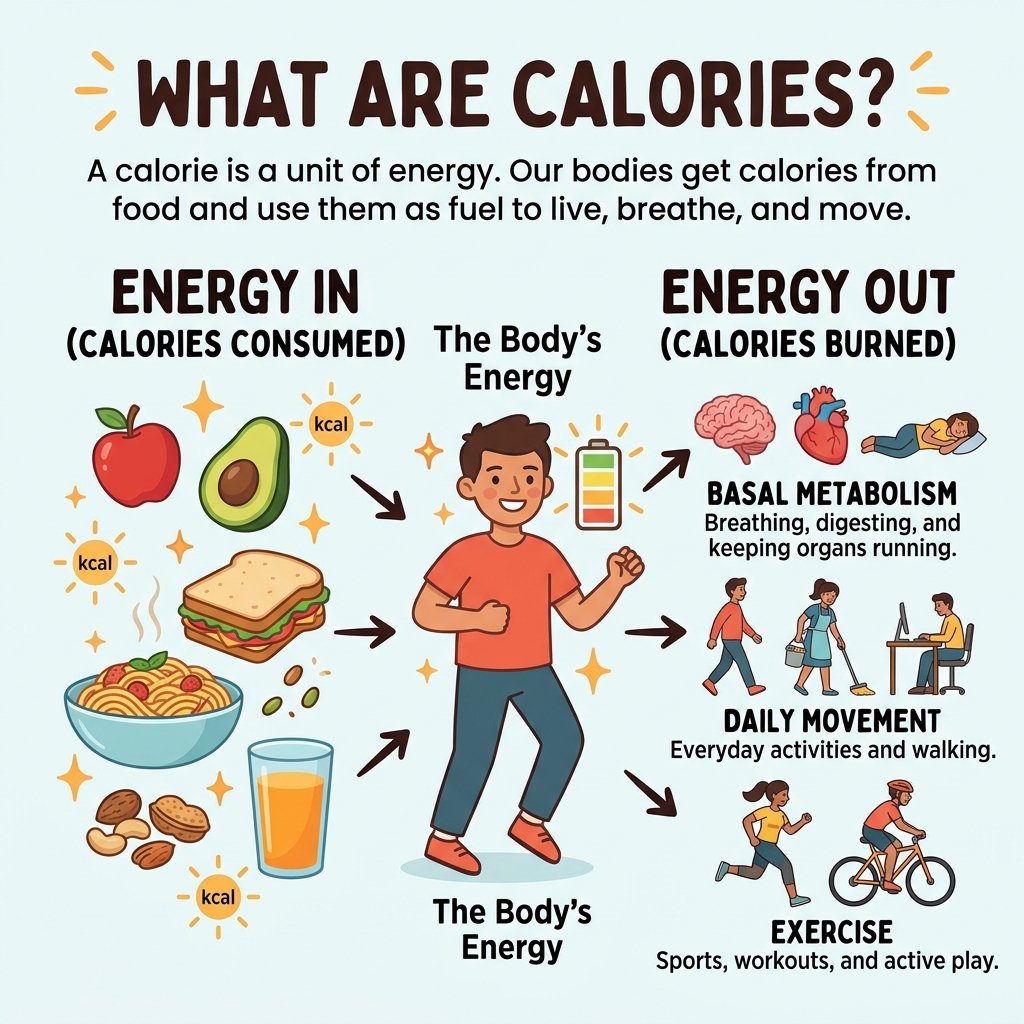
A calorie is a unit of energy. It tells you how much energy a food or drink gives your body.
Your body needs this energy for everything it does. It powers your heartbeat, your breathing, your thinking, and every step you take. Even when you are sleeping, your body is using calories.
When you see calories listed on a food label, that number shows how much energy you get from one serving of that food.
Why Calories Matter
Calories matter because weight depends on the balance between energy in and energy out.
If you eat more calories than your body uses, the extra energy is stored as fat. If you eat fewer calories than your body uses, your body uses stored energy, and weight goes down. If both are about equal, your weight stays steady.
This is why calories are the starting point for most weight loss, weight gain, and maintenance plans.
Where Calories Come From
All the calories in your food come from three main nutrients. Alcohol also adds calories, though it is not a nutrient.
Carbohydrates give about four calories per gram. Protein also gives about four calories per gram. Fat gives about nine calories per gram, which is more than double the other two.
This is one reason fatty foods often have more calories in a small portion. A spoon of oil can have more calories than a whole apple.
Not All Calories Feel the Same
Even though a calorie is a calorie in terms of energy, different foods affect your body differently.
For example, two hundred calories from vegetables and lean protein will keep you full much longer than two hundred calories from a sugary drink. I have noticed this myself many times. A balanced meal keeps me satisfied for hours, while sweets leave me hungry soon after.
So when you count calories, the quality of your food still matters.
How Many Calories Do You Need
There is no single number that works for everyone. Your calorie needs depend on your age, gender, height, weight, and how active you are.
As a rough guide, many adult women need around 1,800 to 2,200 calories a day, and many adult men need around 2,200 to 2,800. These are only general estimates.
You can use a free online calorie calculator to get a more personal number. Treat the result as a starting point, then adjust based on how your weight changes over a few weeks.
How to Count Calories Step by Step
Counting calories is easier when you follow a simple process.
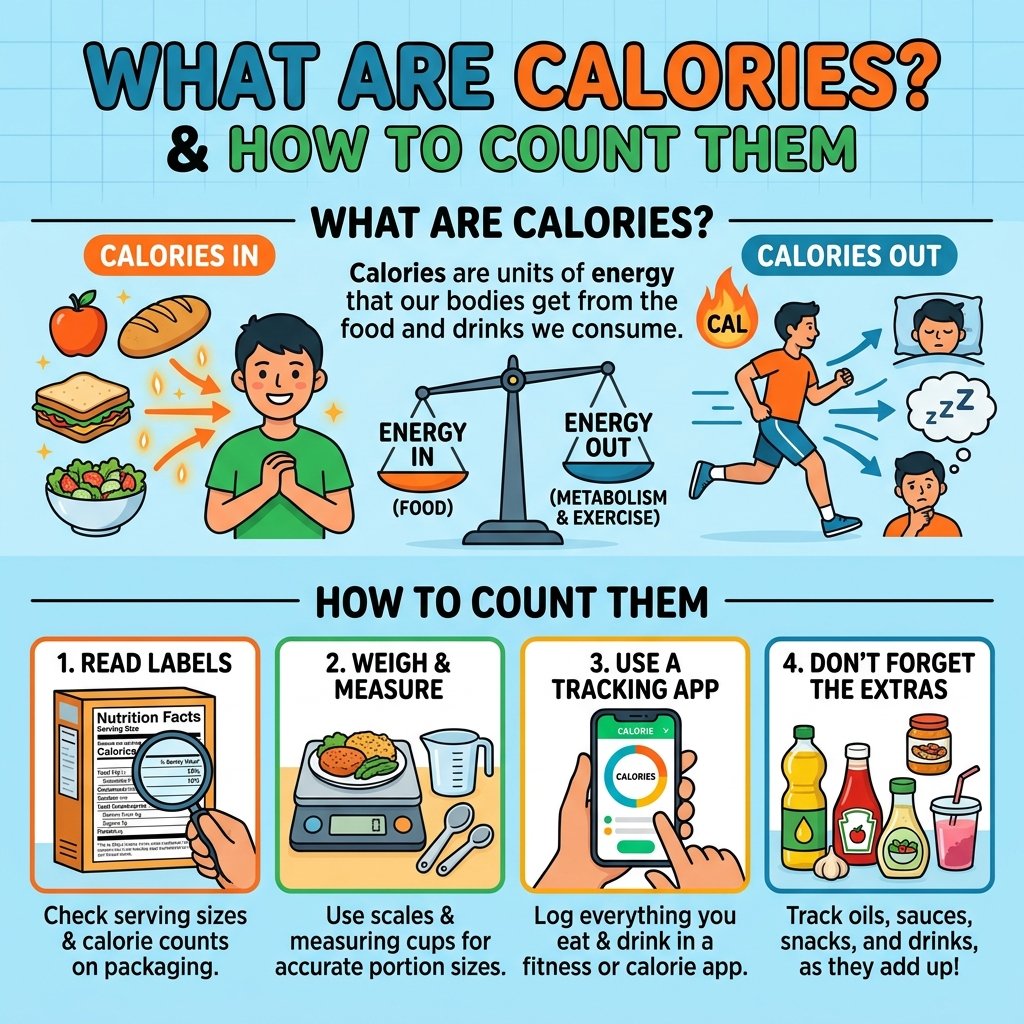
Step 1: Find your daily calorie goal. Use a calorie calculator and choose a goal that matches your plan, whether that is losing weight, maintaining it, or gaining it.
Step 2: Read food labels. Check the calories per serving and compare it with the amount you actually eat. Many packets contain more than one serving, which surprises a lot of people.
Step 3: Weigh or measure your food. A cheap kitchen scale is the most accurate way to track portions. Measuring cups and spoons also work well.
Step 4: Log everything you eat and drink. You can use a free app or just a notebook. Include snacks, cooking oil, sauces, and drinks, because these small things add up fast.
Step 5: Add up the total. At the end of the day, compare your total with your goal and see how close you were.
Useful Tips for Better Accuracy
Log your food right after eating instead of trying to remember it later. This is a small habit, but it makes a big difference.
Weigh food raw when possible, because cooked food changes weight after absorbing water or losing it. Be honest about portions, especially with oil, butter, and rice.
If you eat at restaurants, search for similar meals in your app and choose a slightly higher estimate. Restaurant food usually has more oil and sugar than we expect.
Common Mistakes to Avoid
One common mistake is forgetting drinks. Juice, tea with sugar, soft drinks, and milk coffee can add hundreds of calories without you noticing.
Another mistake is guessing portion sizes. Most people underestimate how much they eat, so a scale helps a lot.
Some people also cut calories too low, hoping for faster results. This usually leads to tiredness, strong cravings, and giving up after a few weeks. A moderate, steady approach works better.
Is Calorie Counting for Everyone
I believe calorie counting is a helpful tool, but it is not right for everyone.
It works well for people who like clear numbers and want to understand their eating habits. You do not have to count forever. Many people track for a few weeks to learn portion sizes and then eat more naturally.
However, if counting makes you anxious or you have a history of disordered eating, it is better to speak with a doctor or a registered dietitian first.
Final Thoughts
Calories are simply units of energy, and understanding them gives you more control over your health. Counting them does not have to be strict or stressful.
Start by finding your daily goal, read labels, measure your portions, and log your meals. Over time, it becomes a quick routine.
Most importantly, remember that calories are only one part of the picture. Eating whole, nutritious foods and staying active will always support better long term results.