Introduction
When I first heard about meditation, I believed it was something only experienced yoga teachers or spiritual people practiced. I thought it would be difficult to sit quietly for a long time without getting distracted. Because my daily routine was always busy, I never imagined meditation could become part of my life. Eventually I decided to give it a try, and that simple decision completely changed the way I looked at mental health and relaxation.
The first few sessions were not perfect. My mind wandered constantly, and I found it difficult to stay focused. Instead of giving up, I kept practicing for a few minutes every day. Slowly I noticed positive changes. I felt calmer during stressful situations, my concentration improved, and I became more patient in my daily life.
In this article, I want to share the meditation techniques that helped me as a beginner. These methods are simple, practical, and suitable for anyone who wants to experience the benefits of meditation without making it complicated.
Why I Started Meditating
Like many people, I often felt overwhelmed by work, personal responsibilities, and constant notifications from my phone. My mind always seemed busy, even when I wanted to relax.
I wanted a healthy habit that could help me slow down and enjoy the present moment. Meditation became that habit.
What surprised me most was that I did not need expensive equipment or a special place. All I needed was a few quiet minutes and the willingness to practice consistently.
Benefits I Have Experienced
After practicing meditation regularly, I noticed many positive changes.
I became better at managing stress.
My focus improved while working and studying.
I felt calmer during challenging situations.
I slept more peacefully at night.
I also became more aware of my thoughts instead of reacting to every emotion immediately.
These improvements happened gradually, but they encouraged me to continue practicing every day.
Finding a Quiet Space
One of the first things I learned was the importance of choosing a peaceful environment.
I usually sit in a quiet corner of my home where I am less likely to be interrupted.
The room does not need to be completely silent.
The goal is simply to find a place where I can relax and focus without unnecessary distractions.
Sitting Comfortably
Many beginners believe meditation requires sitting in a complicated position.
From my experience, comfort is much more important.
Sometimes I sit on a chair with both feet on the floor.
Other times I sit on a cushion with my legs crossed.
The most important thing is keeping my back straight while remaining relaxed.
Focusing on the Breath
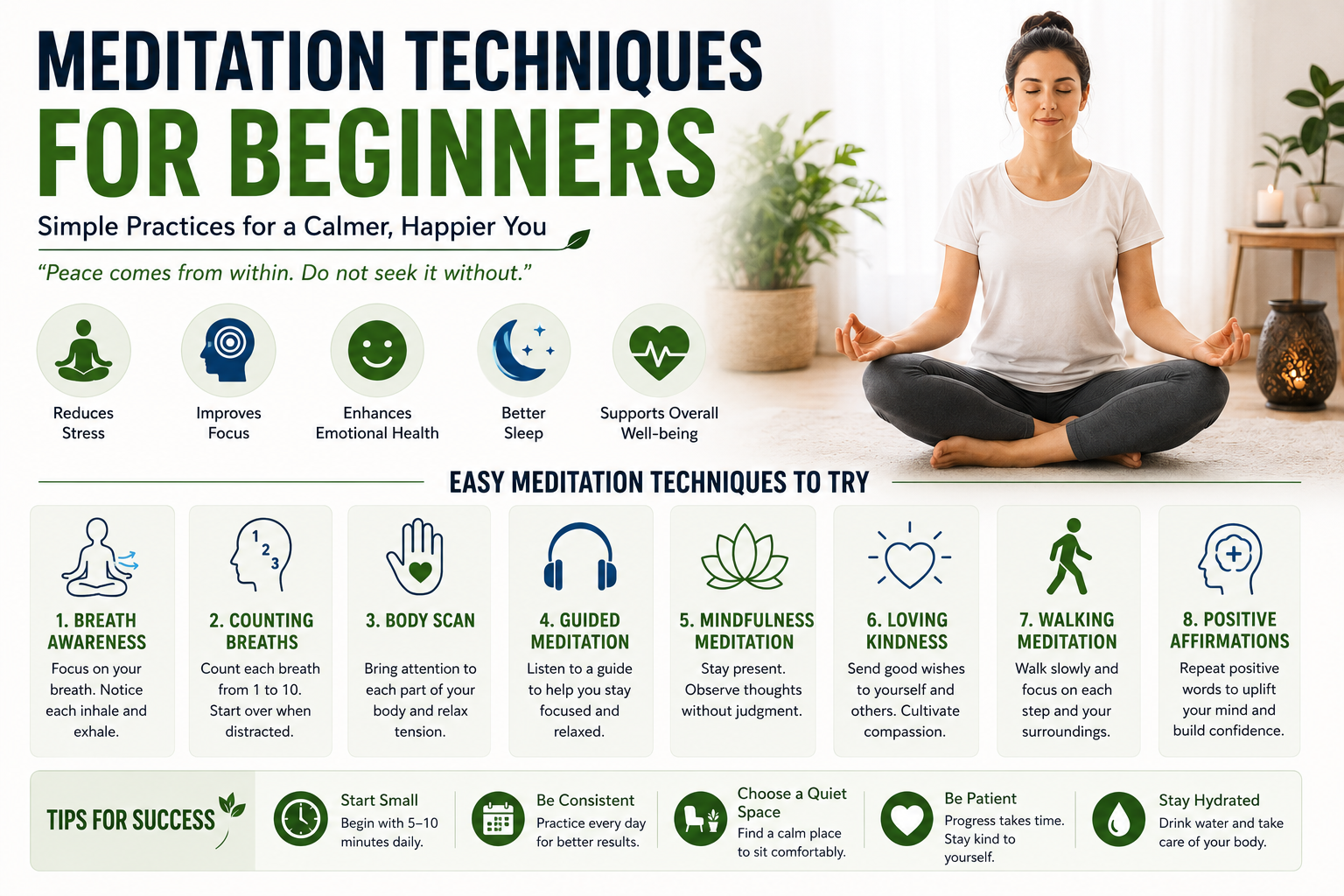
Breathing meditation was the first technique I practiced.
I close my eyes and pay attention to each breath.
I notice the feeling of air entering and leaving my body.
Whenever my thoughts begin to wander, I gently return my attention to my breathing.
This simple practice has become one of the most effective ways for me to calm my mind.
Counting Breaths
Another technique that helped me as a beginner was counting each breath.
I slowly count from one to ten while breathing naturally.
After reaching ten, I begin again from one.
If I lose count because my mind starts wandering, I simply start over without becoming frustrated.
This method improves concentration while keeping the mind engaged.
Body Scan Meditation
Body scan meditation helped me become more aware of physical tension.
I slowly focus on different parts of my body, beginning with my feet and gradually moving upward toward my head.
Whenever I notice tight muscles, I consciously relax them.
This technique leaves me feeling refreshed after every session.
Guided Meditation
When I first started meditating, guided meditation made the process much easier.
Listening to a calm voice helped me stay focused instead of becoming distracted by random thoughts.
As I gained more experience, I became comfortable practicing without guidance, but guided sessions remain one of my favorite options.
Mindfulness Meditation
Mindfulness meditation teaches me to pay attention to the present moment.
Instead of worrying about the future or thinking about the past, I focus on what is happening right now.
I notice my breathing, physical sensations, sounds around me, and my thoughts without judging them.
This practice has helped me become more patient and less reactive during stressful situations.
Loving Kindness Meditation
This technique was very different from what I expected.
During loving kindness meditation, I quietly repeat positive wishes for myself and other people.
I wish happiness, peace, good health, and kindness for those around me.
Practicing this meditation has helped me develop greater compassion and understanding.
Walking Meditation
Meditation does not always require sitting still.
Sometimes I practice walking meditation.
I walk slowly while paying attention to every step.
I notice how my feet touch the ground and how my body moves naturally.
This method feels especially enjoyable when practiced outdoors.
Using Positive Affirmations
Occasionally I include simple positive affirmations during meditation.
I quietly repeat phrases such as I am calm, I am grateful, or I am improving every day.
These affirmations help create a positive mindset while encouraging self confidence.
Creating a Daily Routine
The biggest lesson I learned was the importance of consistency.
Instead of meditating for an hour once a week, I practice for ten to fifteen minutes almost every day.
Short daily sessions have been much more effective than occasional long sessions.
Meditation has become as natural as brushing my teeth every morning.
Common Challenges for Beginners
Almost everyone experiences distractions while meditating.
I certainly did.
At first I believed my mind should become completely empty.
Later I realized that thoughts naturally appear.
The goal is not to stop thinking.
The goal is to gently return attention to the present whenever the mind wanders.
Another challenge is expecting immediate results.
Meditation works gradually, and patience is an important part of the process.
Healthy Habits That Support Meditation
Meditation works even better when combined with other healthy habits.
Regular exercise helps me feel more relaxed before meditation.
Eating balanced meals provides steady energy.
Drinking enough water supports overall health.
Getting enough sleep also improves my ability to concentrate during meditation sessions.
All of these habits work together to support both physical and mental well being.
Staying Motivated
There are days when I do not feel like meditating.
Whenever that happens, I remind myself how much better I feel afterward.
I also avoid putting pressure on myself to have a perfect session.
Some days my mind feels calm.
Other days it feels busy.
Both experiences are completely normal.
The important thing is continuing the practice without judging myself.
Lessons I Have Learned
Meditation has taught me many valuable lessons.
I have learned to slow down instead of constantly rushing through life.
I have become more patient with myself and with others.
I have realized that peace does not come from controlling everything around me.
Instead, it comes from learning how to respond calmly to whatever life brings.
These lessons have improved not only my mental health but also my relationships and daily happiness.
Conclusion
In my opinion, meditation is one of the simplest and most valuable habits anyone can develop.
It does not require expensive equipment, special skills, or a large amount of time.
Simple techniques such as breathing meditation, counting breaths, body scan meditation, mindfulness, loving kindness meditation, guided meditation, and walking meditation can all help beginners build a consistent practice.
The most important lesson I have learned is that meditation is not about becoming perfect.
It is about becoming more aware of the present moment and treating ourselves with patience and kindness.
With regular practice, meditation can improve focus, reduce stress, encourage emotional balance, and create a greater sense of peace in everyday life.
Starting with just a few minutes each day can lead to meaningful improvements that continue to grow over time.