Introduction
Being a student comes with many responsibilities. There are classes to attend, assignments to complete, exams to prepare for, and sometimes part time work as well. I used to think that because my schedule was so busy, I did not have enough time to exercise. Most of my day was spent sitting at a desk, reading books, or using a laptop. Over time, I noticed that I felt tired more often, had less energy, and found it harder to stay focused on my studies.
That is when I realized that exercise is not a waste of time. In fact, it helps me become more productive. After making physical activity a part of my daily routine, I felt more energetic, my concentration improved, and I became more motivated to complete my daily tasks.
In this article, I want to share my thoughts about creating a daily exercise routine for students. My goal is to show that staying active does not require hours in the gym. A simple routine followed consistently can improve both physical health and academic performance.
Why Students Should Exercise Every Day
I believe students often underestimate the importance of regular exercise. Many people think physical activity is only necessary for athletes, but every student can benefit from moving their body each day.
Exercise increases blood circulation, which helps deliver oxygen to the brain. As a result, I often feel more alert during lectures and while studying.
Regular physical activity also reduces stress. Student life can be overwhelming, especially during examination periods. Whenever I exercise, I notice that my mind becomes calmer and I can handle academic pressure much better.
Exercise also improves sleep quality. A good night’s sleep helps me wake up refreshed and ready to learn.
Benefits of a Daily Exercise Routine
Since making exercise a daily habit, I have experienced several positive changes.
I have more energy throughout the day.
My concentration while studying has improved.
I feel less stressed during busy weeks.
My posture has become better because I spend less time sitting without movement.
I also feel more confident because staying active improves both physical and mental health.
Perhaps the biggest benefit is that exercise has become a healthy habit that supports every other part of my life.
Starting the Day With Light Movement
I like beginning my morning with a few minutes of light exercise.
Instead of checking my phone immediately after waking up, I stretch my arms, shoulders, neck, and legs.
I then walk around my room or march in place for a few minutes to wake up my body.
This simple habit helps me feel refreshed before starting my day.
My Daily Exercise Routine
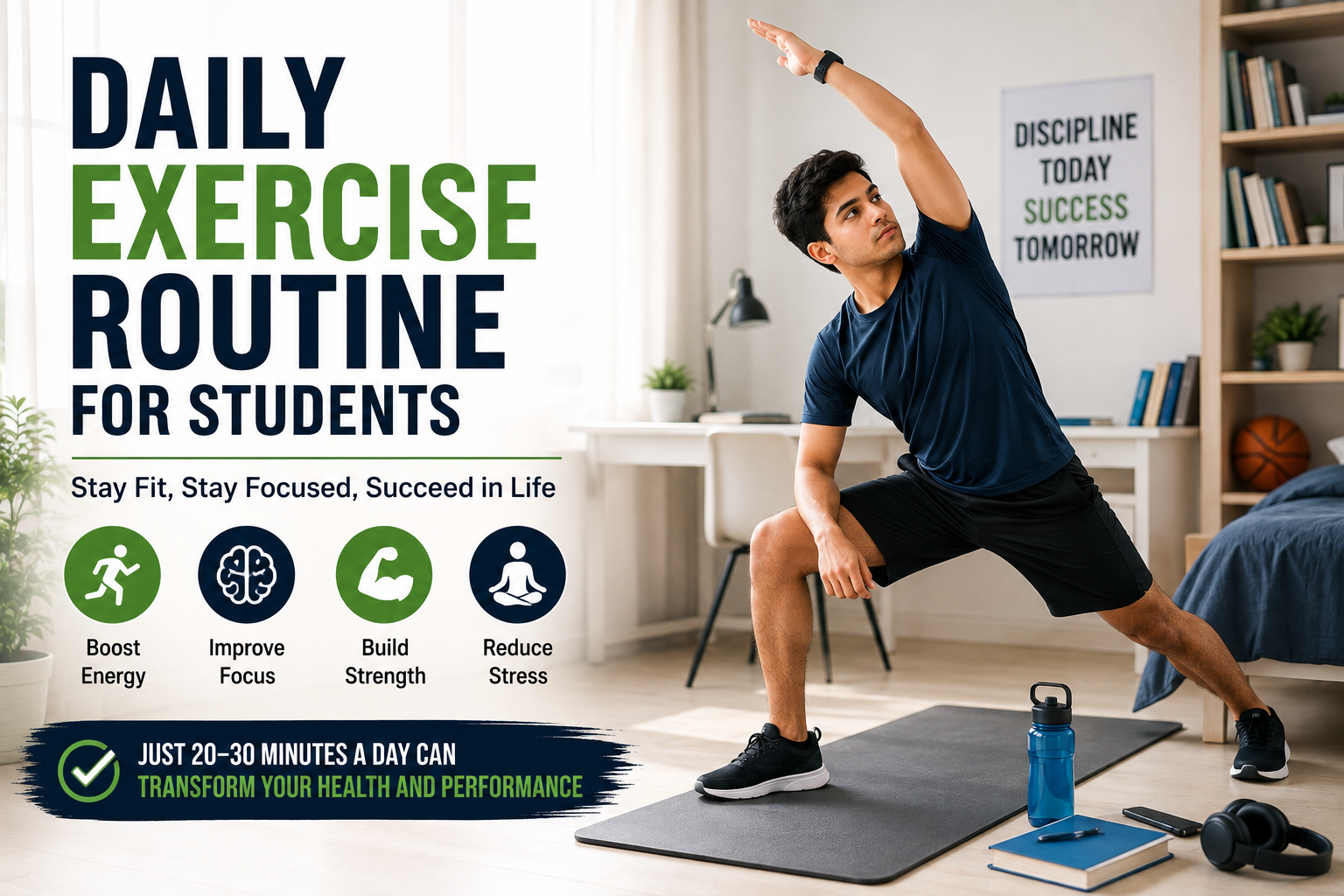
This is the routine that I personally find simple and effective.
Warm Up
I begin with five minutes of warming up.
I perform arm circles, shoulder rolls, gentle leg swings, and march in place.
These movements prepare my muscles for exercise.
Jumping Jacks
I perform jumping jacks for one minute.
This exercise increases my heart rate and gives me an instant energy boost.
Squats
I complete fifteen body weight squats.
Squats strengthen the legs while improving balance and stability.
I focus on proper technique rather than performing the movement quickly.
Push Ups
I perform ten push ups.
When I first started exercising, I used knee push ups because they were easier.
As I became stronger, I gradually switched to regular push ups.
Plank
I hold a plank for thirty seconds.
This simple exercise strengthens my core and improves posture.
Since students spend many hours sitting, I believe a strong core is extremely important.
Lunges
I perform ten lunges on each leg.
Lunges improve lower body strength while helping me develop better balance.
High Knees
I perform high knees for one minute.
This movement increases my heart rate while improving endurance.
It also makes the workout more enjoyable.
Glute Bridge
I perform fifteen glute bridges.
This exercise strengthens the hips and lower back.
It also helps reduce stiffness caused by sitting for long periods.
Superman Exercise
I complete twelve Superman repetitions.
This exercise improves posture and strengthens the muscles that support the spine.
Stretching
I finish my workout with gentle stretching.
Stretching helps relax my muscles and leaves me feeling refreshed.
The entire routine usually takes around twenty to thirty minutes.
Exercise During Study Breaks
One habit that has helped me a lot is taking short movement breaks while studying.
Instead of sitting for several hours without moving, I stand up every hour.
Sometimes I walk around the room.
Sometimes I perform a few stretches or light squats.
These small breaks improve my focus when I return to studying.
Healthy Eating Supports Exercise
Exercise works best when combined with healthy eating habits.
I always try to include fruits, vegetables, lean protein, whole grains, and healthy fats in my meals.
Drinking enough water throughout the day also helps me stay energized.
Instead of relying on sugary snacks for energy, I choose healthier options whenever possible.
Good nutrition supports both learning and physical performance.
Common Mistakes Students Should Avoid
One mistake I often see is believing there is no time for exercise.
Even twenty minutes of physical activity is much better than doing nothing.
Another mistake is studying for many hours without taking movement breaks.
The body and mind both perform better after short periods of physical activity.
Skipping sleep is another common problem among students.
Exercise cannot replace proper rest.
Getting enough sleep is essential for recovery and learning.
Finally, comparing yourself with others often creates unnecessary pressure.
Everyone has different fitness levels and different schedules.
The important thing is making steady progress.
Staying Motivated
There are days when I do not feel like exercising.
During those moments, I remind myself how much better I feel after completing my workout.
I also keep my goals simple.
Instead of aiming for perfection, I focus on consistency.
Listening to music while exercising makes the routine more enjoyable.
Sometimes I invite a friend or family member to join me, which adds extra motivation.
Tracking my workouts also helps because I can see how much progress I have made over time.
Balancing Exercise and Studies
Many students worry that exercise will reduce study time.
I have found the opposite to be true.
Regular physical activity helps me study more efficiently because my concentration improves.
Instead of feeling exhausted after several hours of studying, I have enough energy to stay productive.
Exercise has become an important part of my daily routine rather than something separate from my education.
Conclusion
In my opinion, every student should include some form of exercise in their daily routine.
It does not require expensive equipment or a gym membership.
Simple activities such as jumping jacks, squats, push ups, planks, lunges, stretching, and walking provide excellent health benefits.
The most important lesson I have learned is that consistency matters more than intensity.
Small daily workouts improve energy, concentration, confidence, and overall well being.
Student life can be busy, but taking a little time each day to exercise is one of the best investments anyone can make.
A healthy body supports a healthy mind, and together they create the foundation for academic success and a happier life.